


Philippine earthquake drills credited with preventing higher death toll

8 reported
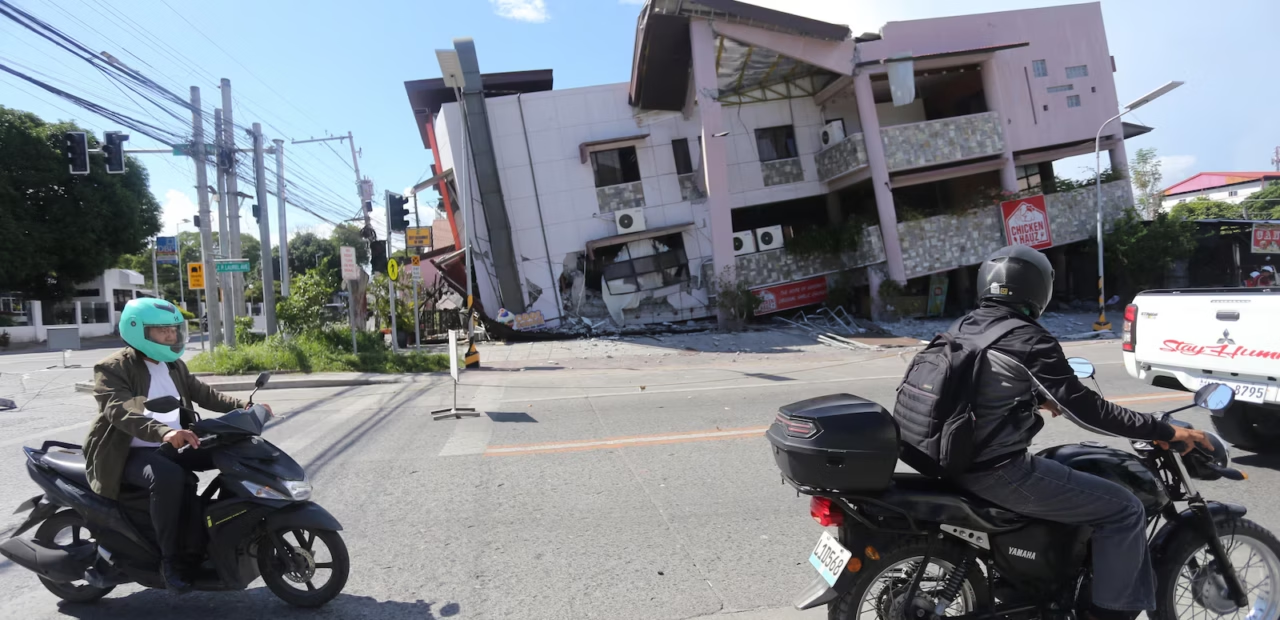
Philippine officials stated that years of disaster-preparedness drills helped prevent a larger casualty toll when a 7.8 magnitude earthquake struck the south on Monday, leaving 55 people dead and 31 others missing. The offshore quake hit off Sarangani province, injuring about 1,120 people and displacing more than 45,000, with about half still in emergency shelters after damaging more than 12,600 houses. Officials said many were too traumatized to return home due to strong aftershocks. Social media videos showed students screaming in panic but staying seated or standing still outside school buildings, with teachers admonishing them to calm down. One viral Facebook video showed grade-schoolers screaming as a tin roof collapsed nearby, but the school in Malita, Davao Occidental province, reported no injuries. Teresito Bacolcol, director of the Philippine Institute of Volcanology and Seismology, said the quake was one of the strongest to hit the archipelago in a half-century and that it was fortunate it struck at 7:37 a.m., minutes before work and classes were to start indoors. Ednar Dayanghirang, director of the Office of Civil Defense in a quake-hit region of about 5 million people, said regular drills helped reduce casualties, including by preventing deadly stampedes.
What’s reported
A 7.8 magnitude offshore earthquake struck Monday off Sarangani province in the Philippines.
The quake left 55 people dead and 31 others missing.
About 1,120 people were injured and more than 45,000 displaced.
More than 12,600 houses were damaged across farming towns and cities.
Officials said years of disaster-preparedness drills helped prevent a larger casualty toll.
The quake hit at 7:37 a.m., minutes before work and classes were to start indoors.
One school in Malita, Davao Occidental province, reported no injuries from the quake.
The Philippines is located on the Pacific "Ring of Fire," an arc of seismic faults.
Key figures
Teresito Bacolcol, director of the Philippine Institute of Volcanology and Seismology
Ednar Dayanghirang, director of the Office of Civil Defense in a quake-hit region
Sources: abcnews.com