



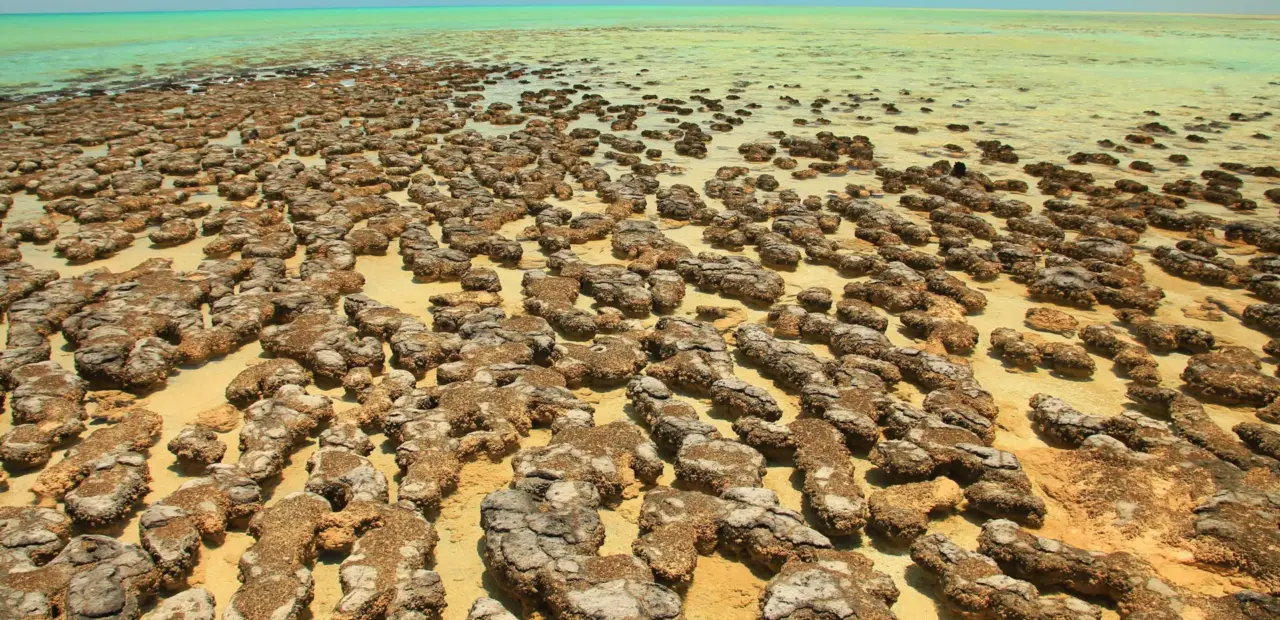
Stromatolites found in asteroid crater may explain oxygen rise

The Story
Researchers from the Korea Institute of Geoscience and Mineral Resources discovered stromatolites inside the Hapcheon impact crater in South Korea. The fossil-like structures suggest asteroid impacts may have created warm, mineral-rich lakes where oxygen-producing microbes could thrive. The findings were published in Communications Earth & Environment, a Nature Portfolio journal.
Key Facts
- The discovery was made by scientists from the Korea Institute of Geoscience and Mineral Resources (KIGAM).
- The Hapcheon crater is the only confirmed asteroid impact crater on the Korean Peninsula.
- Stromatolites are layered rock structures created by ancient microbial communities, such as cyanobacteria that produce oxygen through photosynthesis.
- Each stromatolite measured roughly 10 to 20 centimeters in diameter, and this is the first time they have been identified at the site.
- Geochemical testing showed signs of extraterrestrial material and nearby bedrock, and evidence of alteration by hot water.
- Inner portions of the stromatolites showed stronger hydrothermal signatures, suggesting formation during an earlier, hotter stage of the crater lake.
- Researchers propose that post-impact hydrothermal lakes may have acted as isolated “oxygen oases” before the Great Oxidation Event (GOE) around 2.4 billion years ago.
- The study builds on earlier 2021 research that first confirmed the Hapcheon impact crater in Gondwana Research.
- Lead author Dr. Jaesoo Lim stated, “This is the first comprehensive evidence suggesting that stromatolites could form in hydrothermal lakes created by asteroid impacts.”
- The researchers note that similar impact crater environments on early Mars could be promising places to search for signs of past microbial life.
Conflicting Reports
No conflicting reports identified in the source article.
Still Unclear
No open questions identified in the source article.
Misconceptions
No widespread misconceptions addressed in the source article.
Key Figures
- Dr. Jaesoo Lim – lead author of the study
- Korea Institute of Geoscience and Mineral Resources (KIGAM) – government-funded research institute
Sources: ScienceDaily