
Museum offers tactile tours for blind visitors as America turns 250

7 reported
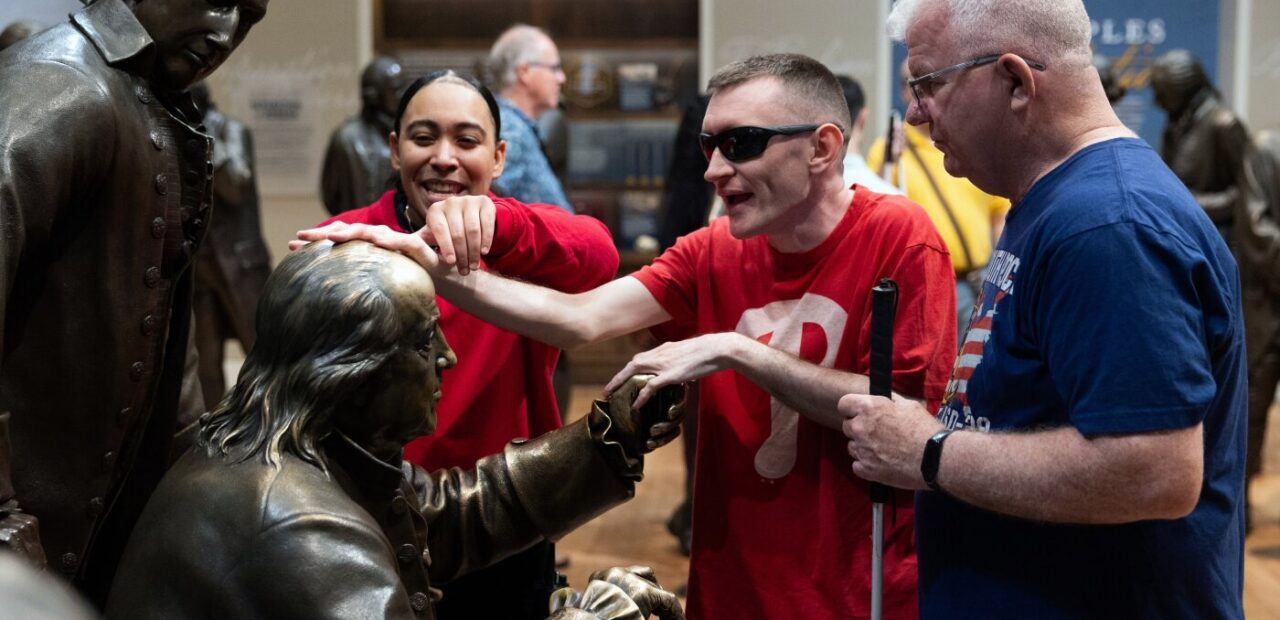
The National Constitution Center in Philadelphia has begun offering guided tactile tours for blind and low vision visitors in its "Signers' Hall" gallery, which features life-size statues of the 42 men present at the signing of the U.S. Constitution. The tours, which started in April, allow visitors to touch the statues while museum educators provide detailed descriptions and historical context. The Americans with Disabilities Act of 1990 required public institutions to make buildings accessible, but access to exhibits inside often remains limited. The NCC joins a growing number of museums nationwide that have incorporated accessibility options in recent years, though touch tours are less common. Visitor Tim Kelly Jr. described running his fingers over Benjamin Franklin's figure and feeling the wrinkles on his face. Kristina Marinello, senior director of museum experience, said the center has long invited touching of the statues, but only began offering these tours officially after staff trained with Philly Touch Tours. Trish Maunder, a co-founder of that organization, said her mantra is "seeing may be believing, but when you touch, you know." Heather Pressman, who teaches courses on museums and accessibility at Johns Hopkins University, noted that nearly a third of the U.S. population has disabilities and that simple steps like large print labels can improve accessibility.
What’s reported
The National Constitution Center in Philadelphia offers guided tactile tours for blind and low vision visitors in "Signers' Hall."
The gallery contains life-size statues of 42 men present at the signing of the U.S. Constitution.
The center began offering these tours officially in April after staff trained with Philly Touch Tours.
The Americans with Disabilities Act of 1990 required public institutions to make buildings accessible, but access to exhibits inside is often still limited.
Touch tours are less common than other accessibility options like sensory-friendly days.
Nearly a third of the U.S. population has disabilities, according to Heather Pressman of Johns Hopkins University.
Second-time visitor Akosua "Kosi" Asabere said she felt both reverence and conflict, noting the Constitution left out women, Black people, and disabled people.
Key figures
Grace Engle, museum educator at the National Constitution Center
Tim Kelly Jr., visitor
Kristina Marinello, senior director of museum experience at the National Constitution Center
Trish Maunder, co-founder of Philly Touch Tours
Heather Pressman, instructor on museums and accessibility at Johns Hopkins University
Akosua "Kosi" Asabere, second-time visitor and software engineer
Sources: NPR