


Study suggests hidden regenerative switch may exist in mammals

8 reported
Researchers at Texas A&M University have published a study in Nature Communications suggesting that mammals, including humans, may retain a dormant ability to regenerate complex body parts. The team developed a two-step treatment using growth factors that redirected the body’s normal healing response away from scar formation and toward regrowth. In animal studies, the treatment successfully restored bone, joints, ligaments, and tendons after amputation, though the regenerated tissues were not perfect replicas. The researchers emphasized that the approach did not require adding stem cells from outside the body, as the necessary cells were already present at the injury site. The study challenges long-standing assumptions about mammalian regeneration and opens new questions about what is biologically possible.
What’s reported
The study was published in Nature Communications by researchers at Texas A&M University’s College of Veterinary Medicine and Biomedical Sciences.
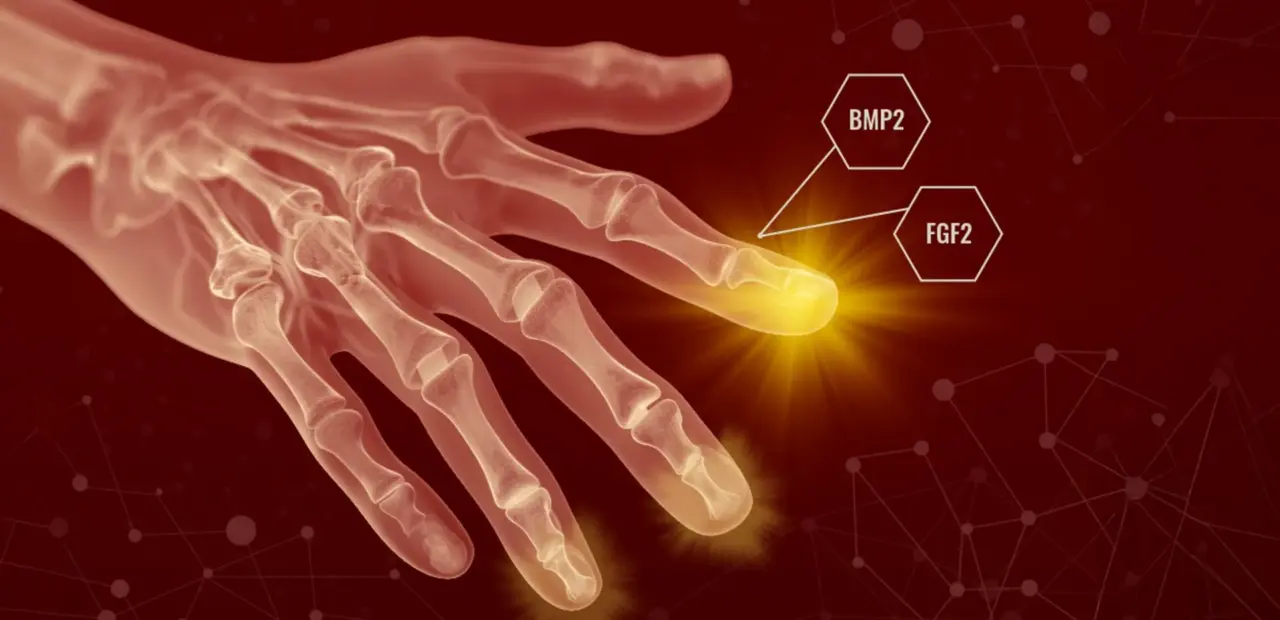
The two-step treatment used fibroblast growth factor 2 (FGF2) followed by bone morphogenetic protein 2 (BMP2).
FGF2 was applied after the wound had healed over, encouraging formation of a blastema-like structure.
BMP2 was applied several days later to prompt cells to build new tissues.
The regenerated tissues included bone, tendon, ligament, and joint structures, though not in perfect form.
The approach did not require external stem cells; the researchers redirected fibroblasts already at the injury site.
BMP2 already has FDA approval for certain applications; FGF2 is being evaluated in clinical trials.
The study’s lead author is Dr. Ken Muneoka, a professor in the VMBS’ Department of Veterinary Physiology & Pharmacology.
Key figures
Dr. Ken Muneoka, professor, VMBS Department of Veterinary Physiology & Pharmacology
Dr. Larry Suva, professor, VMBS Department of Veterinary Physiology & Pharmacology
Ling Yu, Mingquan Yan, Katherine Zimmel Scaturro, Osama Qureshi, Yu-Lieh Lin, Benjamin B. Bartelle, C. Addison Smith, Daniel Osorio Hurtado, James J. Cai, Lindsay A. Dawson, Regina Brunauer, Manjong Han, Connor P. Dolan (co-authors)
Sources: ScienceDaily