

Kenyan police block roads around Nairobi ahead of anti-government protest

15 reported
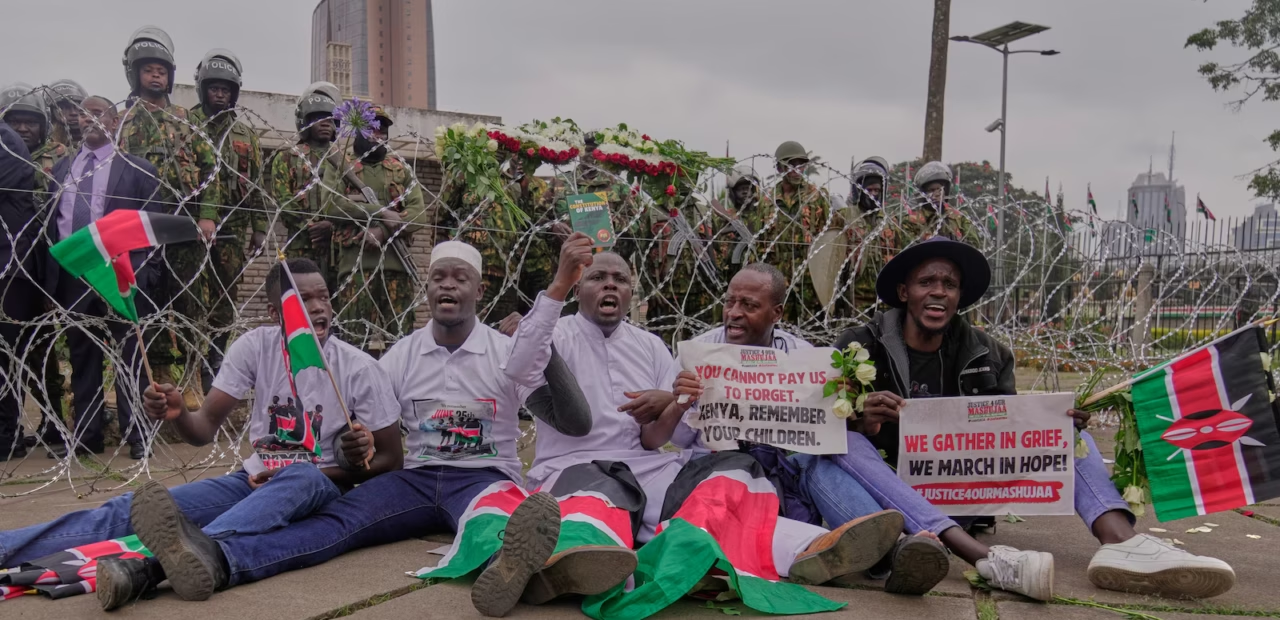
Police in Kenya set up roadblocks on Thursday to prevent access to the capital, Nairobi, ahead of a planned demonstration marking two years since at least 60 people died in anti-government protests that also saw protesters storming the parliament. Families whose loved ones died in the 2024 protests have said they would protest the delay in justice for the victims. The government has been accused of a lack of transparency in an ongoing process to compensate those who suffered human rights abuses during the protests. Last week, President William Ruto said people would be allowed to protest, but the government would also protect the rights of children to go to school and workers to work, warning against any attempts by the demonstrators to “shut down the country.” Interior Minister Kipchumba Murkomen said Wednesday that police would escort the protesters but warned that criminals disguised as protesters would not be allowed to infiltrate and raid businesses. On Thursday morning, police erected roadblocks on all major highways around Nairobi, blocking motorists from accessing the city, and parliament buildings remained barricaded while businesses were closed. Opposition leaders have backed the protests, calling for transparency in the government’s compensation program.
What’s reported
Police in Kenya set up roadblocks on Thursday to prevent access to Nairobi ahead of a planned demonstration.
The demonstration marks two years since at least 60 people died in anti-government protests that included storming the parliament.
Families of victims said they would protest the delay in justice.
The government has been accused of a lack of transparency in a compensation process for human rights abuses.
President William Ruto said people would be allowed to protest but warned against attempts to “shut down the country.”
Interior Minister Kipchumba Murkomen said police would escort protesters but warned against criminals disguised as protesters.
Police erected roadblocks on all major highways around Nairobi; parliament buildings were barricaded and businesses closed.
Opposition leaders backed the protests, calling for transparency in the compensation program.
Several opposition figures marched alongside activists and families, laying wreaths at barricades around Parliament.
Nairobi police chief Issa Mohammud said roadblocks aimed to “sieve out criminals” and confirmed the arrest of “several” people.
Edith Wanjiku, whose son Ibrahim Kamau died of two gunshots to the neck, said her family has not benefited from the compensation program.
Wanjiku said only two out of 10 families whose children were shot near Parliament have been compensated.
During the June 2024 protests, thousands of young Kenyans stormed parliament over a finance bill proposing tax increases.
Police opened fire outside the building, killing dozens of protesters.
Ruto said the government compensation represents “a state acknowledgment that harm occurred” and was not an “admission” of guilt.
Key figures
President William Ruto
Interior Minister Kipchumba Murkomen
Nairobi police chief Issa Mohammud
Former Vice President Kalonzo Musyoka
Former Justice Minister Martha Karua
Former Chief Justice David Maraga
Edith Wanjiku (mother of victim Ibrahim Kamau)
Ibrahim Kamau (deceased son of Edith Wanjiku)
Sources: abcnews.com