



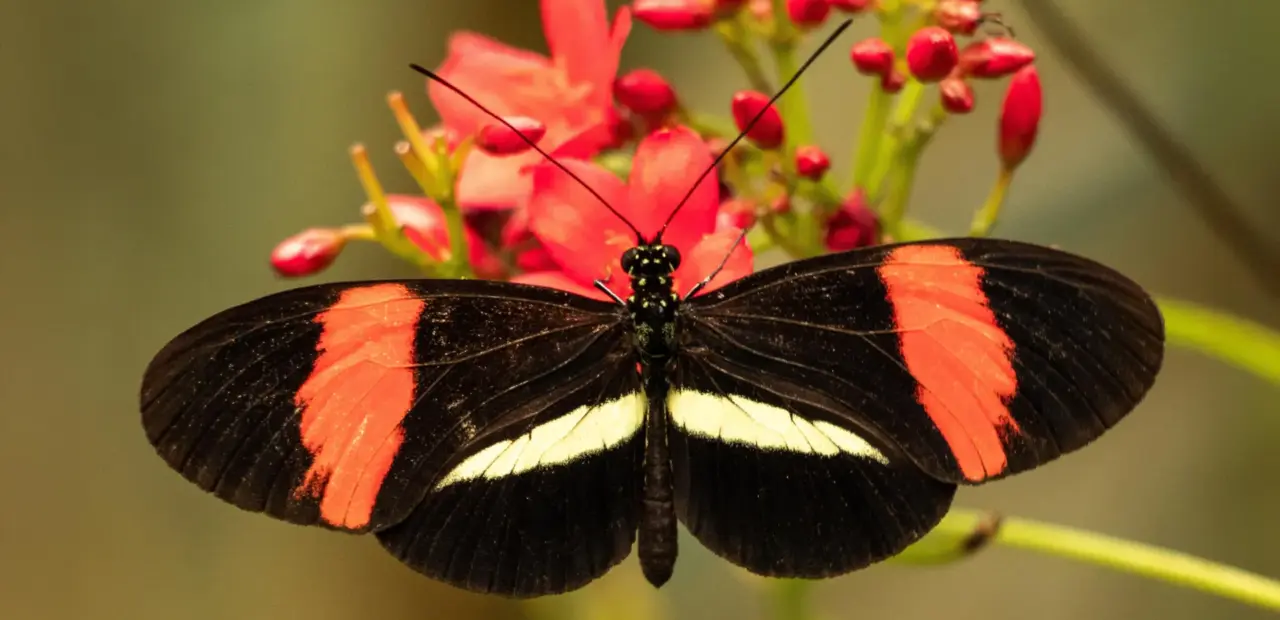
Heliconius butterflies show slowed aging, offer longevity clues

4 verified4 unconfirmed
New research reveals that Heliconius butterflies live significantly longer than closely related species and show little physical decline as they age. The study, led by Jessica Foley, formerly at the University of Bristol and now at Tufts University, examines how these tropical butterflies have evolved extended lifespans. Their ability to feed on pollen was long considered the main factor, but experiments showed they still outlive relatives even without pollen in their diet. A grip strength test indicated that Heliconius butterflies maintain muscle performance with age, while shorter-lived relatives experienced measurable decline. The findings suggest that both nutrition and deeper evolutionary changes contribute to their longevity. Researchers say the butterflies could serve as a new model for studying the biology of aging.
What’s verified
Heliconius butterflies live significantly longer than closely related species.
Their pollen-feeding diet is not the sole cause of their extended lifespan; even without pollen, they live longer.
Grip strength tests show Heliconius butterflies do not experience age-related decline in physical performance, unlike shorter-lived relatives.
The study was led by Jessica Foley, formerly of the University of Bristol and now at Tufts University.
Not yet confirmed
One report stated that the maximum lifespan of Heliconius hewitsoni was 348 days, while the related species Dione juno survived 14 days.
The grip strength test was informally called the “pull-inator,” according to one report.
The specific species used in the grip strength experiment were Heliconius hecale and Dryas iulia, according to one report.
The study was published in Nature Communications on June 16, 2026, according to one report.
Key figures
Jessica Foley (lead researcher, formerly University of Bristol, now postdoc at Tufts University)
Sources: ScienceDaily, NPR