



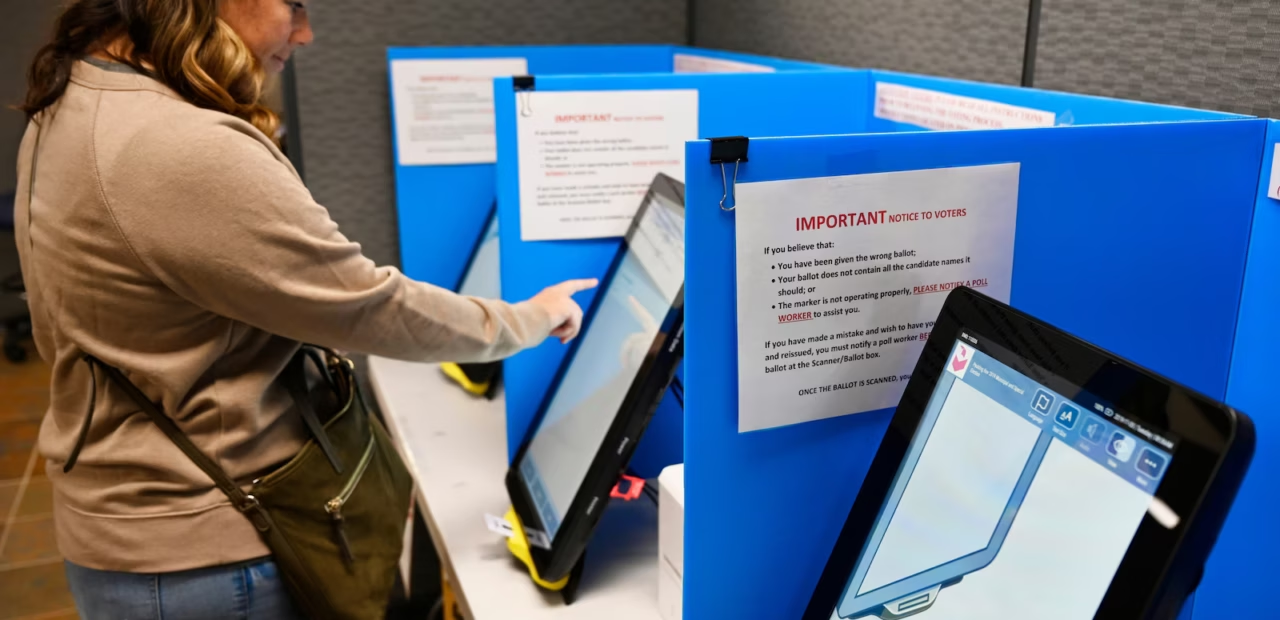
Georgia lawmakers to address vote-counting method ban in special session

8 reported1 unconfirmed1 conflicting
Georgia lawmakers are returning to the Capitol this week for a special session to address a looming ban on the state’s current vote-counting method, which relies on QR codes printed on ballots. The ban, set to take effect July 1, was passed two years ago but no replacement tabulation method was implemented. Republican Gov. Brian Kemp called the special session and instructed lawmakers to “address issues created” by that law. The secretary of state’s office and the State Election Board have issued conflicting guidance for county election officials on how votes should be cast and counted. A special election to fill a U.S. House seat is scheduled for July 28, with early voting beginning July 6. If the issues are not resolved soon, there is likely to be confusion and possibly litigation over the state’s elections after July 1.
What’s reported
Georgia’s current election system uses QR codes on ballots to tally votes.
A law passed two years ago bans the use of QR codes for the official vote count after July 1, 2026.
No replacement counting method has been adopted since the ban was passed.
Gov. Brian Kemp called a special session starting Wednesday to address the QR code issue and draw new congressional maps.
The secretary of state’s office issued guidance for six counties in a congressional district, saying ballots will be scanned using QR codes for election night counts, then optical character recognition software will tally votes from ballot images for the official count.
The State Election Board passed a resolution directing counties to use hand-marked paper ballots with scanners if the special session does not extend the QR code deadline.
A lawyer from the state attorney general’s office said the conflicting guidance “would cause confusion for elections superintendents.”
A special election to fill the U.S. House seat of the late Rep. David Scott is set for July 28, with early voting starting July 6.
Conflicting accounts
The secretary of state’s office and the State Election Board have issued conflicting guidance for county election officials. The secretary of state’s guidance says counties must continue using the current election system, including touchscreen voting machines, and that the law does not authorize hand-marked paper ballots for in-person voting. The State Election Board’s resolution argues the secretary of state’s plan is not authorized by law and directs counties to use hand-marked paper ballots with scanners if the deadline is not extended.
Open questions
It is unclear whether lawmakers will extend the QR code deadline or adopt a new counting method before the July 1 ban takes effect. It is also unclear how the conflicting guidance from the secretary of state’s office and the State Election Board will be resolved.
Key figures
Gov. Brian Kemp (Republican)
Secretary of State Brad Raffensperger (Republican)
Elizabeth Young, lawyer with the state attorney general’s office
Axiver Harris, interim elections director for Henry County
Marcye Scott, candidate in the special election
Carlos Moore, candidate in the special election
The late U.S. Rep. David Scott
Sources: abcnews.com