


Conflict and aid cuts worsen childbirth risks in Central African Republic

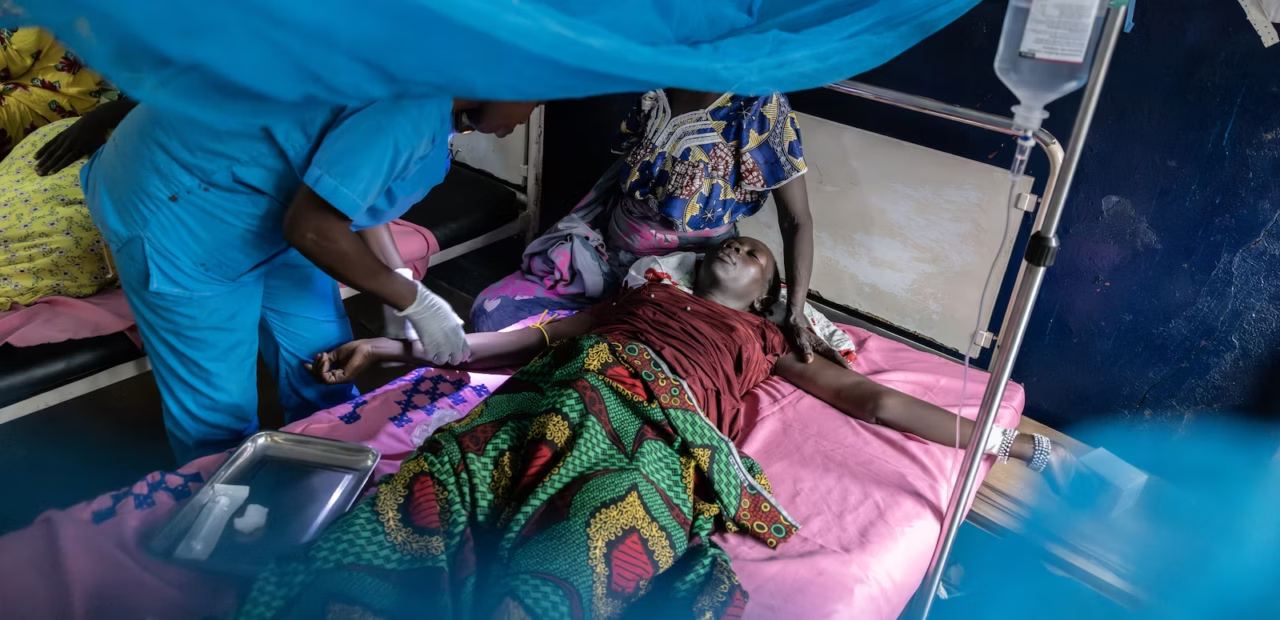
According to an ABC News report, women in Central African Republic are 40 times more likely to die in pregnancy or childbirth than women in the United States, the United Nations has said. The report highlights the story of Maude Ahmad Fadala, a refugee who gave birth in the street in the town of Birao because there were no camp facilities and she had no money to reach a hospital. Years of internal conflict have weakened the country’s health system, and recent cuts to humanitarian aid by the United States have compounded the problem. Four local midwives lost their jobs after the Trump administration cut all U.S. funding to the U.N. Population Fund in the country. The U.N. agency’s budget in Central African Republic has been halved to $6.5 million, and several health facilities and transportation services for pregnant women have closed. A birthing assistant at the district hospital said some women arrive only when they are about to give birth, often after walking for hours or risking dangerous motorbike rides. The district hospital, which serves about 70,000 people plus 22,000 Sudanese refugees, has only eight beds in a small maternity ward and lost 12 staff due to aid cuts, mostly from the maternity department.
What’s reported
Maude Ahmad Fadala gave birth in the street in Birao, Central African Republic, because no camp facilities were available and she had no money to travel.
Women in Central African Republic are 40 times more likely to die in pregnancy or childbirth than in the United States, according to the United Nations.
The maternal mortality ratio is 829 deaths per 100,000 births in Central African Republic.
Nearly two-thirds of maternal deaths worldwide occur in conflict-affected or “fragile” countries, the World Health Organization has said.
The Trump administration cut all U.S. funding to the U.N. Population Fund, resulting in the loss of jobs for four local midwives in Birao.
Four “safe spaces” that provided transport for pregnant women to the district hospital have closed, along with two U.S.-backed health facilities.
UNFPA’s budget in Central African Republic has been halved over two years to $6.5 million, according to country director Victor Rakoto.
Over 40% of births in Central African Republic occur away from medical facilities, the United Nations has estimated.
Amna Adam Hessen lost her baby after missed prenatal appointments, malaria, and a breech position.
Clara Abessendé, one of the four midwives who lost their jobs, said there were more cases of infant and maternal deaths after the Sudan war began in early 2023.
Open questions
It is unclear how the government’s 2024 plan to increase spending on skilled birth attendants is progressing, as officials did not respond to questions. The report does not specify the total number of maternal deaths directly attributed to the aid cuts, nor does it detail any alternative services available for pregnant women.
Key figures
Maude Ahmad Fadala, refugee who gave birth in the street
Delphine Zanabe, birthing assistant at the district hospital in Birao
Marie Justine Mamba Ibingui, UNFPA program officer
Victor Rakoto, UNFPA country director in Central African Republic
Amna Adam Hessen, refugee who lost her baby
Salet, mother of Amna Adam Hessen
Clara Abessendé, former midwife
Katidje Idrisse Tahire, pregnant refugee who fled Sudan
Sources: abcnews.com