



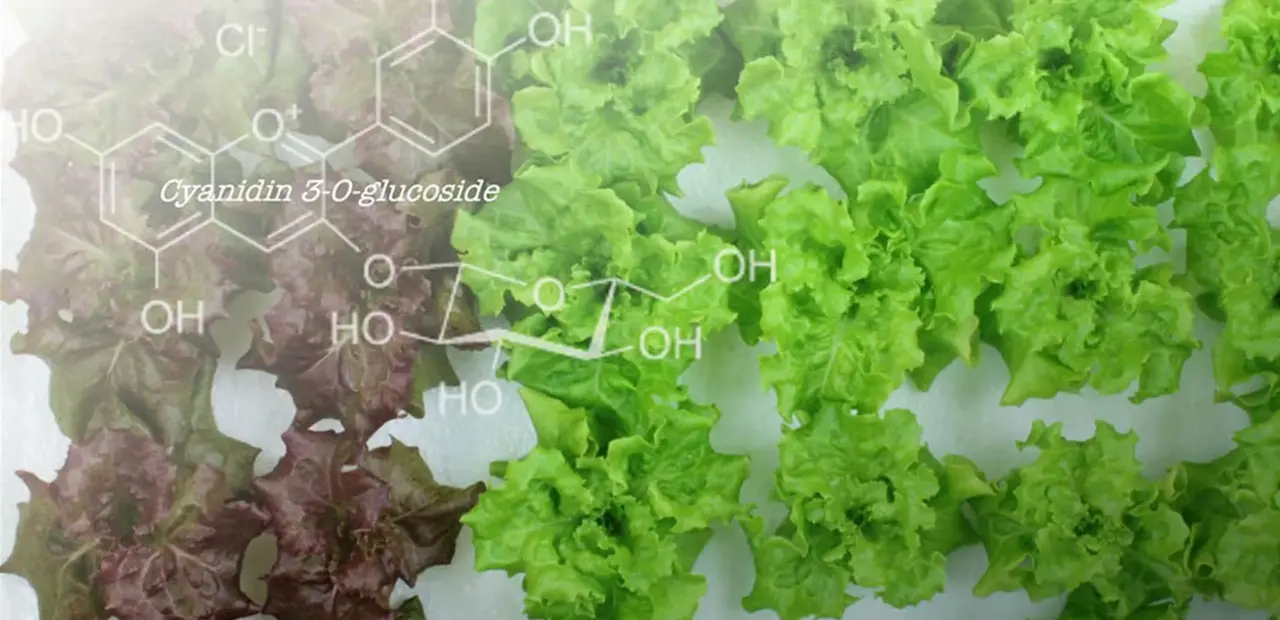
Genome editing turns red lettuce green, boosts other flavonoids

7 reported
Researchers at the University of Tsukuba used genome editing to block red pigment production in red leaf lettuce, causing other beneficial plant compounds to accumulate instead. The modified lettuce showed no meaningful reduction in growth, suggesting a possible method for creating crops with customized nutritional profiles. The study was published June 15, 2026, in Frontiers in Genome Editing.
What’s reported
Researchers used genome editing to switch off the gene for dihydroflavonol 4-reductase, an enzyme involved in anthocyanin formation.
The modified lettuce no longer produced its characteristic red pigmentation.
Levels of several other flavonoids, including quercetin, increased in the edited lettuce.
The modified lettuce showed no meaningful reduction in growth.
The researchers have not yet directly compared the modified plants with conventional green lettuce varieties.
Flavonoid production is highly sensitive to environmental conditions such as light intensity and temperature.
The findings may support development of specialized lettuce varieties for indoor cultivation systems.
Key figures
Ai Nagamine (researcher, University of Tsukuba)
Masaki Ono (researcher)
Osuke Sato (researcher)
Eiji Goto (researcher)
Hiroshi Ezura (researcher, Ezura group)
Sources: ScienceDaily