



U.S.-Iran talks produce road map toward final deal within 60 days, Vance says

20 reported1 unconfirmed
High-level talks between Iran and the United States resulted in “a lot of good progress,” Vice President JD Vance said as he left Switzerland on Monday after the two sides agreed on a road map toward reaching a final deal to end the war within 60 days. Vance said at a press briefing that the talks laid “a very good foundation for a successful final deal,” comparing it to setting a foundation for a house. Technical negotiations continued in the mountaintop resort of Bürgenstock after a first round of marathon talks between senior figures from both countries. The talks had a rough start, first canceled and then shaken by renewed threats from President Donald Trump. Vance confirmed that Iran had threatened to walk out over Trump’s comments, but he defended the president. The talks resulted in a joint statement released by mediators Qatar and Pakistan describing a “constructive atmosphere,” and Washington and Tehran agreed to set up new communication lines to ensure the Strait of Hormuz is open and end fighting in Lebanon. Vance said Iran agreed to allow IAEA inspectors back into the country, and that Jared Kushner proposed a solution for unfreezing Iran’s assets involving U.S. and Qatari approval for purchases of U.S. soy, corn and wheat.
What’s reported
Vice President JD Vance said the talks resulted in “a lot of good progress” and laid “a very good foundation for a successful final deal.”
The two sides agreed on a road map toward reaching a final deal within 60 days.
Technical negotiations continued in Bürgenstock, Switzerland.
The talks were first canceled and then shaken by renewed threats from President Donald Trump.
Iran threatened to walk out over Trump’s comments, according to Vance.
A joint statement by mediators Qatar and Pakistan described a “constructive atmosphere.”
Washington and Tehran agreed to set up new communication lines to keep the Strait of Hormuz open and end fighting in Lebanon.
Vance said Iran agreed to allow IAEA inspectors back into the country.
Jared Kushner proposed a solution for unfreezing Iran’s assets involving U.S. and Qatari approval for purchases of U.S. soy, corn and wheat.
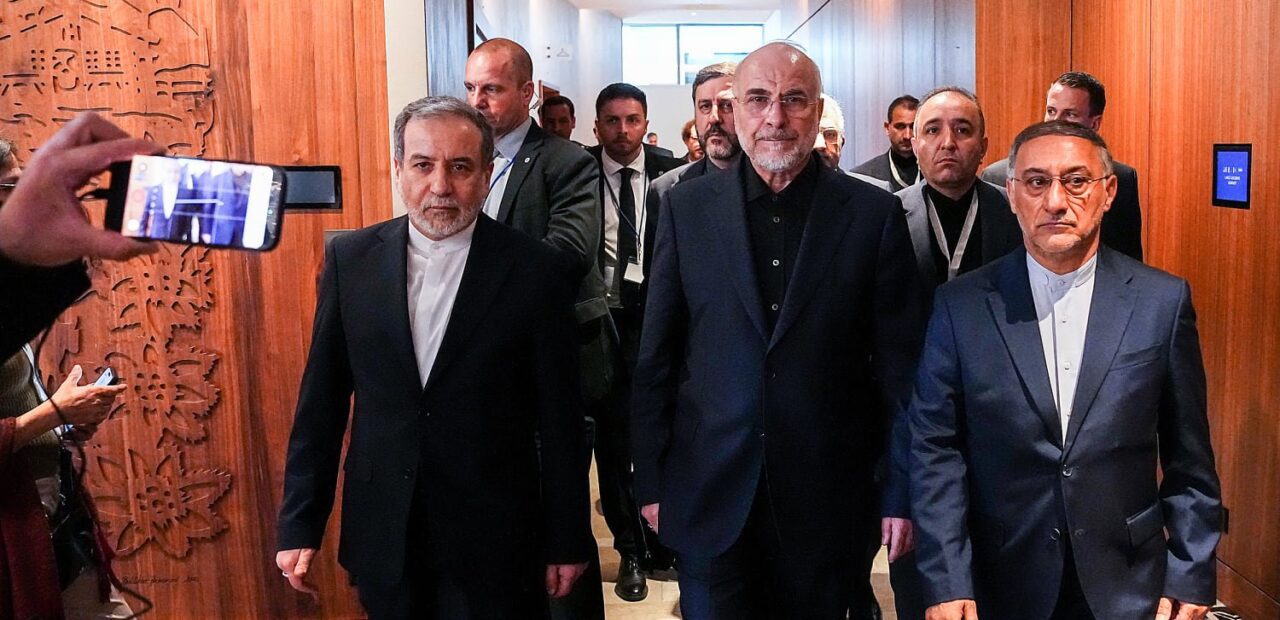
Iran’s Mehr News Agency reported the negotiating team, headed by Parliament Speaker Mohammad Bagher Ghalibaf, departed after approximately 18 hours of talks.
A “High Level Committee” was established with political oversight of mediation.
A deconfliction line was created between the parties and Lebanon.
A communication line was set up to prevent incidents and allow safe passage through the Strait of Hormuz.
Pakistani Prime Minister Shehbaz Sharif said the first committee meeting “concluded successfully.”
The Swiss Foreign Ministry welcomed constructive progress during “intensive diplomatic talks.”
Iranian Foreign Minister Seyed Abbas Araghchi warned the deconfliction cell will be the first “real test” of progress.
Global oil prices fell Monday after the talks concluded.
Trump posted on Truth Social that “we’ll hit Iran very hard again” unless it stops proxies in Lebanon.
In a Fox News interview, Trump said if Iran closes the Strait of Hormuz, the U.S. will “blow the s— out of them.”
Iranian Foreign Ministry spokesman Esmail Baghaei warned Tehran will no longer negotiate directly if such threats continue.
Open questions
The article does not specify the exact terms of the final deal or the details of Iran’s nuclear program negotiations.
Key figures
Vice President JD Vance
President Donald Trump
Jared Kushner
Mohammad Bagher Ghalibaf (Iranian Parliament Speaker)
Kazem Gharibabadi (Iranian Deputy Foreign Minister)
Shehbaz Sharif (Pakistani Prime Minister)
Seyed Abbas Araghchi (Iranian Foreign Minister)
Esmail Baghaei (Iranian Foreign Ministry spokesman)
Sources: NBC News