



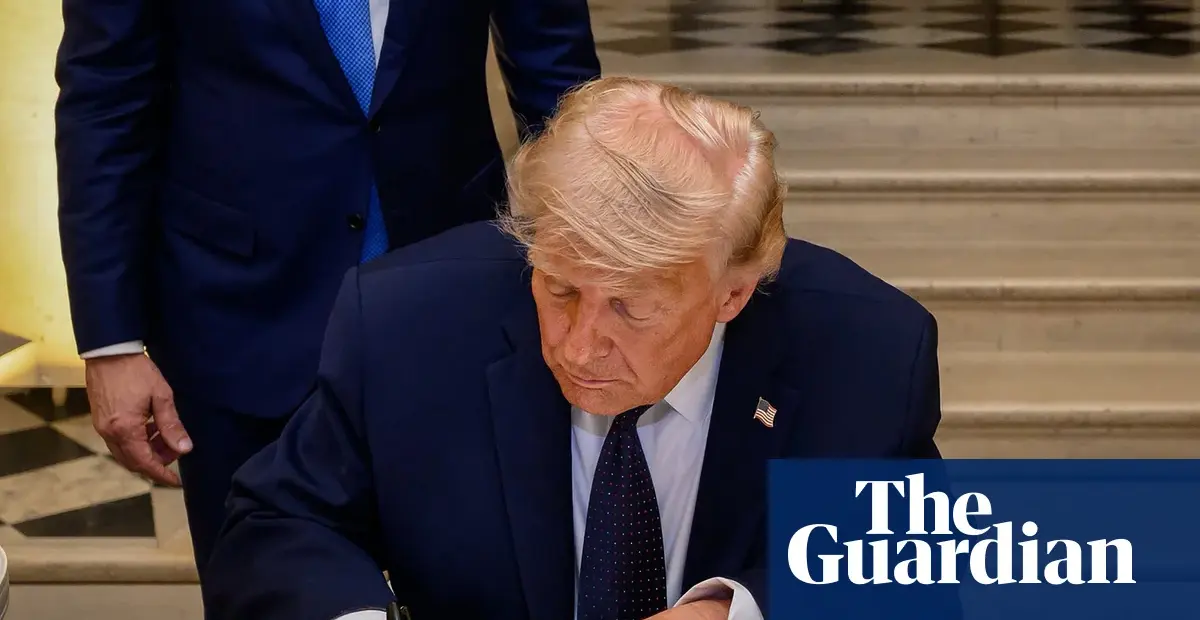
Trump hails Iran deal as economic war costs persist

13 reported3 unconfirmed
Donald Trump praised his Iran agreement this week, urging skeptics to trust Wall Street’s assessment and claiming credit for ending economic chaos that began when he started bombing Iran in late February. He warned that without the deal, “the alternative would be a worldwide depression.” However, by the weekend, the outlook dimmed after planned US-Iran peace talks in Switzerland were canceled, then reinstated, and Iran said Israeli bombing in Jordan justified closing the Strait of Hormuz again. Oil prices dropped below $80 a barrel after the agreement, but economists warn the economic impact will linger through 2026 and into early 2027. Gulf economies are expected to plunge into recession, with Oxford Economics forecasting a 2.6% GDP decline in the region. US inflation surged to 4.2%, its highest in three years, and American drivers pay $1 more per gallon than a year ago. The Federal Reserve may raise rates up to four times by the end of next year, while the European Central Bank has already raised rates for the first time since 2023. Many developing countries have been forced to ration fuel, and analysts assign a 60% chance of renewed fighting after the US midterm elections.
What’s reported
Trump hailed his Iran deal and said “the market loves it,” claiming credit for ending economic chaos from bombing Iran that began in late February.
Planned US-Iran peace talks in Switzerland were called off, then reinstated; Iran said Israeli bombing in Jordan justified closing the Strait of Hormuz again.
The Strait of Hormuz carries about 20% of the world’s oil supplies.
Oil prices dropped below $80 a barrel after the agreement, the first time since early in the war.
Oxford Economics expects Gulf region GDP to decline by 2.6% this year.
US inflation surged to 4.2%, its highest rate in three years; Trump said “I love the inflation.”
American drivers pay $1 more per gallon for petrol than a year ago.
Kevin Warsh was appointed as Federal Reserve chair; Dario Perkins of TS Lombard said the Fed may raise rates up to four times, to a range of 4.5% to 5%, by the end of next year.
The European Central Bank raised interest rates for the first time since 2023.
UK inflation hit 2.8% in April; Sanjay Raja of Deutsche Bank said inflation could rise another percentage point.
Many developing countries have rationed fuel due to rocketing prices.
Matt Gertken of BCA Research assigned a 60% chance of renewed fighting after the US midterm elections (from 4 November 2026 to end of 2027).
Ryan Sweet of Oxford Economics said the economic impact will be felt through the rest of 2026 and potentially early 2027.
Open questions
Whether the Strait of Hormuz will fully reopen and under what conditions (e.g., tolls or reduced ship traffic).
Whether the US-Iran agreement will hold, given risks of renewed fighting over Iran’s nuclear plans or Israeli actions.
The exact economic cost of the war, as the economic timeline does not equal the military timeline.
Key figures
Donald Trump, US president
Kevin Warsh, newly appointed Federal Reserve chair
Dario Perkins, head of global research at TS Lombard
Sanjay Raja, chief UK economist at Deutsche Bank
Ryan Sweet, chief global economist at Oxford Economics
Neil Shearing, chief global economist at Capital Economics
Matt Gertken, chief geopolitical strategist at BCA Research
Sources: The Guardian