


Trump and Iran president sign interim agreement to end war

17 reported3 unconfirmed
President Donald Trump and Iranian President Masoud Pezeshkian both digitally signed a memorandum of understanding on Wednesday outlining terms to end the war, according to U.S. officials. The White House confirmed Trump signed the document while at dinner at the Palace of Versailles with French President Emmanuel Macron. A U.S. official told NBC News that Vice President JD Vance and Iranian Parliament Speaker Mohammad Bagher Ghalibaf had signed the memorandum digitally on Sunday, with Trump as a witness. Vance is still scheduled to travel to Switzerland on Friday for a ceremonial signing. The 14-point interim agreement declares an intent for an immediate and permanent termination of military operations in the U.S.-Israeli war with Iran, which began Feb. 28. Under the deal, the U.S. will lift sanctions on Iran and unfreeze funds and assets, while Iran reaffirms it will not procure or develop nuclear weapons. The agreement also includes a commitment for the U.S. to work with regional partners on a plan for at least $300 billion for Iran’s reconstruction, though a senior U.S. official said the U.S. is not required to contribute to that fund.
What’s reported
Trump and Iranian President Pezeshkian both digitally signed the memorandum on Wednesday.
The White House confirmed Trump signed it at dinner at the Palace of Versailles with French President Macron.
A U.S. official said Vance and Ghalibaf signed the memorandum digitally on Sunday, witnessed by Trump.
Vance will travel to Switzerland on Friday for a ceremonial signing.
The U.S. will lift sanctions on Iran and unfreeze funds and assets under the 14-point memorandum.
The agreement declares intent for an “immediate and permanent termination of military operations” in the U.S.-Israeli war with Iran that began Feb. 28.
Both sides will commit to further talks toward a final deal within 60 days, extendable with mutual consent.
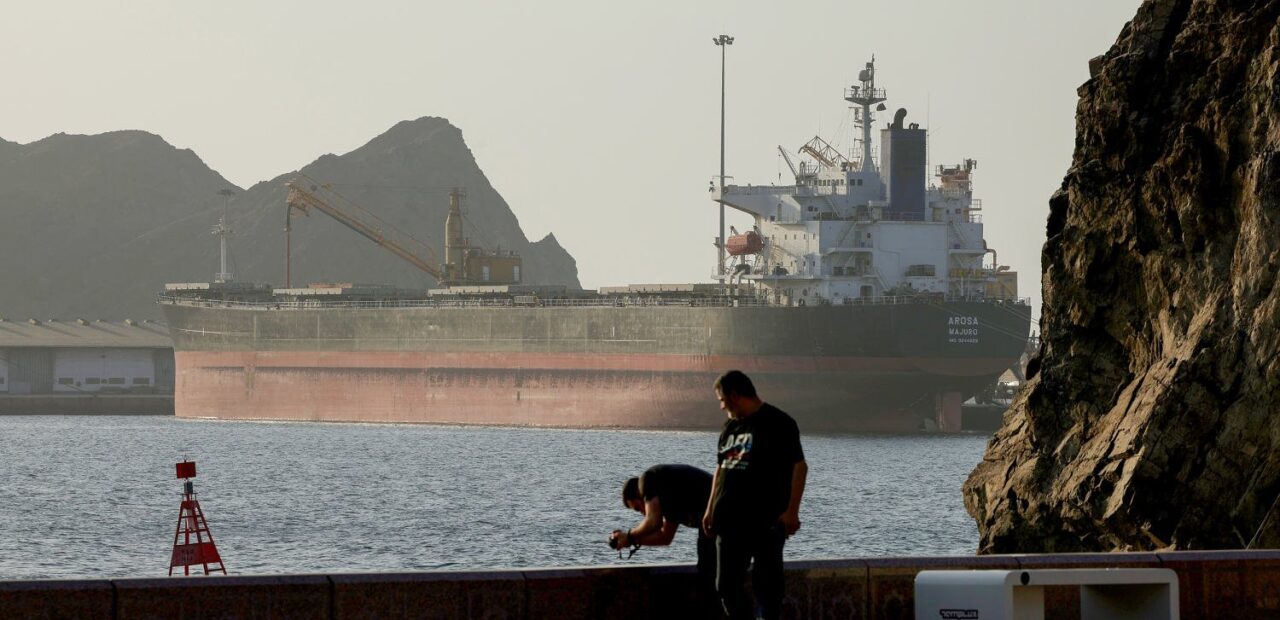
The Strait of Hormuz will reopen, with Iran allowing safe passage of commercial vessels for 60 days, followed by negotiations with Oman.
Iran reaffirms it will not procure or develop nuclear weapons, with a mechanism to be mutually agreed on its enriched material stockpile.
A senior U.S. official said sanctions relief will be tied to the nuclear settlement and Iran’s fulfillment of obligations.
The memorandum includes a commitment for the U.S. to work with regional partners on a plan for at least $300 billion for Iran’s reconstruction; the U.S. is not required to contribute.
Ghalibaf touted the agreement as a victory for Iran in comments on state TV on Wednesday.
A ceasefire was agreed in April to allow negotiations, though both sides have since continued with some strikes.
G7 leaders at the summit in Evian-les-Bains supported the agreement, calling it a “historic opportunity.”
Israel is not a direct party to the agreement; a U.S. official said Israel remains skeptical.
The agreement calls for an immediate end to all fighting, including in Lebanon, where fighting began March 2.
An executive mechanism will be established to monitor implementation, endorsed via a binding U.N. Security Council resolution.
Open questions
The specific mechanism for monitoring Iran’s enriched material stockpile is not detailed.
How the $300 billion reconstruction fund will be distributed is not specified.
Whether Israel will accept the terms regarding Lebanon is not resolved.
Key figures
President Donald Trump (U.S.)
Iranian President Masoud Pezeshkian
French President Emmanuel Macron
Vice President JD Vance (U.S.)
Iranian Parliament Speaker Mohammad Bagher Ghalibaf
Senior U.S. official (unnamed)
Second senior U.S. official (unnamed)
Sources: NBC News