


Trade body urges UK government to prioritize food supply resilience

10 reported
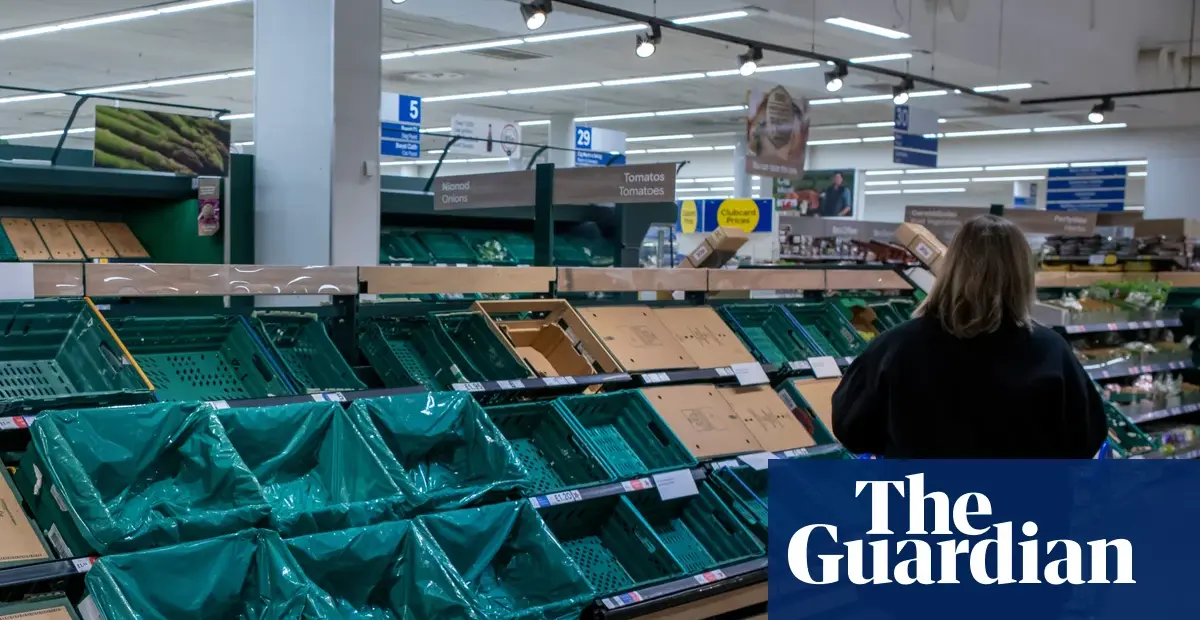
A trade body representing cold storage and logistics businesses has accused UK ministers of complacency regarding risks to the nation’s food supply, citing threats from fuel shortages, cyber attacks, and extreme weather. The Cold Chain Federation (CCF) urged the government to make potential disruption to the food system an “immediate national priority.” The CCF’s chief executive, Phil Pluck, warned that the potential for a major food crisis is as great as ever, noting that the UK is at the mercy of multiple increasingly dangerous factors. The CCF’s deputy chief executive, Tom Southall, said Britain’s food system has not been significantly tested since the second world war, when about half of the nation’s cold stores were in public ownership. The UK relies on overseas imports for more than a third of its food, most entering through four ports, making supplies vulnerable to interruption from international conflicts, border hold-ups, fuel shortages, or cold-storage failures due to flooding or extreme heat. The continued closure of the Strait of Hormuz has also interrupted global flows of fertilizer, necessary for half the world’s food production. The CCF called for cold stores and food transport hubs to be designated as critical infrastructure, and for staff at large cold stores and transport hubs to be given permanent essential-worker status. A government spokesperson responded that the food sector is one of the UK’s 13 critical national infrastructure sectors and that the government is investing in technology to increase yields and develop climate-resilient crops.
What’s reported
The Cold Chain Federation (CCF) accused ministers of complacency over risks to UK food supply.
The CCF urged the government to make potential disruption to the food system an “immediate national priority.”
Phil Pluck, CCF chief executive, said the potential for a major food crisis is as great as ever.
Tom Southall, CCF deputy chief executive, said the food system has not been significantly tested since WWII.
The UK imports more than a third of its food, mostly through four ports.
Threats include fuel shortages, cyber attacks, extreme weather, international conflicts, and border hold-ups.
The continued closure of the Strait of Hormuz has interrupted global fertilizer flows.
The CCF called for cold stores and transport hubs to be designated as critical infrastructure.
The CCF also called for permanent essential-worker status for staff at large cold stores and transport hubs.
A government spokesperson said the food sector is one of 13 critical national infrastructure sectors and that the government is investing in technology for food production.
Key figures
Phil Pluck, chief executive of the Cold Chain Federation (CCF)
Tom Southall, deputy chief executive of the CCF
A government spokesperson (not named)
Sources: The Guardian