



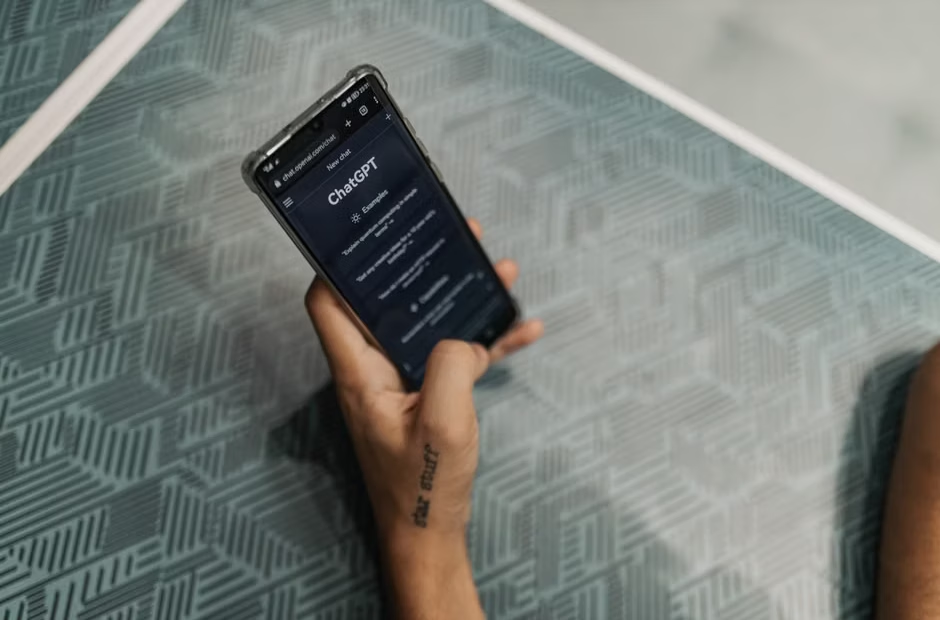
Therapist describes using ChatGPT for personal support after patients brought AI into sessions

6 reported
Clinical psychologist Sarah Darghouth writes that after patients began bringing AI-generated advice into therapy sessions, she found herself using ChatGPT for personal support during a parenting moment. Darghouth, an assistant professor at Massachusetts General Hospital and Harvard Medical School, recounts a patient who ended a relationship after AI suggested it, and another who successfully used AI suggestions to repair a marital conflict. She acknowledges feeling both impressed and “puny” comparing AI’s efficiency to her own slower therapeutic process. Darghouth warns patients about risks including worsened anxiety, false information, increased isolation, and potential delusional beliefs or suicidal thinking. However, she admits that when her nine-year-old had a tantrum on a Sunday morning, she used ChatGPT for calm coaching rather than writing in a diary as she advises patients. She questions whether human therapy’s value lies in its “mess” — conflict, hesitation, and slow emergence — which AI’s clean, all-knowing stance cannot replicate. Darghouth speculates that a minority of people with money may seek human therapists who can sit with emotional tornadoes and feel genuine happiness for patients.
What’s reported
A patient told Darghouth that ChatGPT advised ending a relationship, which the patient did the following session.
Another patient used AI to analyze a fight with his wife and successfully repaired the conflict using its suggestions.
Darghouth warns patients that AI can worsen anxiety, give false information, increase isolation, and lead to delusional beliefs or suicidal thinking.
Darghouth used ChatGPT for personal support when her nine-year-old had a tantrum, describing the help as “fake” but effective.
She notes that less than 7% of people with mental health and substance use conditions receive effective treatment.
Darghouth is a clinical psychologist in Boston and an assistant professor at Massachusetts General Hospital and Harvard Medical School.
Key figures
Sarah Darghouth: clinical psychologist in Boston, assistant professor at Massachusetts General Hospital and Harvard Medical School
Sources: The Guardian