



ECB Rate Decision Clouded by Renewed US-Iran Hostilities

11 reported1 unconfirmed
Investors are repricing expectations for the European Central Bank's July 22 monetary policy meeting after several consecutive days of strikes between the U.S. and Iran over control of the Strait of Hormuz drove oil prices higher. Bundesbank President Joachim Nagel described the situation as "extremely volatile" with "similarly high" uncertainty. The ECB had cut rates four times in the first half of 2025, then hiked by 25 basis points last month to a current deposit rate of 2.25%. Eurozone inflation eased to 2.8% in June, but energy costs rose 8.7% year-on-year. Brent crude futures traded above $85 per barrel on Wednesday, up from around $70 last week. Policymakers will decide without access to second-quarter GDP and July inflation data, due July 30 and 31.
What’s reported
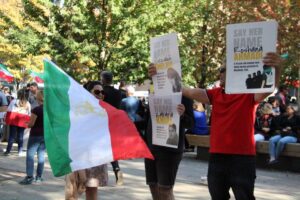
Several consecutive days of strikes between the U.S. and Iran over the Strait of Hormuz have driven oil prices higher.
ECB's next monetary policy meeting is July 22.
Bundesbank President Joachim Nagel said the situation is "extremely volatile" with "similarly high" uncertainty.
ECB cut rates four times in first half of 2025, from 3% to 2%, then hiked 25 basis points to 2.25% last month.
Eurozone headline inflation peaked at 3.2% in May, eased to 2.8% in June; energy costs rose 8.7% year-on-year in June.
Brent crude traded above $85 per barrel on Wednesday, up from around $70 last week.
Eurozone imported 57% of its energy needs in 2024, per Eurostat.
Eurozone economy contracted 0.2% year-on-year in Q1 2026.
Q2 GDP and July inflation data will not be available until July 30 and 31.
Market pricing shows roughly 20% chance of a rate hike next week; investors expect two more 25 basis point hikes by spring 2027.
Austrian central bank chief Martin Kocher said no second-round effects are visible yet.
Open questions
Whether the ECB will hike, hold, or cut rates at its July 22 meeting.
Key figures
Joachim Nagel, Bundesbank President and ECB rate setter
Martin Kocher, Austrian central bank chief
Michiel Tukker, ING rates strategist
Benjamin Schroeder, ING rates strategist
Sources: CNBC