


Sun-like star shows signs of consuming one of its own planets

6 reported2 unconfirmed
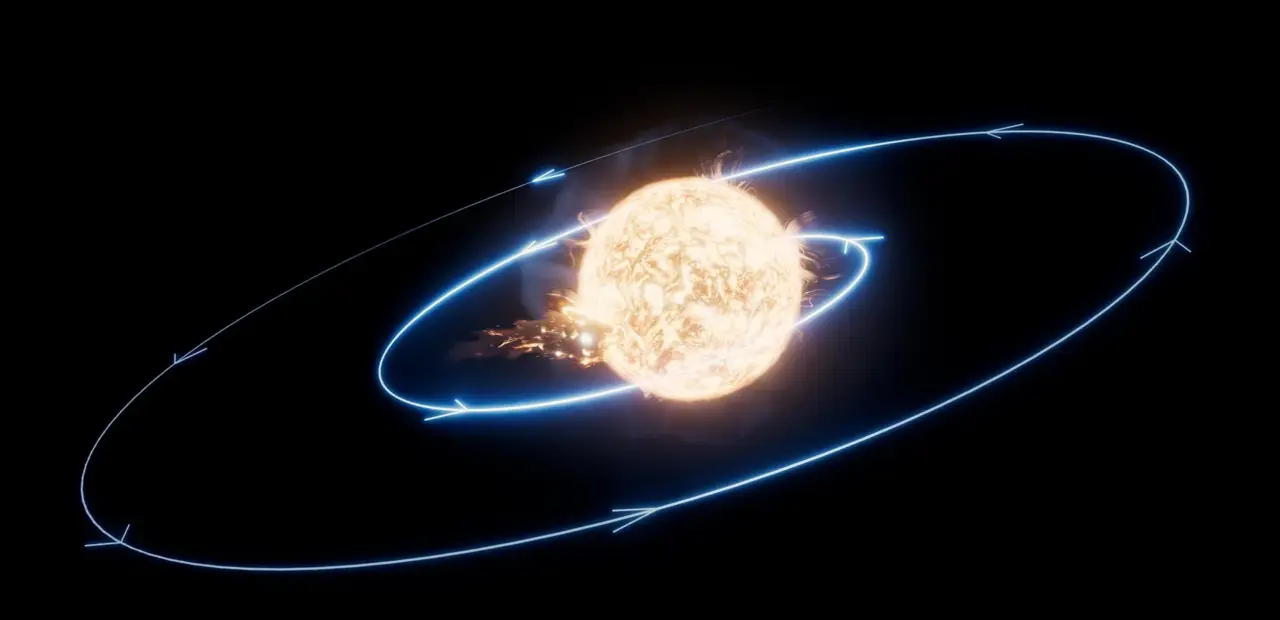
Astronomers have found evidence that TOI-5882, a sun-like star about 1,300 light-years from Earth, may have consumed one of its own planets. The team, led by University of Michigan astronomer Brooke Kotten, discovered an unusually high concentration of lithium in the star, which they interpret as a chemical fingerprint left by planetary material. The research, supported by NASA and the U.S. National Science Foundation, was published in The Astrophysical Journal. The star has a brown dwarf companion more than 20 times as massive as Jupiter, which may have disrupted the missing planet’s orbit and sent it into the star. The researchers estimate the swallowed planet was between a couple of Earth masses and the mass of Neptune. The team compared TOI-5882 to 62 similar stars and found its lithium level ranked at least in the 97th percentile. A few stars in the comparison group also showed high lithium, suggesting planetary engulfment may not be the only cause.
What’s reported
TOI-5882 is a sun-like star about 1,300 light-years from Earth.
The star contains far more lithium than expected for its type.
Researchers estimate the swallowed planet was between a couple of Earth masses and Neptune’s mass.
A brown dwarf companion more than 20 times Jupiter’s mass orbits the star and may have helped send the planet into it.
The team compared TOI-5882 to 62 similar stars; its lithium level is at least in the 97th percentile.
The research was published in The Astrophysical Journal and supported by NASA and the U.S. National Science Foundation.
Open questions
Whether the brown dwarf companion definitively caused the planet’s engulfment.
Whether planetary engulfment is the only process that can enrich a star with lithium, as a few comparison stars also showed high lithium.
Key figures
Brooke Kotten, graduate student researcher, University of Michigan Department of Astronomy, lead author
Seth Jacobson, assistant professor, Michigan State University, senior author
Melinda Soares-Furtado, assistant professor, University of Wisconsin, senior author
Sources: ScienceDaily