



Study Finds Socioeconomic Factors Shape Children’s Brain Development

6 verified4 unconfirmed1 contested
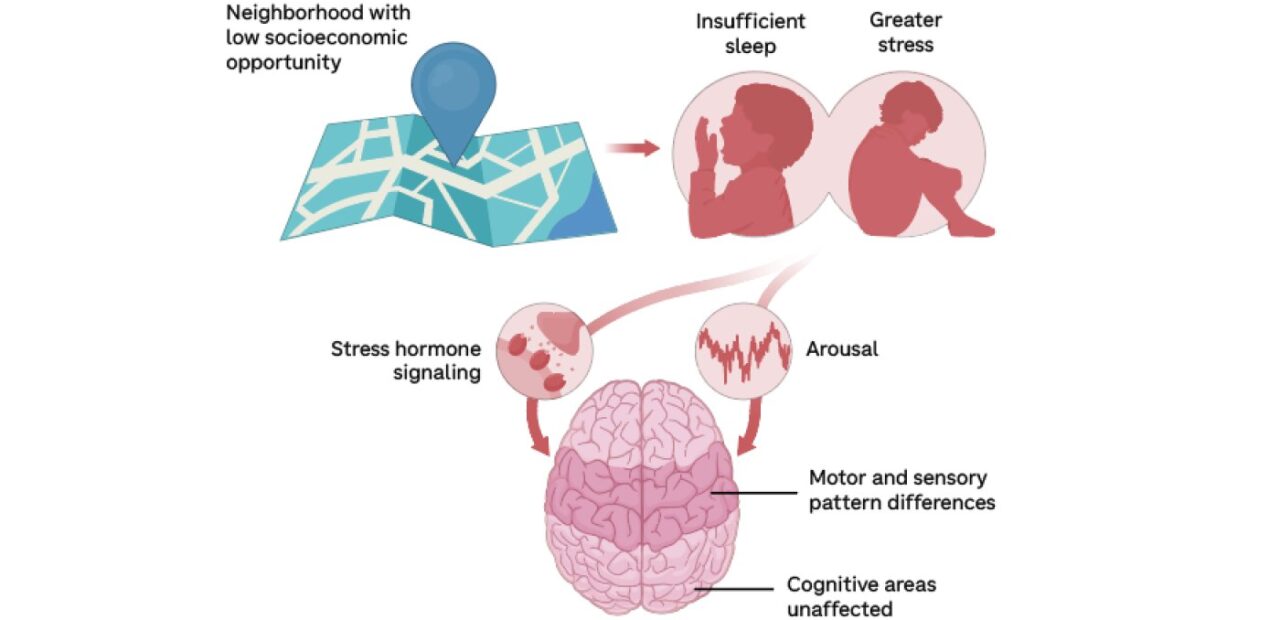
A study published in the journal Science found that socioeconomic factors such as household income and neighborhood quality are the dominant environmental influences on children’s brain development. Researchers analyzed brain scans from the federal Adolescent Brain Cognitive Development (ABCD) Study. They reported that these factors were more strongly linked to brain differences than IQ, mental health, or other variables. The brain differences were associated with less sleep and more stress in children from lower-income surroundings. The findings suggest that earlier studies linking brain structure to IQ may need re-evaluation because they did not account for socioeconomic status. The researchers cautioned that the study does not prove causation.
What’s verified
The study was published in the journal Science.
Researchers used data from the Adolescent Brain Cognitive Development (ABCD) Study.
Socioeconomic factors were the strongest environmental influence on brain structure and function, outweighing IQ and mental health.
Brain differences associated with socioeconomic status were linked to less sleep and more stress.
The study does not prove causation.
Earlier research linking IQ to brain structure may need re-evaluation.
Where accounts differ
One source reported the study included more than 2,300 children, while another reported nearly 12,000 children from the ABCD Study.
Not yet confirmed
One source stated that socioeconomic factors accounted for about 16% of the variability in children’s brain function.
One source reported that the findings were replicated in a UK Biobank sample and were unrelated to genetic ancestry.
One source quoted independent experts including Russell Poldrack and Theodore Satterthwaite.
One source quoted health economist Janet Currie cautioning about the need for further research.
Misconceptions
The sources indicate that earlier studies linking IQ to brain structure may be confounded by socioeconomic factors, and that the new findings call for re-evaluation of those prior results.
Key figures
Scott Marek, study co-lead, Washington University School of Medicine
Nico Dosenbach, study co-author, Washington University School of Medicine
Sources: NPR, statnews.com