


Study finds hidden genetic diversity helped brown tree snakes invade Guam

7 reported1 unconfirmed
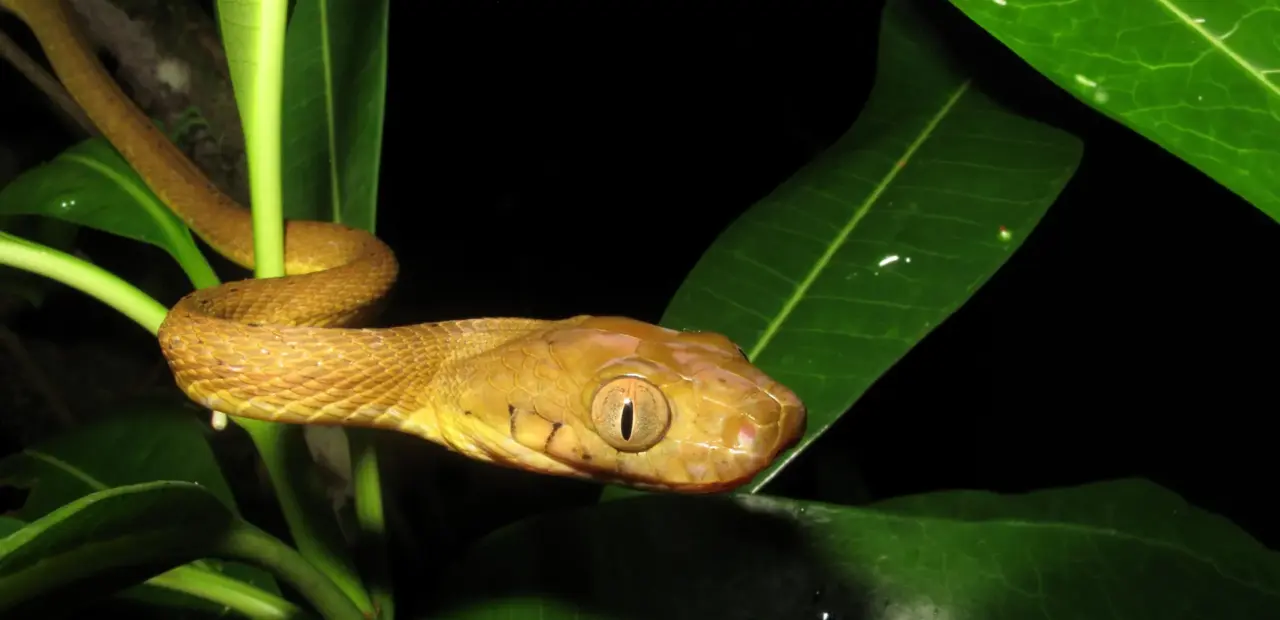
A study published July 24 in Science Advances suggests that hidden genetic diversity may explain how a small founding population of brown tree snakes became a devastating invasive species on Guam. Researchers from the University at Buffalo and the U.S. Geological Survey used advanced long-read DNA sequencing to examine the snake’s genome. They identified more than 19,000 structural variants, including DNA segments that had been duplicated, deleted, or rearranged. Many of these variations were concentrated in genes related to immunity and smell. The findings may help explain how a population founded by only a few snakes survived inbreeding and expanded to densities as high as 30,000 snakes per square mile in parts of Guam. The study’s authors note that the results could also offer hope for endangered species with small or inbred populations. It remains unclear whether the genetic diversity existed before the snakes reached Guam or emerged after the invasion began.
What’s reported
The brown tree snake likely reached Guam after World War II, possibly by hiding aboard military cargo planes.
The snakes have driven many of Guam’s native forest birds to local extinction and cause hundreds of power outages each year.
In some parts of Guam, snake densities have reached 30,000 per square mile.
Researchers identified more than 19,000 structural variants in the brown tree snake genome.
Many of these variants were concentrated in genes tied to immunity and smell.
The study was published on July 24 in Science Advances.
The research was led by the University at Buffalo in collaboration with the U.S. Geological Survey.
Open questions
It is unclear whether the structural variants were present before the snakes reached Guam or appeared after the invasion began. Comparisons with brown tree snakes from their native range would be needed to determine this.
Key figures
Trevor Krabbenhoft, PhD, associate professor in the UB Department of Biological Sciences and corresponding author of the study
Christopher Osborne, PhD, former PhD student in Krabbenhoft’s lab and now an aquatic biologist with State University of New York Oswego
Levi Gray, PhD, postdoctoral researcher in Krabbenhoft’s lab
M. Renee Bellinger, PhD, USGS scientist
Melia Nafus, PhD, USGS scientist
Brian Foote, UB research scientist
Steven Fleck, PhD, UB postdoctoral researcher
Sarah Chang, UB PhD student
Hannah Waterman, UB PhD student
Sources: ScienceDaily