

Rising waters of Lake Turkana displace residents and increase crocodile incidents

The Story
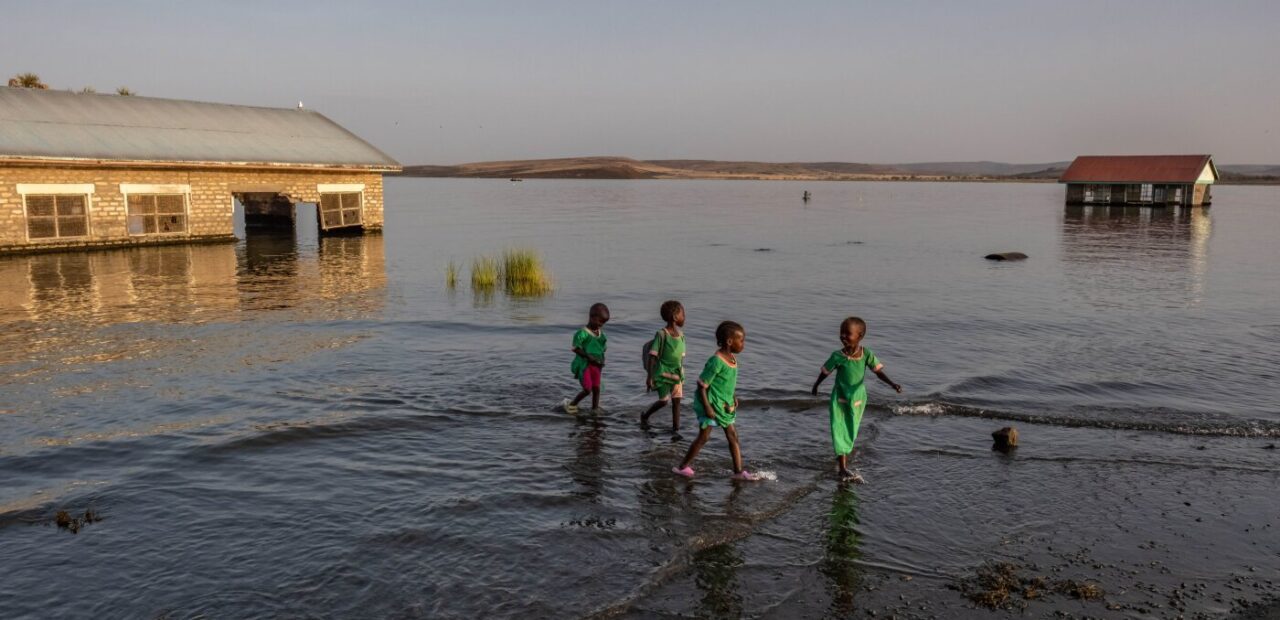
Lake Turkana, the world’s largest permanent desert lake, has been steadily rising since around 2018, displacing thousands of people and submerging villages, schools, and infrastructure along its shores in northern Kenya. The lake’s expansion is attributed to a combination of climatic factors and tectonic activity, according to researchers at the Kenya Marine and Fisheries Research Institute. Declining fish catches have led to increased competition among fishermen, spiking armed conflict and contributing to a rise in crocodile attacks as habitats change. The El Molo people, one of Africa’s smallest indigenous groups, have been especially affected, with their ancestral lands now underwater and their way of life threatened. The Kenyan government provides periodic food supplies and a reverse osmosis plant for fresh water, but residents say these measures are insufficient. Researchers note that while the lake still holds enough fish for a thriving industry, most subsistence fishermen lack motorized boats to reach deeper waters.
Key Facts
- The village on Komote Island is now separated from the mainland by about 660 yards of water.
- Fishermen’s catches have declined from over 250 pounds to as little as 10 pounds.
- Lake Turkana was placed on UNESCO’s List of World Heritage in Danger in 2018.
- In a single incident in February 2025, more than 20 people were killed in clashes between Turkana and Dassanech fishermen near the Ethiopian border.
- Nyabonte Kuras, a 24-year-old Dassanech fisherman, reported that his cousin was fatally shot and another friend killed in a January 2026 attack.
- Ng’ikalei Loito, 33, lost both legs after a crocodile attack while bathing in flooded scrubland.
- School enrollment at one primary school dropped from over 230 to 139 students due to flooding and safety issues.
- Over half the fishing vessels are rafts made of doum palms, and only 12% are motorized.
Conflicting Reports
No conflicting reports identified in the source article.
Still Unclear
No open questions identified in the source article.
Misconceptions
The article addresses the misconception that declining fish catches necessarily indicate overall fish stock depletion. Researcher Kevin Obiero states that recent surveys suggest the lake still holds enough fish, but most subsistence fishermen cannot access deeper fishing grounds.
Key Figures
- Alfred Lenkutuk, a 71-year-old El Molo man living on Komote Island
- John Wambisa, a geography teacher at a flooded school
- Kevin Obiero, a researcher at the Kenya Marine and Fisheries Research Institute (KMFRI)
- Nyabonte Kuras, a 24-year-old Dassanech fisherman who survived an armed attack
- Ng’ikalei Loito, a 33-year-old woman who lost her legs in a crocodile attack
Sources: NPR