

New method proposed to detect supermassive black hole pairs

8 reported
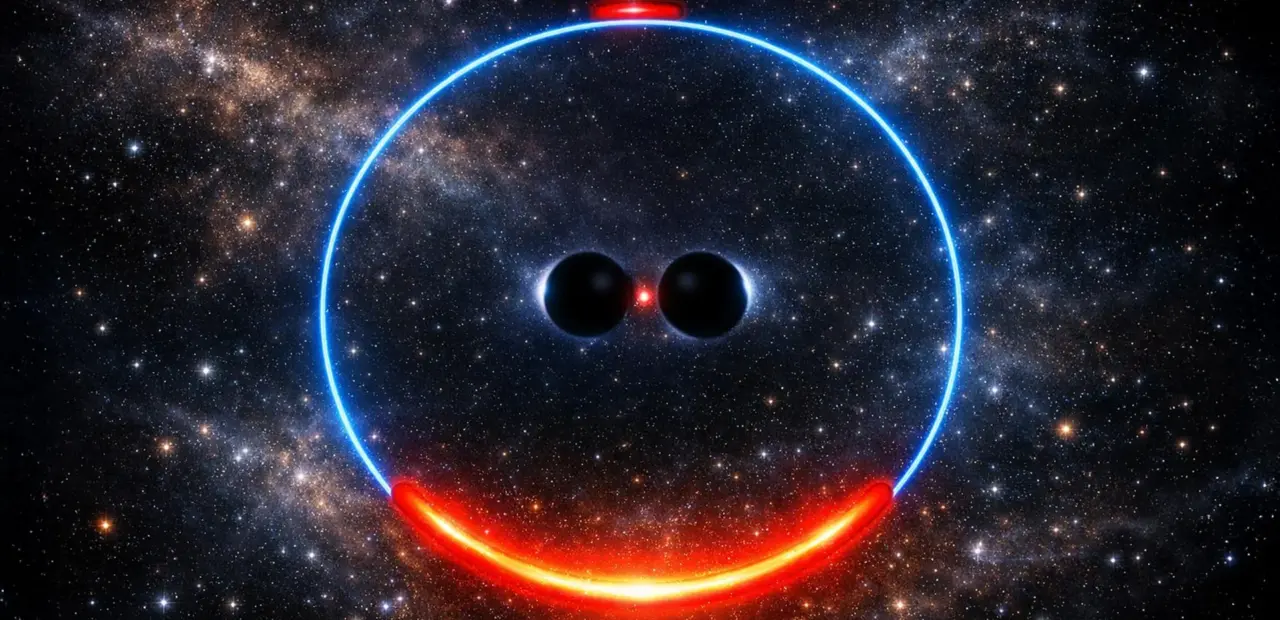
Astronomers from the University of Oxford and the Max Planck Institute for Gravitational Physics have proposed a new method to detect tightly bound pairs of supermassive black holes. In a study published in Physical Review Letters, the researchers suggest searching for stars that flash repeatedly as their light is magnified by the black holes’ gravity. The timing and brightness of these bursts could provide a unique fingerprint of black holes slowly spiraling toward a future collision. The method relies on gravitational lensing, where the black holes’ immense mass bends and focuses starlight. A binary system creates a diamond-shaped caustic curve that can produce extraordinarily bright, repeating flashes. The team found that the timing and intensity of these flashes should follow predictable trends, allowing researchers to estimate black hole masses and orbital details. Future observatories such as the Vera C. Rubin Observatory and the Nancy Grace Roman Space Telescope could expand the search for these events.
What’s reported
The study was published in Physical Review Letters on June 5, 2026.
Researchers from the University of Oxford and the Max Planck Institute for Gravitational Physics contributed.
The method involves searching for stars that flash repeatedly due to gravitational lensing by a supermassive black hole binary.
A binary system creates a diamond-shaped caustic curve where stars can appear dramatically brighter.
The flashes would occur repeatedly as the caustic curve rotates and changes shape.
The timing and intensity of flashes should follow predictable trends, not random patterns.
Analyzing these patterns could reveal black hole masses and orbital evolution details.
The Vera C. Rubin Observatory and Nancy Grace Roman Space Telescope could aid the search.
Key figures
Dr. Miguel Zumalacárregui, Max Planck Institute for Gravitational Physics
Professor Bence Kocsis, University of Oxford’s Department of Physics
Hanxi Wang, graduate student in Professor Kocsis’ group
Sources: ScienceDaily