



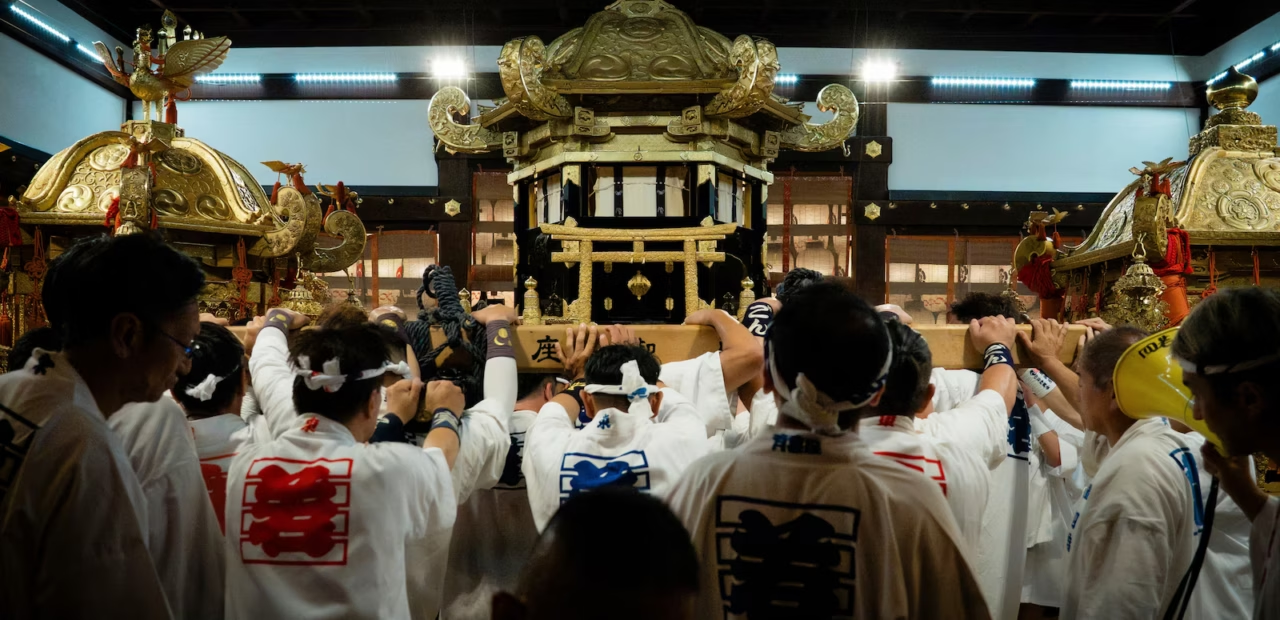
Japan’s Gion Matsuri festival brings Shinto traditions and towering floats to streets

11 reported
A centuries-old festival in Japan, the Gion Matsuri, brings towering floats to the streets in Shinto religious processions rooted in rituals dating back more than 1,000 years. The festival was born as a ritual to ward off epidemics and is celebrated in the former imperial city of Kyoto throughout July. The parades, accompanied by dances, music and song, draw large crowds and tourists every year, with the biggest floats weighing up to 12 tons. The festival originated in the late 9th century as a ritual to appease spirits believed to cause epidemics and to pray for protection from disease. At the heart of the celebration is Kyoto’s Yasaka Shrine, a Shinto site whose principal deity has long been revered as a protector against calamities. The shrine’s history reflects centuries of interaction between Shinto and Buddhism in Japan, with the sanctuary’s main deity once being Gozu Tennō, an ox-headed figure believed to have the power to spread or avert epidemics. Japan’s government separated Shinto and Buddhism in 1868 during the Meiji era, and Shinto was formally separated from the state after World War II.
What’s reported
The Gion Matsuri festival is celebrated in Kyoto, Japan, throughout July.
It originated more than 1,000 years ago as a ritual to ward off epidemics.
The biggest floats can weigh up to 12 tons.
The festival takes its name from Kyoto’s Gion District and “matsuri,” the Japanese word for festival.
At the heart of the celebration is Kyoto’s Yasaka Shrine, a Shinto site.
Until about 150 years ago, Yasaka Shrine was a Buddhist temple.
The shrine’s main deity was Gozu Tennō, an ox-headed figure believed to have power over epidemics.
Japan’s government separated Shinto and Buddhism in 1868 during the Meiji era.
Shinto was formally separated from the state after World War II.
A boy is chosen as a sacred messenger to the gods during the parade, sitting on a float with his feet never touching the ground.
A sacred tree called the shingi is placed at the top of one of the floats, believed to be where a deity descends.
Key figures
Katsushi Horikawa: participant who rides atop a float
Fabio Rambelli: religious studies professor at the University of California, Santa Barbara
Andrea De Antoni: professor of anthropology and religious studies at the University of Kyoto
Jacques Garrigues: Frenchman who has lived in Kyoto for three decades and attended the procession
Atsushi Matono: person responsible for erecting the shingi (sacred tree) on a float
Sources: abcnews.com