



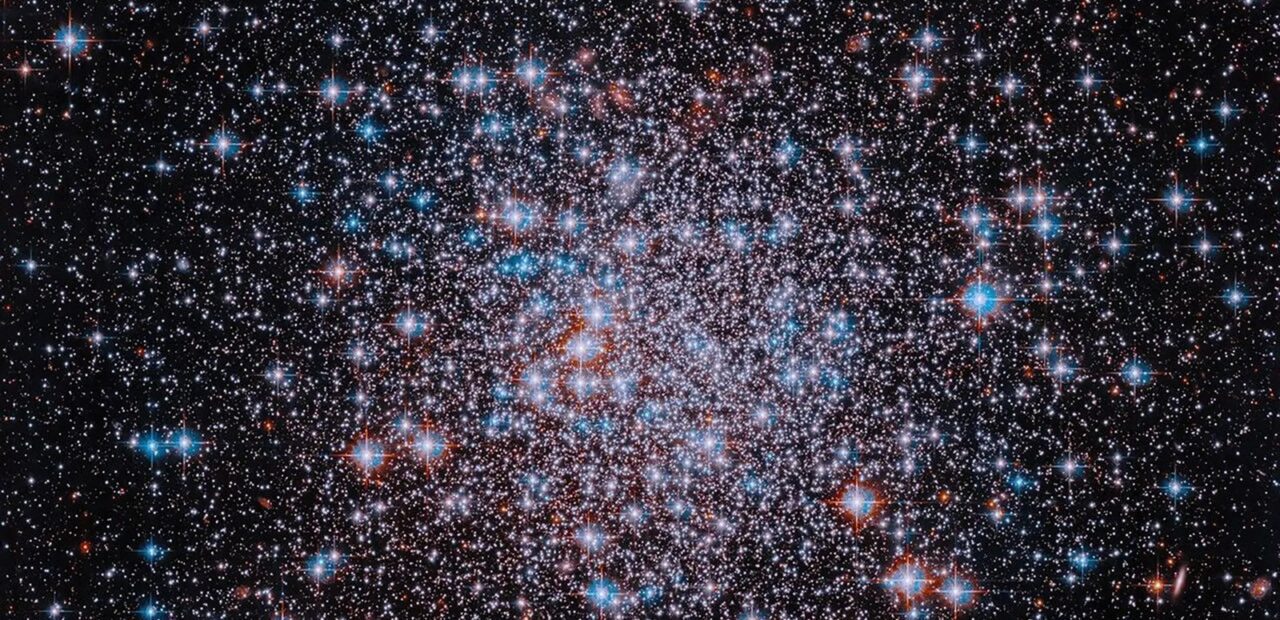
Hubble Image Linked to Two Different Globular Clusters in Reports

3 verified4 unconfirmed1 contested
Two independent reports have associated a new Hubble Space Telescope image with different globular clusters, creating confusion over the featured object. One report states the image shows NGC 6426, an ancient cluster in the outer halo of the Milky Way, and notes the image was released to mark the nation’s 250th anniversary. The other report identifies the same image as Messier 3 (M3), a massive globular cluster. Both reports describe globular clusters as dense, spherical swarms of stars held together by gravity. They also agree that about 150 such clusters are known in the Milky Way and that the stars within a single cluster formed at roughly the same time from a common gas cloud. The conflicting identifications leave the true subject of the image unclear.
What’s verified
Globular clusters are dense, spherical collections of stars bound by gravity.
Approximately 150 globular clusters are known to exist in the Milky Way.
Stars in a given globular cluster formed at roughly the same time from the same cloud of gas.
Where accounts differ
One report identifies the cluster in the Hubble image as NGC 6426, a globular cluster about 13 billion years old in the outer halo of the Milky Way, released for the nation’s 250th anniversary. Another report identifies the cluster as Messier 3 (M3), one of the Milky Way’s most massive globular clusters.
Not yet confirmed
The exact age of the cluster (13 billion years reported by one source, no age given by the other).
The purpose of the image release (250th anniversary mentioned by one source, not by the other).
Details about the cluster’s chemical composition, two distinct stellar populations, and color interpretation come from only one source.
The specific processing credits and date of release (July 5, 2026) are reported by only one source.
Key figures
No figures confirmed by both sources. One source credits A. Sarajedini (Florida Atlantic University) and Gladys Kober (NASA/Catholic University of America).
Sources: ScienceDaily, NASA