


Hawaii tests recycled ocean plastic and fishing nets in asphalt roads

8 reported2 unconfirmed
Researchers in Hawaii are exploring the use of discarded fishing nets and household plastic waste in asphalt for roads, according to findings presented at the spring meeting of the American Chemical Society. The work, led by the Center for Marine Debris Research at Hawaiʻi Pacific University in partnership with the Hawaii Department of Transportation, aims to address marine pollution and landfill overflow. Early tests on a residential street on Oahu showed that pavement containing recycled polyethylene did not release more polymers than conventional polymer-modified asphalt. The researchers used pyrolysis gas chromatography-mass spectrometry to analyze road dust and found that tire wear dominated the polymer signal, with very few polyethylene particles detected. The study is funded by the Hawaii Department of Transportation, and further testing is needed to evaluate long-term durability.
What’s reported
Hawaii researchers are testing recycled plastic and fishing nets in asphalt roads.
The work was presented at the spring meeting of the American Chemical Society.
The Center for Marine Debris Research at Hawaiʻi Pacific University leads the research.
The Hawaii Department of Transportation funded the study.
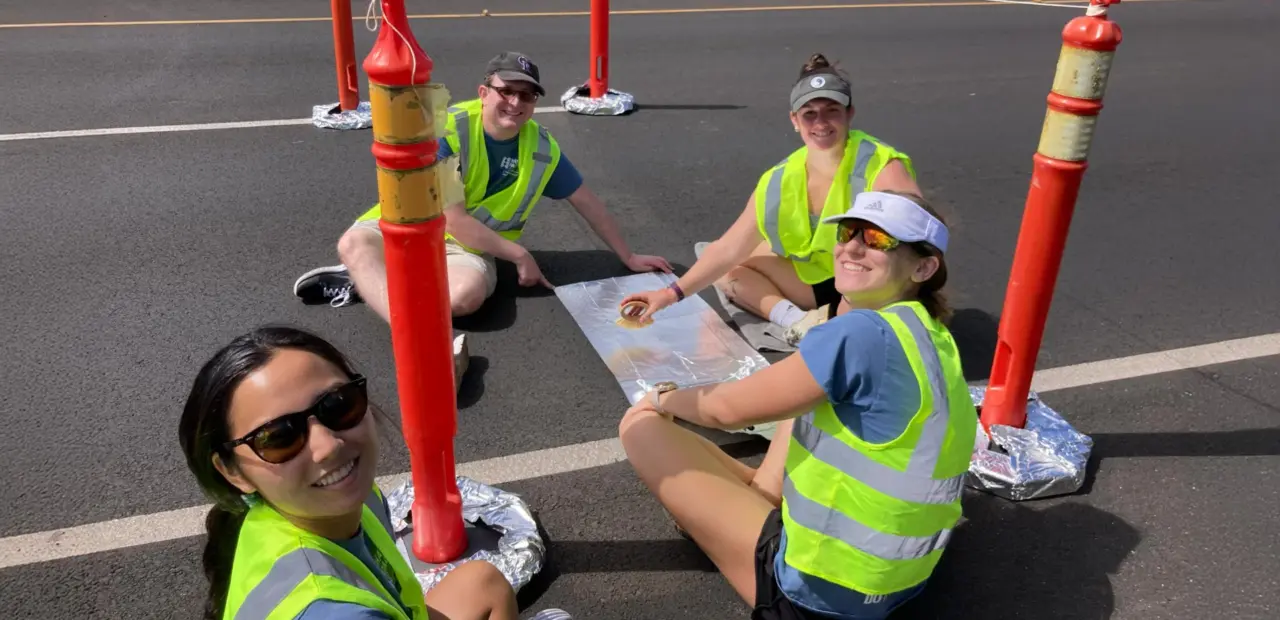
Three asphalt mixtures were tested on a residential street on Oahu: standard SBS, recycled polyethylene from Honolulu’s recycling program, and polyethylene from discarded fishing nets.
Early findings showed recycled plastic pavement did not release more polymers than conventional pavement.
Tire wear swamped the polyethylene signal in road dust analysis.
The CMDR’s Bounty Project has removed 84 tons of derelict fishing gear from the Pacific Ocean.
Open questions
Long-term durability of the recycled plastic roads has not yet been confirmed.
Whether the approach will be scaled beyond the initial test sections.
Key figures
Jeremy Axworthy, researcher at the Center for Marine Debris Research (CMDR) at Hawaiʻi Pacific University
Jennifer Lynch, director of CMDR and leader of the research team
Sources: ScienceDaily