

Cuba announces 176 free-market reforms, observers call it most sweeping since revolution

9 reported
Cuba has announced a package of 176 free-market reforms that observers describe as the most sweeping economic overhaul of the island’s communist economy since the Cuban revolution. The measures aim to further decentralize the state-run economy, which has been strained by a tightened U.S. embargo under President Donald Trump. The plan includes expanded space for private businesses, imports and exports without state intermediation, free hiring of personnel, authorization for private banks, and investment by Cubans abroad, as well as permission for fast-food chains to operate on the island. Cuban authorities cautioned that implementation could be slow and that measures will not be viable if the U.S. does not lift the energy and financial embargo imposed in January. The embargo has blocked Cuba from fuel, its main energy source, deepening a crisis that has been deteriorating for five years, with blackouts lasting up to 20 hours a day. Cuban President Miguel Díaz-Canel said the proposed measures were based on an analysis of the Vietnamese and Chinese models, communist countries with market economies. Analysts cited in the article said the reforms will only have a true effect if complemented with the gradual lifting of U.S. sanctions, and that obstacles include mistrust from potential investors and slow bureaucracy.
What’s reported
Observers called the reforms the most sweeping economic overhaul since the Cuban revolution.
The package includes 176 measures to decentralize the state-run economy.
The plan allows private businesses, imports/exports without state intermediation, free hiring, private banks, investment by Cubans abroad, and fast-food chains.
Cuban authorities said implementation could be slow and depends on the U.S. lifting the energy and financial embargo.
Since January, the U.S. embargo has blocked Cuba from fuel, causing blackouts up to 20 hours a day.
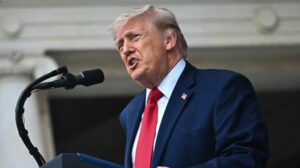
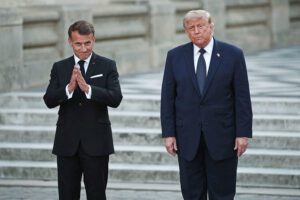
U.S. President Donald Trump and Secretary of State Marco Rubio are maintaining a policy of maximum pressure and have not ruled out military force.
Raul Guillermo Rodriguez Castro, grandson of former President Raúl Castro, said Cuba does not represent a threat to the U.S. and seeks a “very Cuban” economic model.
Cuban President Miguel Díaz-Canel said the measures were based on Vietnamese and Chinese models.
Analysts said the reforms will only have effect if U.S. sanctions are lifted, and obstacles include investor mistrust and slow bureaucracy.
Key figures
Luis Carlos Battista, Cuban-American political scientist and lawyer, doctoral candidate at the University of Salamanca
Raul Guillermo Rodriguez Castro, grandson of former President Raúl Castro
Cuban President Miguel Díaz-Canel
U.S. President Donald Trump
U.S. Secretary of State Marco Rubio
Lee Schlenker, research associate at the Quincy Institute in Washington
Paolo Spadoni, associate professor in the Department of Social Sciences at Augusta University in Georgia
Sources: abcnews.com