

Child tooth and green stones reveal 5,500-year-old cave mystery in Pyrenees

8 reported5 unconfirmed
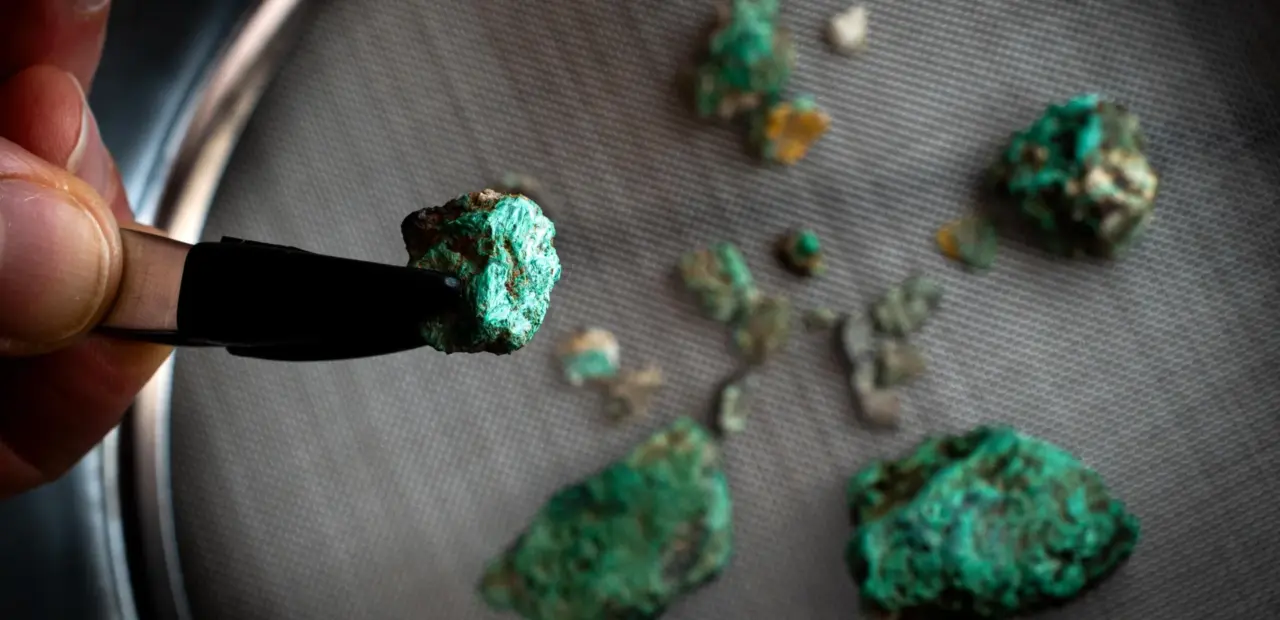
Archaeologists have uncovered evidence in a high-altitude cave in the eastern Pyrenees that may indicate early copper mining and repeated prehistoric visits over roughly 2,000 years. The cave, known as Cave 338, sits more than 7,300 feet above sea level in the Freser Valley. Researchers excavated a 6-square-meter area near the entrance and found four distinct layers of human activity, including 23 hearths containing crushed and burned fragments of green mineral that resembles malachite, a copper-rich ore. Human remains were also recovered, including a finger bone and a baby tooth from at least one child about 11 years old, raising the possibility of hidden burials. Two pendants were found: one made from a shell and another from a brown bear tooth. The findings challenge the belief that prehistoric communities only briefly passed through high-altitude environments. The research was published in Frontiers in Environmental Archaeology.
What’s reported
The cave is located in the Freser Valley of the eastern Pyrenees at an elevation of more than 7,300 feet (2,235 meters).
Archaeologists excavated a 6-square-meter area near the cave entrance and identified four distinct layers of human activity.
The deepest and oldest layer contained only charcoal fragments dated to approximately 6,000 years ago.
Researchers uncovered 23 hearths containing crushed and burned fragments of green mineral that resembles malachite, a copper-rich ore.
Radiocarbon dating places hearths from the second layer at roughly 3,000 years old and the third layer between about 5,500 and 4,000 years ago.
Human remains from the third layer include a finger bone and a baby tooth from at least one child about 11 years old.
Two pendants were recovered: one made from a shell and another from a brown bear tooth, both from prehistoric contexts likely around the second millennium BC.
The identification of the green mineral as malachite is still preliminary, with ongoing research by the University of Granada and the Autonomous University of Barcelona.
Open questions
Whether the finger bone and baby tooth belonged to the same child.
The cause of death of the child.
Whether additional burials are hidden deeper within the cave.
The precise identity and origin of the green mineral.
The full depth and sequence of the site, as excavation has not yet reached the bottom.
Key figures
Prof Carlos Tornero, lead author, Catalan Institute of Human Paleoecology and Social Evolution
Dr. Julia Montes-Landa, co-author, University of Granada
Sources: ScienceDaily