



Alevi community in Germany: 13% of Muslims, historical persecution detailed

A report from DW describes the Alevi community in Germany, which makes up approximately 13% of Muslims living in the country. The article traces the faith’s roots in rural Anatolia and its oral traditions, noting that migration from Turkey since the 1950s led to the loss of many village communities. Alevism, which developed from the 13th century, combines Central Asian shamanism, Shiite Islam, and Muslim mysticism. The text states that Alevis faced persecution under the Ottoman Empire and still experience mistrust in modern-day Turkey, citing the 1937/38 Dersim massacre and the 1993 Sivas arson attack as key events. In response, Alevi organizations have proliferated in Germany, with around 200 groups under the AABF umbrella, and the faith is recognized in North Rhine-Westphalia and Berlin. New institutions, such as the Alevi-Bektashite Cultural Institute (opened early 2026) and the Institute for Alevi Theology at the University of Hamburg (founded 2024), aim to preserve and study Alevi culture and history. Scholars like Gülizar Cengiz, Cem Kara, and Markus Dressler are quoted on efforts to archive manuscripts and research Alevi ethnohistory.
What’s reported
Alevis make up around 13% of Muslims in Germany.
Alevism developed from the 13th century and is the second largest religious community in Turkey after Sunni Islam.
The faith combines Central Asian shamanism, Shiite Islam, and Muslim mysticism.
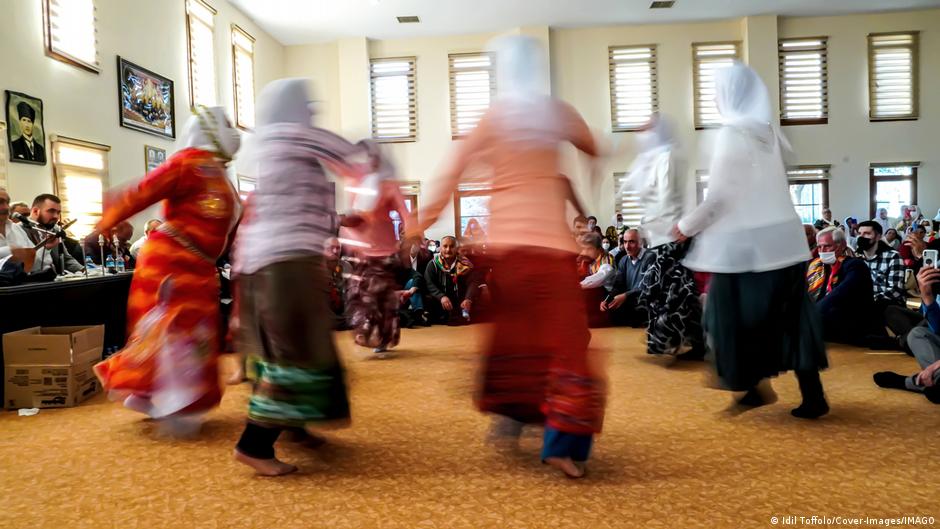
Alevi rituals include the Cem ceremony (men and women) and Semah dance.
The 1937/38 Dersim massacre killed tens of thousands of Alevis; the 1993 Sivas arson attack killed 35.
Around 200 Alevi organizations exist in Germany under the AABF umbrella.
The Alevi-Bektashite Cultural Institute in North Rhine-Westphalia opened in early 2026.
The Institute for Alevi Theology at the University of Hamburg was founded in 2024 and will train theology students from 2027.
A long-term research project on Alevi ethnohistory was launched in 2026 by Leipzig University.
Open questions
The article does not specify the total number of Alevis in Germany or the exact demographic breakdown beyond ethnic groups mentioned (Turks, Kurds, Zaza).
Key figures
Gülizar Cengiz – Chair of the Alevi-Bektashite Cultural Institute, member of the Bektashi order.
Cem Kara – Professor of Alevi Theology at the University of Hamburg.
Markus Dressler – Professor of modern Turkish studies at Leipzig University’s Institute of Religious Studies.
Haji Bektash – Muslim mystic, quoted by Cengiz.
Sources: dw.com