



Scientists link Giant’s Causeway to global volcanic event

7 reported
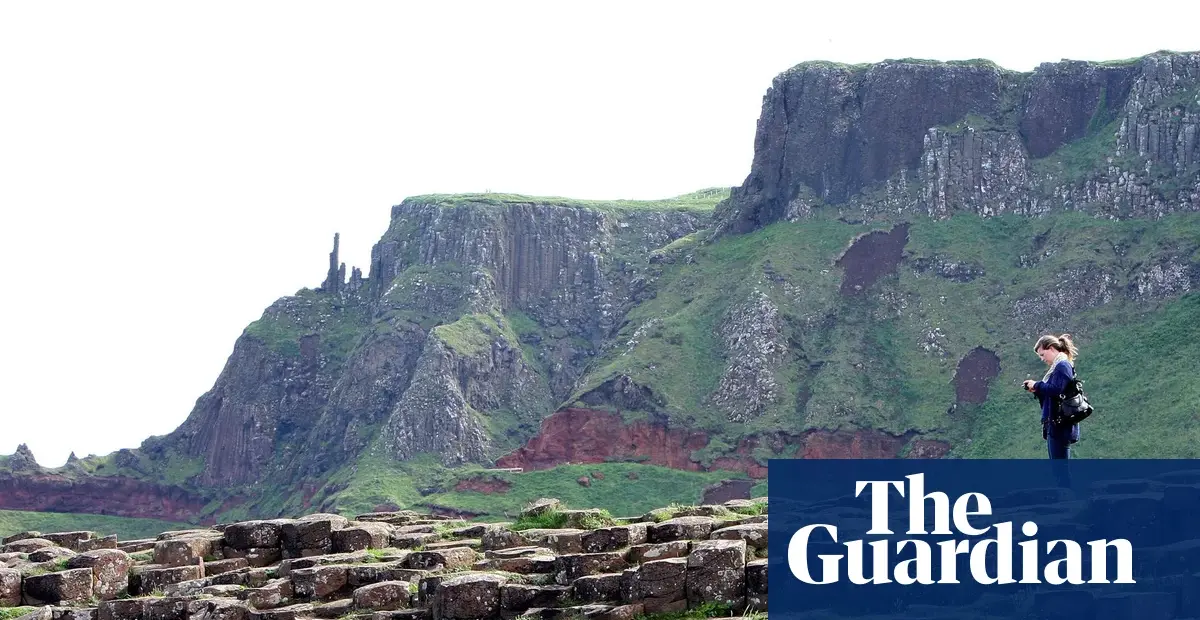
A new study has determined that the Giant's Causeway in Northern Ireland was formed by intense volcanic activity during a major globally impacting event about 60 million years ago, not by a legendary battle between giants. Geochronologists from the British Geological Survey found the causeway's 40,000 basalt columns formed over 5.5 million years, which is 8 million years less than previously estimated. For the first time, researchers connected the first lava flows on the Northern Irish plateau to the same volcanic activity that formed basalt columns in Scotland's Fingal's Cave on Staffa, rocks previously thought to have formed millions of years later. The study also links rock formations on the Mourne mountain range, the Hebridean isle of Rùm, and magmatic activity on Skye to this volcanic activity. Dr Simon Tapster, a geochronologist at the British Geological Survey, stated that by piecing together volcanic rocks across the North Atlantic, they reassessed a major globally impacting volcanic event and found it occurred in a much shorter duration. The research is part of a wider BGS initiative to improve understanding of UK geology through better quantifying geological time.
What’s reported
The Giant's Causeway was formed by intense volcanic activity during a "major globally impacting volcanic event" about 60 million years ago.
The causeway's 40,000 interlocking basalt columns formed over 5.5 million years, 8 million years less than previously estimated.
For the first time, scientists connected the first lava flows on the Northern Irish plateau to the same volcanic activity that formed basalt columns in Fingal's Cave on Scotland's Staffa.
Rock formations on the Mourne mountain range, the Hebridean isle of Rùm, and magmatic activity on Skye are also linked to this volcanic activity.
The Giant's Causeway is a Unesco world heritage site and has been named one of the greatest natural wonders of the UK.
According to Irish folklore, the causeway was created by the giant Finn McCool to cross to Scotland to confront Benandonner.
The causeway formed when thick molten rock rose through cracks in the Earth's crust, cooled, contracted, and fractured into mostly hexagonal columns.
Key figures
Dr Simon Tapster, geochronologist at the British Geological Survey (BGS)
Sources: The Guardian