


Fed’s Goolsbee: Energy inflation from Iran war persists longer than expected

12 reported
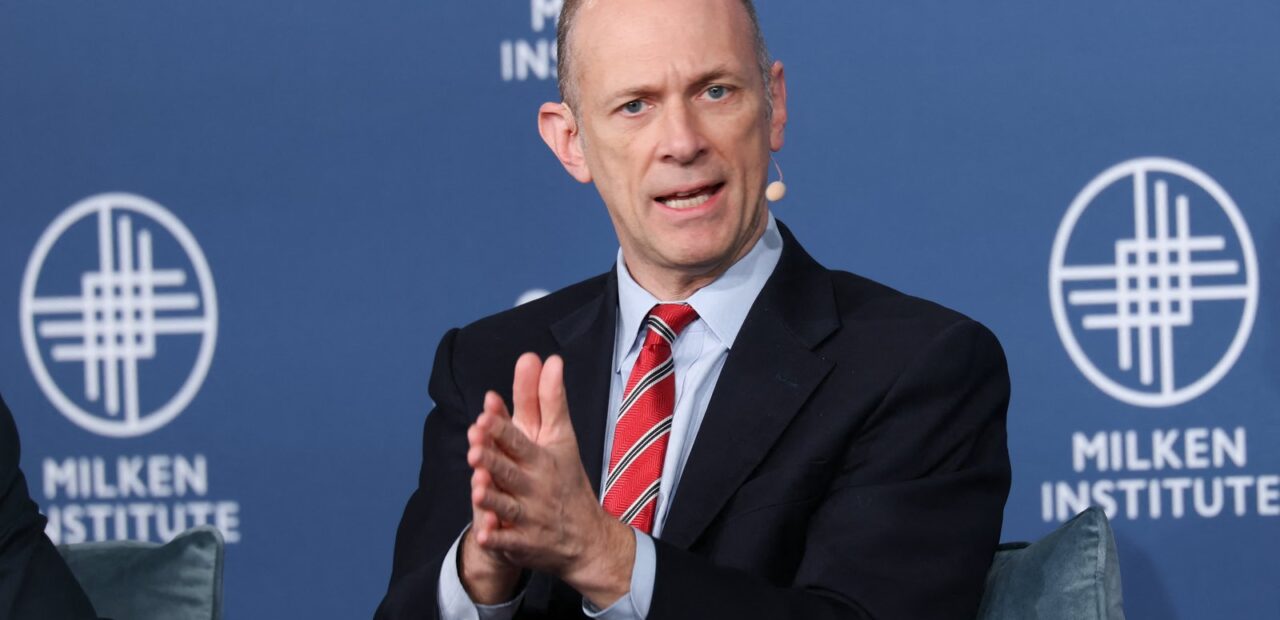
Chicago Federal Reserve President Austan Goolsbee said Thursday that energy inflation tied to the war in Iran has lasted longer than expected, creating a “stagflationary shock” for Asian economies. Speaking to CNBC’s Kaori Enjoji at the Bank of Japan-IMES Conference, Goolsbee noted that initial futures market estimates had expected energy prices to be “a lot lower” than current levels. While oil prices have eased recently on signs of progress in U.S.-Iran peace talks, prices remain well above pre-war levels. Brent crude futures gained over 1.81% to $96 per barrel, and West Texas Intermediate gained 1.71% to $90.21 per barrel, compared with $72 and $67.02 respectively the day before the U.S. and Israel launched strikes on Iran. Goolsbee, who voted against the Federal Reserve’s final rate cut in 2025, said he dissented because he wanted evidence that inflation would not be persistent, and he does not regret that decision. He also expressed concern that financial markets may run ahead of actual economic benefits from AI adoption, potentially overheating the economy before productivity gains materialize.
What’s reported
Energy inflation tied to the war in Iran has lasted longer than expected, according to Chicago Fed President Austan Goolsbee.
Goolsbee spoke to CNBC’s Kaori Enjoji at the Bank of Japan-IMES Conference.
Initial futures market estimates had expected energy prices to be “a lot lower” than current levels.
Oil prices have eased recently on signs of progress in U.S.-Iran peace talks but remain well above pre-war levels.
Brent crude futures gained over 1.81% to $96 per barrel; WTI gained 1.71% to $90.21 per barrel.
Pre-war prices were $72 for Brent and $67.02 for WTI the day before the U.S. and Israel launched strikes on Iran.
Goolsbee said Asian economies face a “stagflationary shock of the old-fashioned variety” because they are energy importers.
Goolsbee voted against the Federal Reserve’s final rate cut in 2025 and does not regret it, as inflation has not proved temporary.
He said if inflation moves back toward the Fed’s 2% target, interest rates would “ultimately settle at some place well below where they are today.”
Goolsbee expressed concern that AI-related stock market gains could overheat the economy before productivity increases occur.
He said policymakers should watch for signs of consumer spending fueled by stock market wealth and data center investment driving up costs.
Goolsbee noted that AI productivity growth could eventually affect Asian economies as well.
Key figures
Austan Goolsbee, Chicago Federal Reserve President
Kaori Enjoji, CNBC correspondent
Sources: CNBC