



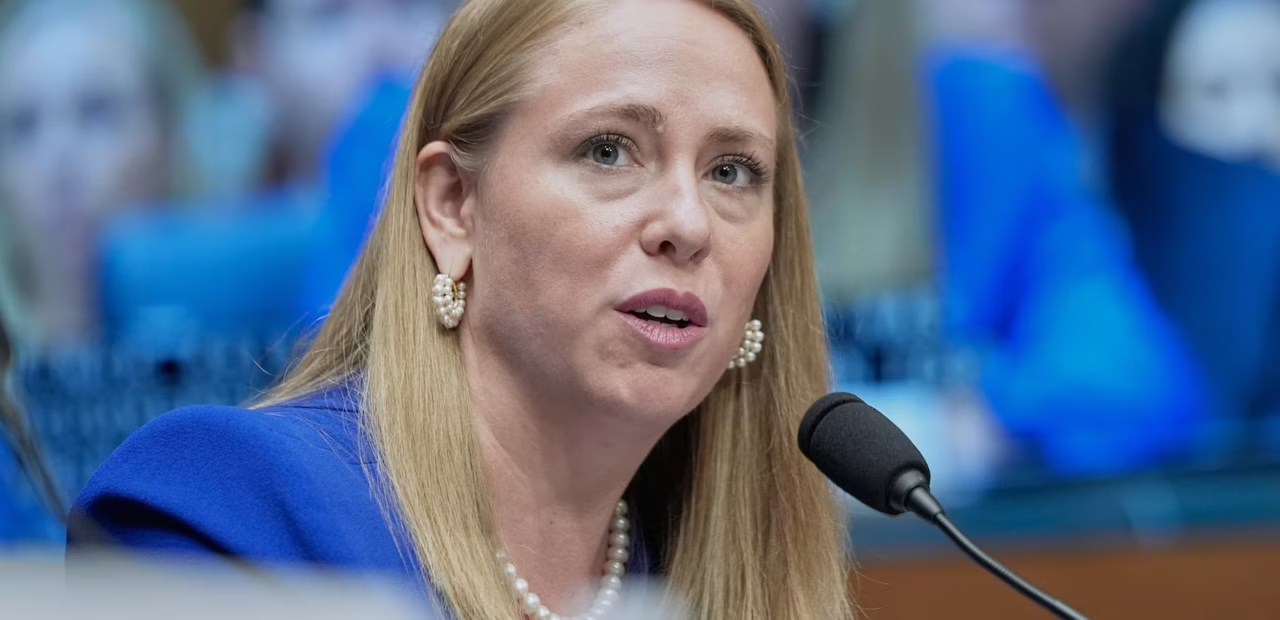
EEOC votes to end 60-year employer demographic reporting requirement

5 verified6 unconfirmed
The U.S. Equal Employment Opportunity Commission voted 2-1 along party lines Tuesday to advance a Trump administration proposal that would end a requirement for large employers to submit annual workforce demographic reports. The requirement, in place since 1966, has applied to private sector employers with at least 100 employees and federal contractors with at least 50 workers. The proposal will now enter a 30-day public comment period before final approval. Republican commissioners argued the reporting imposes costs on businesses and may encourage discrimination, while Democratic opponents said eliminating the data would undermine the agency's ability to enforce civil rights laws. The EEOC last collected data for 2024 but has not publicly released it; collection for 2025 would have begun this year.
What’s verified
The EEOC's Republican majority voted 2-1 to rescind the annual EEO-1 demographic data collection requirement from private sector employers.
The requirement has been in place since 1966 for companies with at least 100 employees and federal contractors with at least 50 workers.
The proposal will be published in the Federal Register for a 30-day public comment period.
EEOC Chair Andrea Lucas argued the requirement risks encouraging racial stereotyping and discrimination by employers.
Democratic Commissioner Kalpana Kotagal voted against the proposal, saying it would weaken the EEOC's ability to protect workers.
Not yet confirmed
The proposal was recommended by Project 2025, the Heritage Foundation's policy blueprint, according to a single report.
Source 1 reports that women held 34.5% of executive and senior manager roles in 2023, up from 29.2% a decade earlier.
Source 1 notes that 24 S&P 100 companies in 2025 chose not to disclose EEO-1 data after having done so the year before.
Source 2 reports that states might step in to create their own demographic reporting requirements if federal rules end.
Source 2 states that the vote occurred on Black Women's Equal Pay Day, noting Black women make 64 cents for every dollar paid to white men, according to the Institute for Women's Policy Research.
The EEOC is prohibited from publicly releasing individual company forms, only publishing aggregate data.
Key figures
Andrea Lucas – EEOC Chair
Kalpana Kotagal – Democratic EEOC Commissioner
Donald Trump – President of the United States
Alexandra Garrison Barnett – labor and employment attorney at Alston & Bird
Valerie Rawlston Wilson – labor economist, Economic Policy Institute
Sources: abcnews.com, stateline.org