



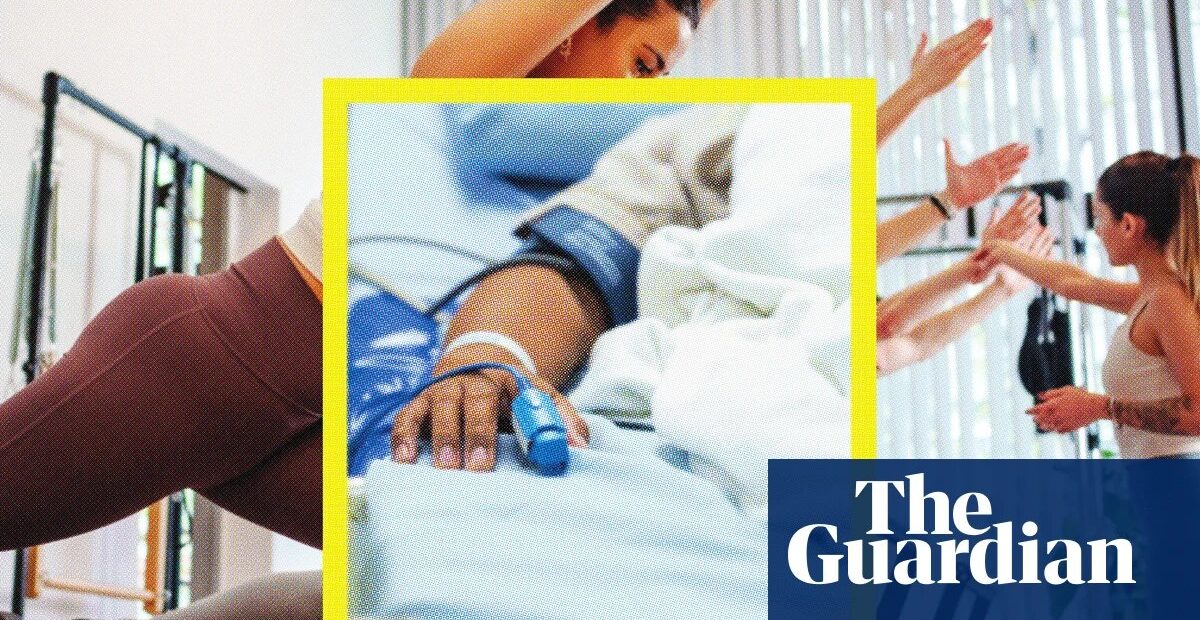
Woman hospitalized after intense bootcamp class, diagnosed with exertional rhabdomyolysis

13 reported
A woman who attended her first bootcamp class in January 2025 was hospitalized for seven days after developing exertional rhabdomyolysis, a condition caused by extreme exercise. The class involved four sets of lateral shuffle push-ups and weight-bearing exercises. After the workout, she experienced severe pain, weakness, and dark urine, leading her to visit the emergency room. Doctors found her creatine kinase (CK) level was 57,000 units per liter, far above the typical diagnostic threshold. She required IV fluids and assistance from family for basic tasks during her hospital stay. The condition, which can cause kidney damage, is on the rise in several countries, researchers say, likely due to the popularity of high-intensity workouts.
What’s reported
The woman attended her first bootcamp class in January 2025.
The class included four sets of lateral shuffle push-ups and weight-bearing exercises.
She experienced nausea during class and stepped outside to recover.
Two days after class, her arms were so stiff she could not raise them to brush her teeth.
Her CK count was 57,000 units per liter; the ER machine could not measure it initially.
She was hospitalized for seven days and required IV fluids.
Exertional rhabdomyolysis occurs when extreme exercise causes muscle cell contents to flood the bloodstream, potentially overwhelming the kidneys.
Researchers estimate 10% of patients develop acute kidney injury.
A study estimated over 40,000 exertional rhabdomyolysis cases in US hospitals from 2000 to 2019.
Cases have increased in Norway, Australia, and the US between the 2000s and 2010s.
A Canadian province reported a surge in cases this year.
Push-ups are cited as the "No 1 cause" of rhabdomyolysis in a 2024 article by the National Federation of State High School Associations.
In April, Texas families filed a lawsuit after 20 children were hospitalized after hundreds of pushups.
Misconceptions
The article states that despite a common misconception that only unfit people can get exertional rhabdomyolysis, even elite athletes are susceptible.
Key figures
Dr Barry Boden, orthopaedic surgeon at The Orthopaedic Center in Maryland, specializing in sports medicine.
Dr Petr Schlegel, CrossFit trainer and professor at the University of Hradec Králové in the Czech Republic.
Dr Bryant Walrod, sports medicine physician and head team physician for the Ohio State Buckeyes.
Dr Rebecca Stearns, COO at the Korey Stringer Institute for preventing sudden death in sports.
Dr Natalia Petrzela, author of "Fit Nation: The Gains and Pains of America’s Exercise Obsession," fitness instructor, and professor at The New School.
Sources: The Guardian