


U.S. and Saudi Arabia sign nuclear cooperation agreement

12 reported3 unconfirmed
The U.S. Department of Energy announced on Wednesday that the United States and Saudi Arabia signed a peaceful nuclear cooperation agreement, known as a 123 agreement, along with a bilateral safeguards agreement. A senior administration official told NBC News that President Donald Trump had approved the deal, which will see U.S. support for a nuclear power program in the kingdom and American companies building the program. The agreement is not expected to require the most rigorous level of U.N. inspections or include a ban on uranium enrichment or reprocessing of spent nuclear fuel, according to three people familiar with the deal. The pact would allow U.S. companies to build a uranium enrichment facility in Saudi Arabia pending a joint feasibility study. Congress will be required to vote on the agreement, but would need a veto-proof majority to block it. The deal comes as the U.S.- and Israel-launched war against Iran, which began in late February, continues. Secretary of State Marco Rubio said the U.S. would not reach any agreement that leads to the risk of proliferation.
What’s reported
The U.S. and Saudi Arabia signed a peaceful nuclear cooperation agreement (123 agreement) and a bilateral safeguards agreement on Wednesday.
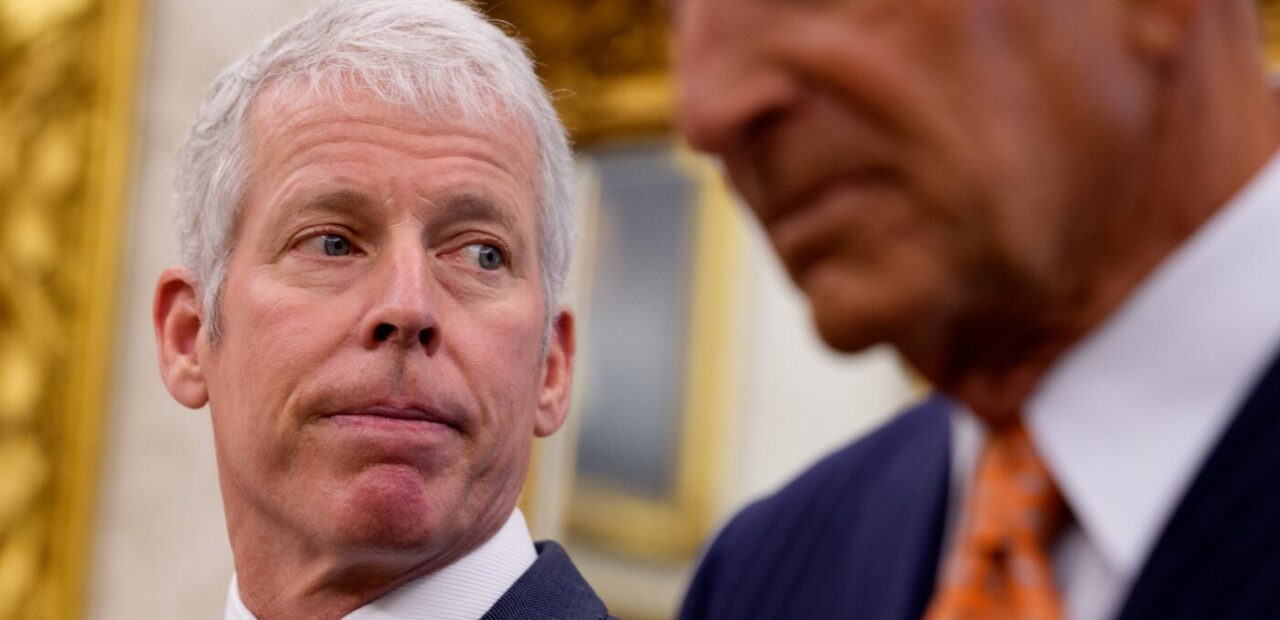
U.S. Secretary of Energy Chris Wright and Saudi Minister of Energy Prince Abdulaziz bin Salman signed the agreements.
A senior administration official told NBC News that President Donald Trump approved the deal.
The agreement will support the creation of a nuclear power program in Saudi Arabia, with American companies building it.
The deal is not expected to require the most rigorous U.N. inspections or include a ban on uranium enrichment or reprocessing of spent nuclear fuel, per three people familiar.
U.S. companies could build a uranium enrichment facility in Saudi Arabia pending a joint U.S.-Saudi feasibility study.
Congress must vote on the agreement but would need a veto-proof majority to block it.
The agreement comes as the U.S.- and Israel-launched war against Iran, ongoing since late February, continues.
Secretary of State Marco Rubio said the U.S. would not reach any agreement that leads to proliferation risk.
Saudi Crown Prince Mohammed bin Salman has previously warned the kingdom would try to obtain a nuclear weapon if Iran could.
Saudi Arabia signed a mutual defense pact with Pakistan in September; Pakistan’s defense minister said its nuclear program would be made available to Saudi Arabia if required.
The deal was reported first by The Wall Street Journal.
Open questions
The full text of the agreement has not been released, and the administration has not publicly outlined all details.
Whether the agreement includes the “Additional Protocol” granting the IAEA greater oversight is not specified.
Whether the deal includes “gold standard” safeguards blocking enrichment and reprocessing is not confirmed.
Key figures
Chris Wright, U.S. Secretary of Energy
Prince Abdulaziz bin Salman, Saudi Minister of Energy
President Donald Trump
Secretary of State Marco Rubio
Darya Dolzikova, senior research fellow, Royal United Services Institute
Sanam Vakil, director of Middle East and North Africa program, Chatham House
Crown Prince Mohammed bin Salman
Khawaja Asif, Pakistani Defense Minister
Salman Al-Dosary, Saudi Minister of Media
Abdulla bin Mohamed Alhamed, Chairman of UAE National Media Authority
Sources: NBC News