



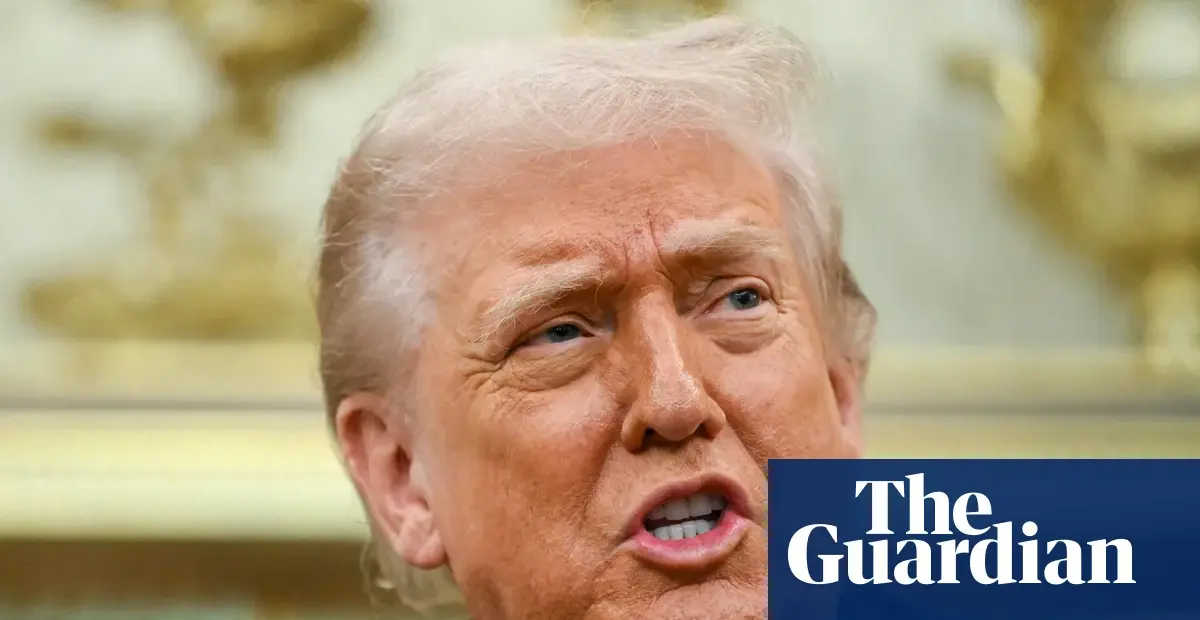
Trump’s Iran deal nears as war goals narrow, Guardian analysis says

The Story
According to a Guardian analysis published May 30, 2026, the United States and Iran are on the verge of a deal to end fighting that began after Trump authorized war with Iran on February 28. The immediate consequence would be the reopening of the Strait of Hormuz, which Iran had closed, disrupting 20% of the world’s crude oil supplies and causing rising gasoline prices in the US. The analysis reports that a memorandum of understanding, mediated by Pakistan and Qatar, would extend the current ceasefire for 60 days while negotiations address the dispute over Iran’s nuclear program. The Guardian notes that Trump’s initial maximalist goals, including regime change and unconditional surrender of Iran, have been abandoned as the Islamic regime remains intact despite targeted assassinations. The article cites analysts who say Iran still possesses about 970lb of highly enriched uranium, potentially enough for ten bombs, and that 70-80% of its drones and ballistic missiles remain intact. The analysis concludes that Trump may be forced into a transactional deal resembling the 2015 JCPOA, which he had previously scrapped.
Key Facts
- The US and Iran are reportedly on the verge of a deal to end fighting, with the Strait of Hormuz reopening as the most immediate consequence.
- The strait carried 20% of the world’s crude oil before the war; its closure led to soaring US gasoline prices and fertilizer shortages.
- A memorandum of understanding, mediated by Pakistan and Qatar, would extend the ceasefire for 60 days for nuclear program negotiations.
- Trump launched the war on February 28 with goals including regime change and unconditional surrender, which have not been achieved.
- Iran still possesses about 970lb of highly enriched uranium, dispersed at multiple underground locations, according to unnamed sources.
- Reporting indicates 70-80% of Iran’s drones and ballistic missiles remain intact, despite Trump’s claims of destruction.
- Hawkish Republican senators Lindsey Graham, Ted Cruz, Roger Wicker, and former Trump officials have warned against the deal.
- Trump stated last weekend that the deal is “95% negotiated.”
Conflicting Reports
No conflicting reports identified in the source article.
Still Unclear
It is unclear whether Trump can close the deal, given Iranian distrust of his record, according to analyst Vali Nasr. The precise terms of the memorandum of understanding remain unconfirmed.
Misconceptions
The article states that Trump initially claimed to have effectively destroyed Iran’s airforce, navy, and overall military capacity, but reporting suggests significant portions of Iran’s ballistic missiles and drones remain intact. It also notes that Trump insisted the June 2025 bombing had “obliterated” Iran’s uranium stockpile, yet Iran is still believed to possess about 970lb of highly enriched uranium.
Key Figures
- Donald Trump, US president
- Robert Kagan, foreign policy fellow at the Brookings Institution
- Sina Toossi, analyst with the Center for International Policy
- Robert Litwak, international relations professor at George Washington University
- Vali Nasr, international relations professor at Johns Hopkins University
- Senators Lindsey Graham, Ted Cruz, Roger Wicker (chair of Senate armed services committee)
- Mike Pompeo, former CIA director and secretary of state
- Mojtaba Khamenei, current supreme leader of Iran (succeeded his father)
- Ayatollah Ali Khamenei, former supreme leader (killed by Israeli strikes)
Sources: The Guardian