


Trump Threatens Major Strikes on Iran, Seeks Control of Oil Industry

10 verified4 unconfirmed
President Donald Trump threatened Thursday to launch major strikes on Iran and assume total control of its oil and gas industries, including the key Kharg Island terminal. The threat came as the U.S. and Iran traded strikes for a second day, pushing the Middle East closer to the resumption of full-scale war. The American attack appeared more intense and widespread than the previous day, with explosions reported in Tehran, Bandar Abbas, and other southern areas. Iran released little information on damage and said it fired back at Kuwait, Bahrain, and Jordan, while U.S. Central Command said it targeted Iranian military surveillance, communications, and air defense sites. Meanwhile, negotiations to end the war appeared stuck, with Iran’s Foreign Ministry stating that U.S. attacks had effectively rendered the ceasefire meaningless. Central to the impasse is Iran’s stranglehold on the Strait of Hormuz, which has disrupted global energy supplies and driven up prices worldwide.
What’s verified
President Trump posted on social media that the U.S. would hit Iran “VERY HARD TONIGHT” and would “assume total control” of Iran’s oil and gas industries, including Kharg Island, in the “not too distant future.”
U.S. and Iran traded strikes for a second day; the American attack appeared more intense and widespread than before.
Explosions echoed in Tehran, Bandar Abbas, and other southern areas; Iran’s Revolutionary Guard said sites hit included a manufacturing complex, a military barracks, and a Guard base outside Tehran.
Iran said it fired back at Kuwait, Bahrain, and Jordan; Kuwait closed its airspace for several hours; Jordan intercepted 20 Iranian missiles; Bahrain reported an 11-year-old girl hurt by debris.
U.S. Central Command said airstrikes targeted “Iranian military surveillance capabilities, communication systems and air defense sites.”
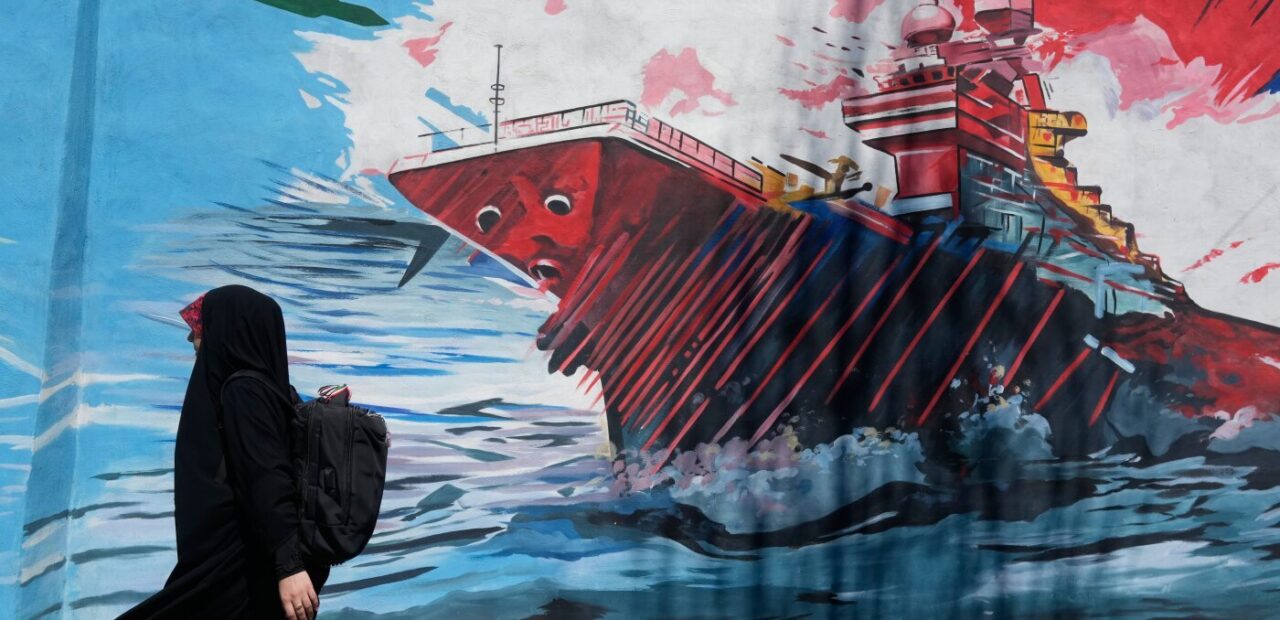
The U.S. military continued enforcing a blockade of Iranian ports, firing missiles to disable a Guinea-Bissau-flagged tanker attempting to transport Iranian oil.
An Indian official said a U.S. strike on a different merchant ship earlier in the week killed three Indian sailors; India’s foreign ministry summoned a senior U.S. diplomat to protest.
Iran announced the Strait of Hormuz closed, but it had already severely restricted traffic; U.S. Central Command disputed the claim, and Trump said the U.S. conducted a secret mission to sneak ships through.
Trump said more than 100 million barrels of oil have evaded Iran’s chokehold; there was no immediate confirmation.
Iran insists any deal to end the war must also end fighting between its ally Hezbollah and Israel; Israeli Prime Minister Benjamin Netanyahu appears intent on destroying Hezbollah.
Not yet confirmed
A Qatari diplomatic delegation, negotiating in coordination with the U.S., reportedly left Tehran on Thursday after holding talks, according to an anonymous official.
Trump compared his plans for Iran to how the U.S. assumed control of Venezuela’s oil sector after capturing former President Nicolás Maduro in January, according to a single report.
In April, Trump reportedly warned Iran that “a whole civilization will die tonight” if it did not agree to his terms, before extending a ceasefire, according to a single report.
Pakistan expressed deep concern over rising tensions and urged both Iran and the U.S. to adhere to the ceasefire, according to a single report.
Key figures
President Donald Trump; Iran’s Foreign Ministry; U.S. Central Command; Israeli Prime Minister Benjamin Netanyahu; Indian Ports, Shipping and Waterways Minister Sarbananda Sonowal; Indian foreign ministry spokesperson Randhir Jaiswal; leader of the International Maritime Organization; Qatari diplomatic delegation (anonymous official); Pakistan.
Sources: NPR, abcnews.com