



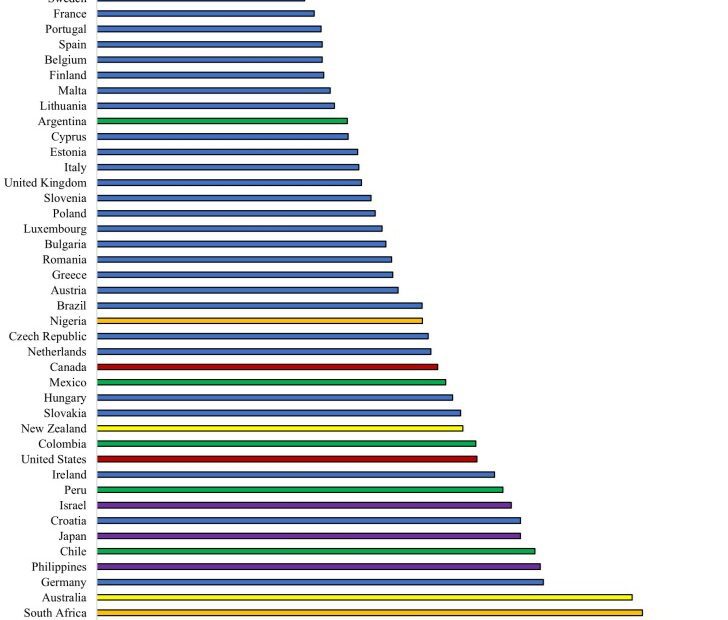
Study finds occupational licensing higher in poorer countries

6 reported
A new working paper from the Federal Reserve Bank of Minneapolis by researchers Hartley and Kleiner surveys workers around the world to measure occupational licensing by country. The study finds that occupational licensing is negatively correlated with GDP per capita, meaning many developing countries have more licensing while wealthier nations have less. The United States has seen a substantial increase in licensing over time, but countries such as India, South Africa, and the Philippines have high levels of licensing, while Denmark, Sweden, and France have relatively little. The paper also notes that countries with poor government quality ratings—including regulatory quality, political stability, rule of law, and corruption—tend to have more occupational licensing. The source article raises concerns about the survey methodology for India, where 42% of workers are reported as requiring a government license, noting high informality and the prevalence of unlicensed workers. The article concludes that multiple independent surveys confirm Denmark, Sweden, and France have less licensing than the United States, suggesting licensing is often about rent-seeking rather than quality assurance.
What’s reported
Hartley and Kleiner’s working paper from the Minneapolis Fed surveys workers globally on occupational licensing.
Occupational licensing is negatively correlated with GDP per capita.
India, South Africa, and the Philippines have high licensing; Denmark, Sweden, and France have low licensing.
Countries with poor government quality ratings have more licensing.
The source article questions the India figure of 42% due to high informality and unlicensed workers.
Multiple independent surveys confirm Denmark, Sweden, and France have less licensing than the United States.
Key figures
Hartley (researcher, co-author of the working paper)
Kleiner (researcher, co-author of the working paper)
Sources: marginalrevolution.com