



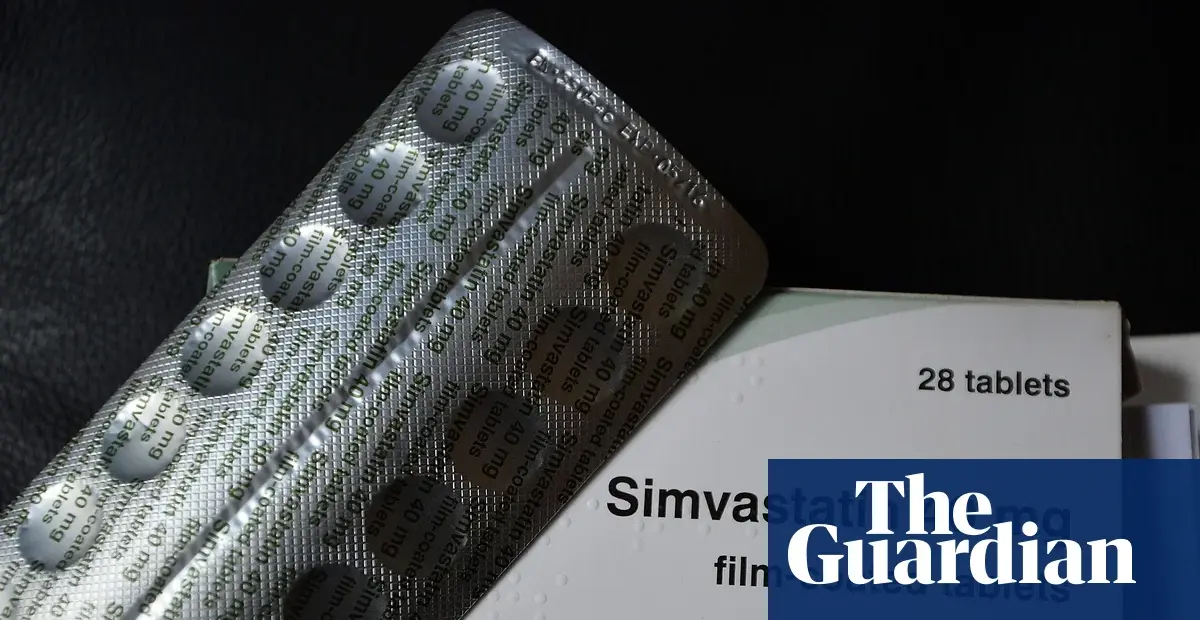
Statins help close cholesterol, blood pressure gap for obese over 40s, study finds

6 reported
A study published in the Lancet found that many adults over 40 living with obesity now have cholesterol and blood pressure levels indistinguishable from those of healthy weight, largely due to statins and blood pressure medications. Researchers examined data on nearly 1 million adults aged 20 to 79 from seven countries, including England, the US, and Japan, from 1990 to 2024. The study showed that unhealthy cholesterol and blood pressure declined over time, with larger declines among obese individuals, leading to a convergence of these risk factors in those over 40. In some cases, older people with obesity became "better off" than those with normal BMI on these metrics. However, the study noted that for adults under 40, obesity still carried higher cardiovascular risks. Experts cautioned that obesity still increases risks for other health problems like diabetes and kidney disease.
What’s reported
The study was published in the Lancet and examined data on nearly 1 million adults aged 20 to 79.
Data came from 110 health surveys conducted between 1990 and 2024 in England, Japan, South Korea, Taiwan, Thailand, Finland, and the US.
Unhealthy cholesterol and blood pressure levels declined over time, especially among those aged 40 and over.
The declines were larger among people with obesity, leading to a convergence of these risk factors between obesity and normal BMI in people older than 40.
In England, the US, Thailand, South Korea, and Japan, older people with obesity often became indistinguishable from, or better off than, those with normal BMI in terms of non-HDL cholesterol and systolic blood pressure.
For adults under 40, those who were obese still had higher levels of bad cholesterol and higher blood pressure.
Key figures
Prof Majid Ezzati, School of Public Health, Imperial College London
Prof Edward Gregg, Imperial College London
Yse d’Ailhaud de Brisis, Imperial College London
Prof Bryan Williams, chief scientific and medical officer, British Heart Foundation
Sources: The Guardian