



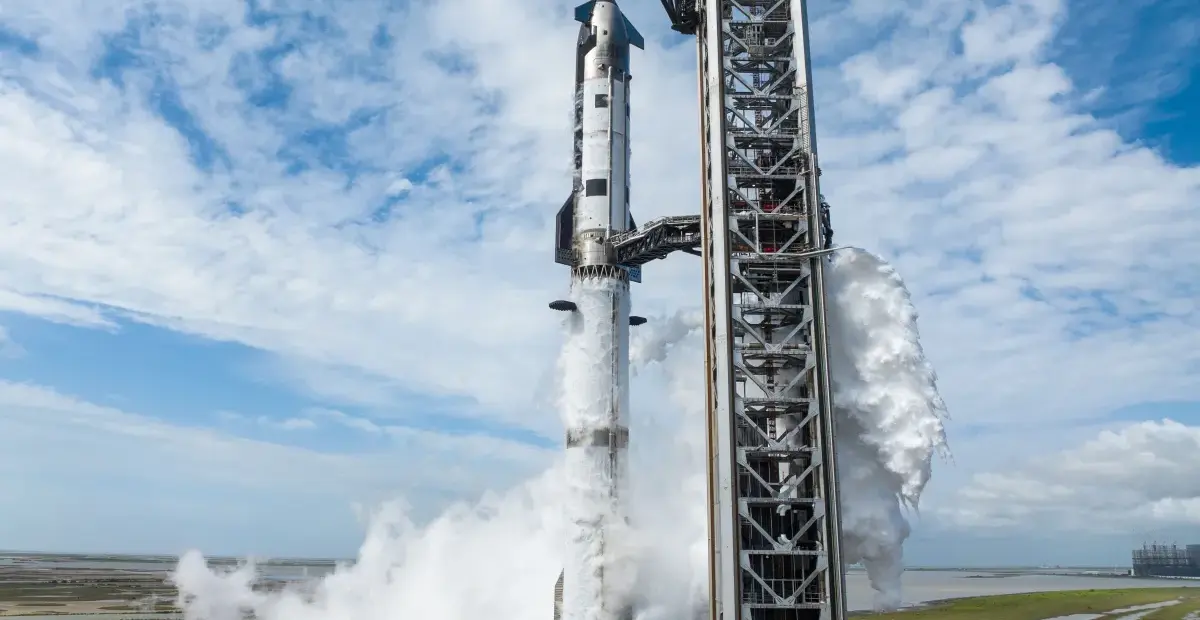
SpaceX Cleared for Next Starship Test Flight as Soon as Thursday

6 verified3 unconfirmed
SpaceX has received clearance from the Federal Aviation Administration to conduct the next test flight of its Starship and Super Heavy booster system, which could take off as soon as Thursday, July 16. The mission will be the second flight of the third version of Starship and the first to carry real, functioning Starlink V3 satellites. The launch window is set to open at 5:45 p.m. CDT (22:45 UTC) from SpaceX's Starbase facility in Texas. The previous flight in May experienced a booster failure that prevented a controlled landing, and both SpaceX and the FAA have identified probable causes and implemented modifications. The flight will follow a suborbital trajectory lasting roughly an hour, ending with a controlled splashdown of the Starship upper stage northwest of Australia. The 20 Starlink V3 satellites onboard are designed to deploy briefly, test laser communication links, and then burn up in the atmosphere.
What’s verified
The FAA has cleared SpaceX to launch the next Starship test flight.
The flight could occur as soon as Thursday, July 16, 2026.
This is the second flight of the third version (V3) of Starship.
The spacecraft will carry 20 Starlink V3 satellites, the first real satellites installed in the deployer.
The previous Starship flight in May suffered a booster failure; both SpaceX and the FAA identified root causes and updates have been made.
The mission will follow a suborbital path from Starbase, Texas, to a controlled splashdown in the Indian Ocean near Australia.
Not yet confirmed
Specific details about the booster failure cause (e.g., engine startup sequence and resulting 90-degree turn) come from a single report.
Information about SpaceX’s IPO and public listing on June 12 is reported by only one source.
The exact time of the launch window (5:45 p.m. CDT) appears in only one source; other sources say only "as soon as Thursday."
Key figures
Federal Aviation Administration (FAA); Elon Musk (CEO of SpaceX).
Sources: TechCrunch, Ars Technica