


Sea Cucumber Tissue Survives Indefinitely After Amputation, Study Finds

6 verified5 unconfirmed
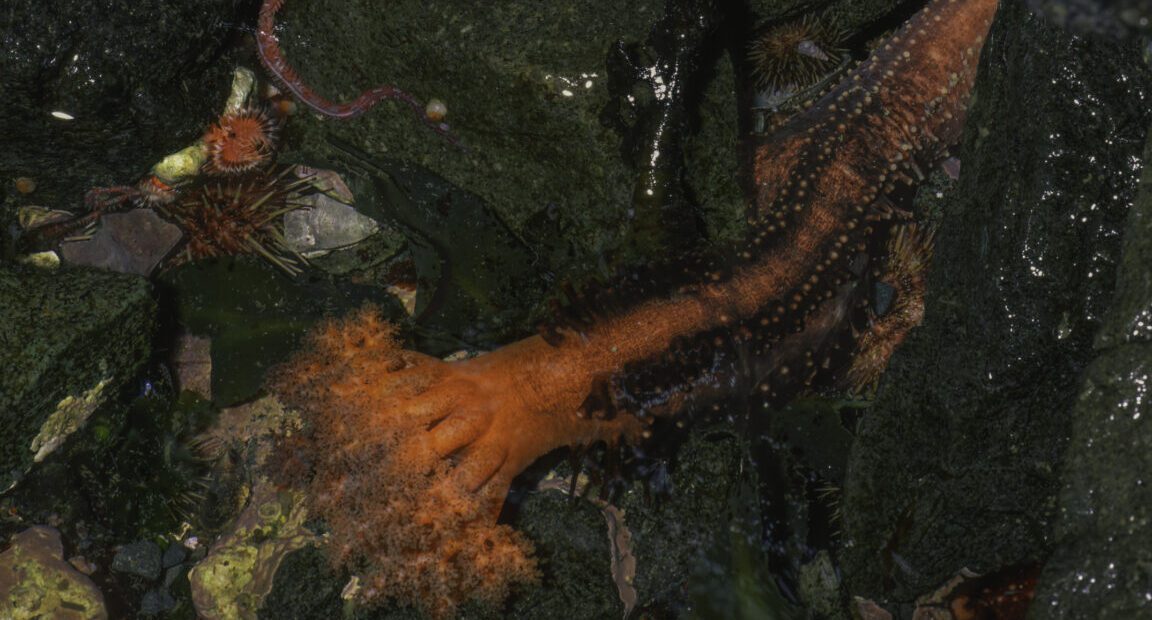
Scientists have discovered that severed tissue from a species of sea cucumber called Psolus fabricii can survive and remain biologically active for years when left in ordinary seawater. The tissue—amputated tube feet and tentacles—shows signs of wound repair, regeneration, and continued cellular processes without any special nutrients or sterile conditions. Researchers describe the phenomenon as a form of “naturally occurring tissue immortality” that has not been observed in any other animal. The discovery was made accidentally when a collaborator noticed that discarded tissue from the sea cucumber kept living without intervention. While the severed bits do not grow into new sea cucumbers, they have stayed alive and responsive to stimuli for years in a tank of running seawater. The findings challenge conventional understanding of how long animal tissue can survive outside the body.
What’s verified
The sea cucumber species involved is Psolus fabricii, also called the scarlet sea cucumber.
Severed tissue (tube feet and tentacles) has survived for years in natural seawater without decay.
The tissue exhibits wound healing, immune cell activity, nutrient absorption from seawater, and preserved neural responses.
No other animal tissue has been observed surviving this long outside the body in a natural, non-sterile environment.
The tissue does not regenerate into a complete sea cucumber.
The discovery was made by researchers at Memorial University of Newfoundland and the Bigelow Laboratory for Ocean Science.
Not yet confirmed
The exact duration the tissue has been observed: one source states “three years and counting,” while the other uses “indefinitely” without specifying a time.
Only one source reports that the species lives in the cold waters of the Atlantic and Arctic oceans and has a soft bottom side with tube feet.
Only one source mentions that other sea cucumber species tested did not survive beyond 3.5 months.
Only one source names the scientific journal where the study was published (Science Advances).
Only one source provides the longevity comparisons to glass sponges and quahog clams.
Key figures
Sara Jobson, researcher at Memorial University of Newfoundland and lead author of the study.
Rachel Sipler, marine biogeochemist at Bigelow Laboratory for Ocean Science.
Andrea Bodnar, science director at Gloucester Marine Genomics Institute (not involved in the study, commented on findings).
Sources: Ars Technica, sciencealert.com