



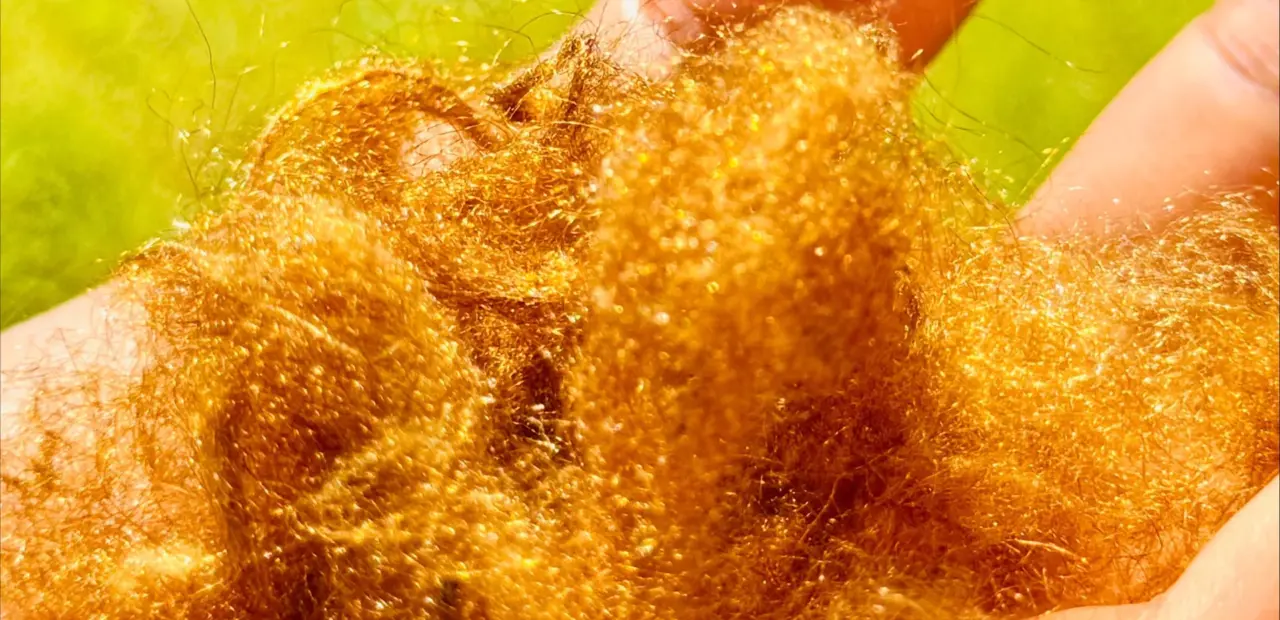
Scientists recreate ancient golden sea silk, reveal color secret

5 reported
Researchers in South Korea have recreated a legendary golden fabric known as sea silk, which was prized by emperors and popes for centuries before its source species became endangered. The team, led by Professor Dong Soo Hwang and Professor Jimin Choi at Pohang University of Science & Technology (POSTECH), used fibers from the pen shell (Atrina pectinata), a shellfish cultivated in Korean coastal waters. Their findings, published in Advanced Materials, explain that the fabric’s golden color comes from structural coloration rather than dyes or pigments. The color is produced by layered spherical protein structures called “photonin” that reflect light, similar to the effect seen in soap bubbles or butterfly wings. The researchers also noted that the byssus fibers of pen shells are traditionally discarded as waste, and converting them into textiles could reduce marine waste while creating sustainable materials. The study was based on a single source, ScienceDaily, and has not been cross-referenced with other outlets.
What’s reported
Researchers at POSTECH in South Korea recreated a golden fiber similar to sea silk using the pen shell (Atrina pectinata).
The original sea silk was made from byssus threads of the Mediterranean clam Pinna nobilis, which is now endangered and banned from harvesting in the EU.
The golden color is produced by structural coloration from layered spherical protein structures called “photonin,” not from dyes or pigments.
The color remains stable over long periods because it is built into the fiber’s structure.
The byssus fibers of pen shells are typically discarded as waste; the study suggests converting them into textiles could reduce marine waste.
Key figures
Professor Dong Soo Hwang (Division of Environmental Science and Engineering / Division of interdisciplinary bioscience & bioengineering, POSTECH)
Professor Jimin Choi (Environmental Research Institute, POSTECH)
Sources: ScienceDaily