



Scientists discover cell death ‘footprints’ that viruses may exploit

8 reported
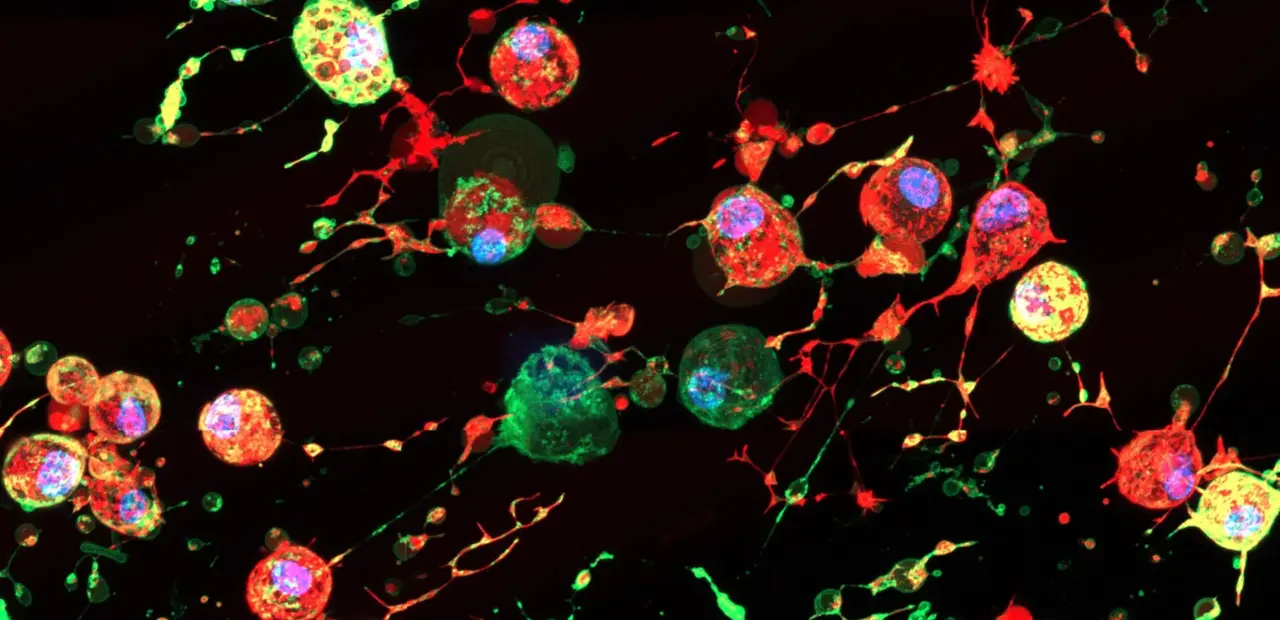
Researchers at La Trobe University have identified a previously unknown biological process during cell death that may help explain how viruses move through the body. Published in Nature Communications, the study reveals that dying cells leave behind a residue called "the footprint of death," which contains a newly discovered type of Extracellular Vesicle (EV) named F-ApoEVs. These vesicles act like breadcrumb trails to help the immune system locate and remove cellular debris. However, laboratory experiments with influenza-infected cells showed that viruses can hide inside these F-ApoEVs, potentially allowing infection to spread to neighboring cells while remaining concealed within the body's normal disposal process. The research was led by PhD candidate Stephanie Rutter in the laboratory of Professor Ivan Poon at the La Trobe Institute for Molecular Science. The team believes the discovery could improve understanding of both infectious diseases and autoimmune disorders, leading to new treatment strategies. The project was conducted in collaboration with researchers at WEHI and Toronto Metropolitan University in Canada.
What’s reported
Researchers at La Trobe University identified a previously unknown biological process during cell death.
Dying cells leave behind a residue called "the footprint of death."
The residue contains a newly discovered type of Extracellular Vesicle (EV) named F-ApoEVs.
F-ApoEVs help the immune system locate and remove cellular debris.
In laboratory experiments, influenza viruses were able to hide inside F-ApoEVs, potentially spreading infection.
The study was published in Nature Communications.
The research was led by PhD candidate Stephanie Rutter in the laboratory of Professor Ivan Poon.
The project involved researchers from La Trobe University, WEHI, and Toronto Metropolitan University.
Key figures
Stephanie Rutter, PhD candidate at La Trobe University, lead researcher
Professor Ivan Poon, Director of the Research Centre for Extracellular Vesicles (RCEV) at La Trobe University
Dr. Georgia Atkin-Smith, study co-leader at WEHI
Sources: ScienceDaily