



Palaeolithic cave art research continues in Spain’s Basque Country

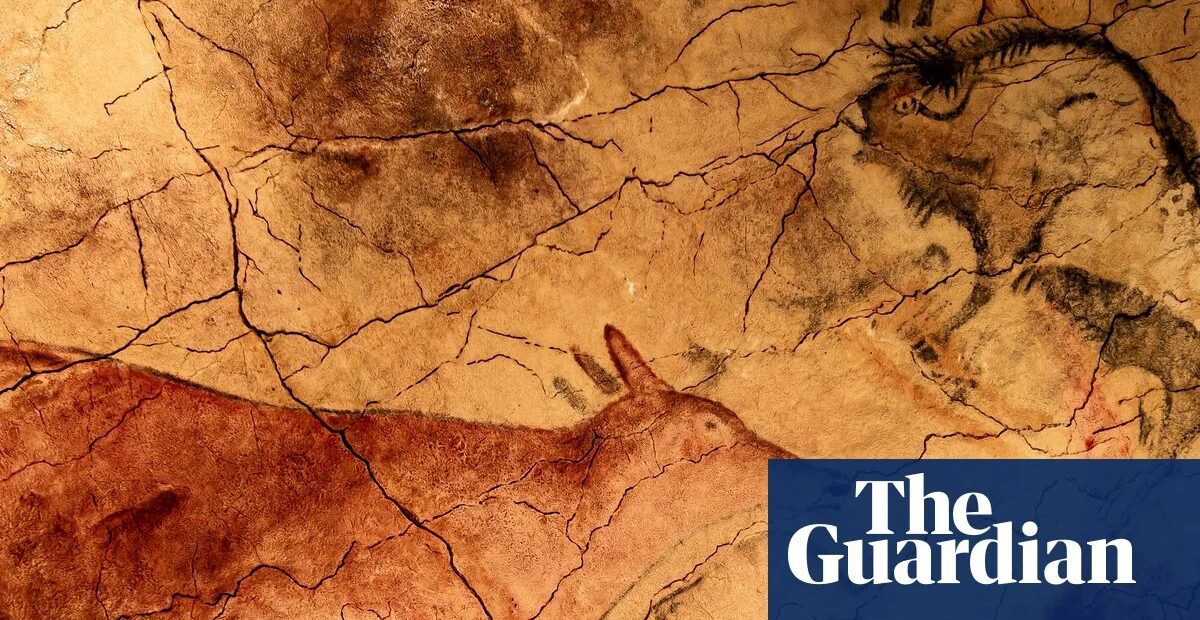
Diego Garate Maidagan, a professor of prehistory and Palaeolithic art at the University of Cantabria, is one of the few researchers allowed into the Altamira cave in northern Spain. The cave, which contains paintings of aurochs, mammoths, and steppe bison, was discovered in 1868 when a dog entered. The paintings were initially declared a hoax by French experts. The cave was opened to the public in 1917, partly closed in the 1970s, and fully shut in 2002 due to damage from visitor breath. A replica cave was built adjacent. Garate and colleagues have been testing the theory that caves in northern Spain and southwestern France were once lavishly decorated. They trained speleologists to find hidden art, and Garate has found bison and horse paintings at Mount Lumentxa. A test cave called Isuntza has been used as a laboratory for reverse-engineering prehistoric art-making processes.
What’s reported
Altamira paintings made about 34,000 years ago, sealed by rockfall, discovered in 1868.
Initially French experts declared it a hoax; later similar caves found in France.
Pablo Picasso possibly said “After Altamira, all is decadence.”
Altamira opened 1917, partly closed 1970s, shut 2002 due to moisture and carbon monoxide.
Only replica cave is open; original only accessible to scholars like Garate.
Garate’s research includes etching technique using flint blades, ochre, charcoal.
Colors preserved due to landslide that sealed cave.
Many caves have only vestigial chisel marks due to bacteria, calcite, air, water.
Garate lives in Plentzia, Basque Country.
He and Santander colleagues deputized Basque speleologists to find hidden art.
Garate found two bison and a horse at Mount Lumentxa.
Isuntza cave, with no previous human entry, used as laboratory for field experiments.
Experiments include testing lighting with burning woods and fats, and painting with ochre using bird bones as blowpipes.
Olga Spaey, PhD candidate from Bordeaux Montaigne University, participated in handprint experiments.
Handprints at El Castillo cave from about 37,000 years ago.
Researchers believe rock art was religious, but article notes this view leaves questions.
Atxurra cave has engravings Garate calls “Champions League of rock art.”
Open questions
The source article does not definitively answer the purpose or meaning of the cave art. The researcher Spaey suggests a religious interpretation, but the author finds it unsatisfying. The long-term preservation of modern test samples in the Isuntza cave is also uncertain; water has already erased some.
Misconceptions
The article notes that early French experts wrongly assumed the sophisticated Altamira paintings were a hoax because they underestimated ancient humans. That view was later disproven when similar caves were found in France.
Key figures
Diego Garate Maidagan (professor of prehistory and Palaeolithic art, University of Cantabria)
Olga Spaey (Belgian PhD candidate, Bordeaux Montaigne University)
Pablo Picasso (artist, mentioned with possibly apocryphal quote)
Sources: The Guardian