


Orcas Filmed Ramming Sunfish Into Fragments in New Hunting Behavior

7 verified4 unconfirmed
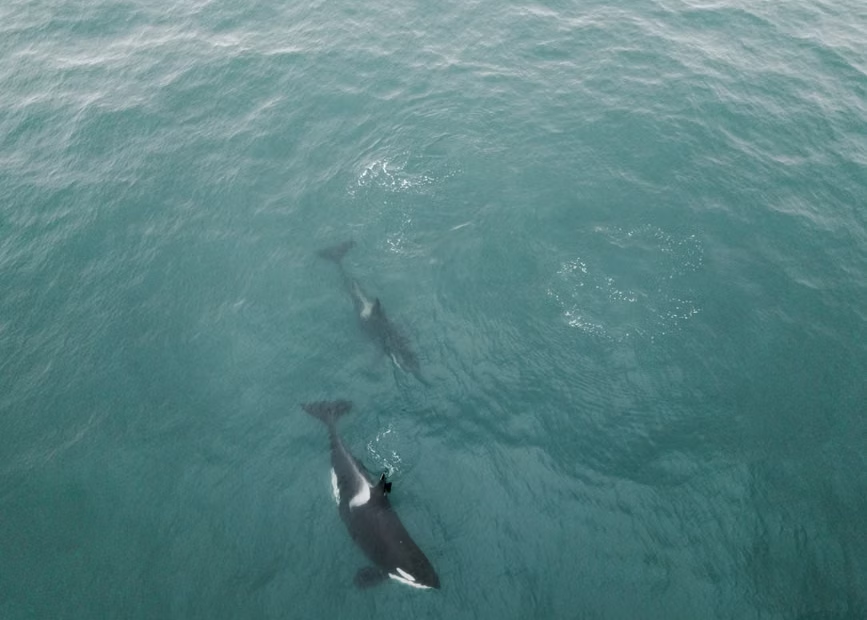
Researchers have documented a previously undescribed orca behavior in the Gulf of California, where the animals use high-speed teamwork to break sunfish carcasses into thousands of pieces. In two separate encounters filmed about a year apart, one orca held a dead sunfish by its fin while another charged into it at high speed, causing the tissue to disintegrate. The behavior was reported in a paper published in the journal Frontiers in Ethology on July 23, 2026. Scientists say the forceful impacts appear to be used for processing prey rather than killing it, since the sunfish were already dead. The resulting fragments were then eaten by a juvenile orca, while adults consumed the remaining carcass. The research suggests this “ram-to-fragment” strategy may help younger orcas feed more easily, or could simply be a form of play.
What’s verified
Orcas in the Gulf of California were filmed ramming dead sunfish carcasses so hard that the tissue broke into thousands of pieces.
The behavior was documented in two separate events about a year apart (July 2024 and September 2025).
In each event, one orca held the sunfish by its tail fin while another orca charged at it at high speed; the holder released just before impact.
A juvenile orca ate the smaller fragments, while adult orcas fed on the remaining carcass.
The findings were published in the journal Frontiers in Ethology on July 23, 2026.
Co-author Dr. Kathryn Ayres of Beneath The Waves stated the behavior may help younger orcas feed more easily or could be for fun, as orcas are known for playing with their food.
Ramming has not previously been formally described as an orca predation strategy.
Not yet confirmed
Only one source provides the identity of the second event’s videographer: Héctor Franz, in September 2025.
Only one source notes that the fragmented tissue’s microbiome may spread into the water and change nutrient composition.
Only one source mentions that all observed fragmentation events involved sharp-tail sunfish (Masturus lanceolatus), and that other sunfish species may not break apart as easily.
It is not known if the same orcas participated in both events.
Key figures
Dr. Kathryn Ayres – first author and co-author of the study, scientist at Beneath The Waves.
Sources: ScienceDaily, Ars Technica