



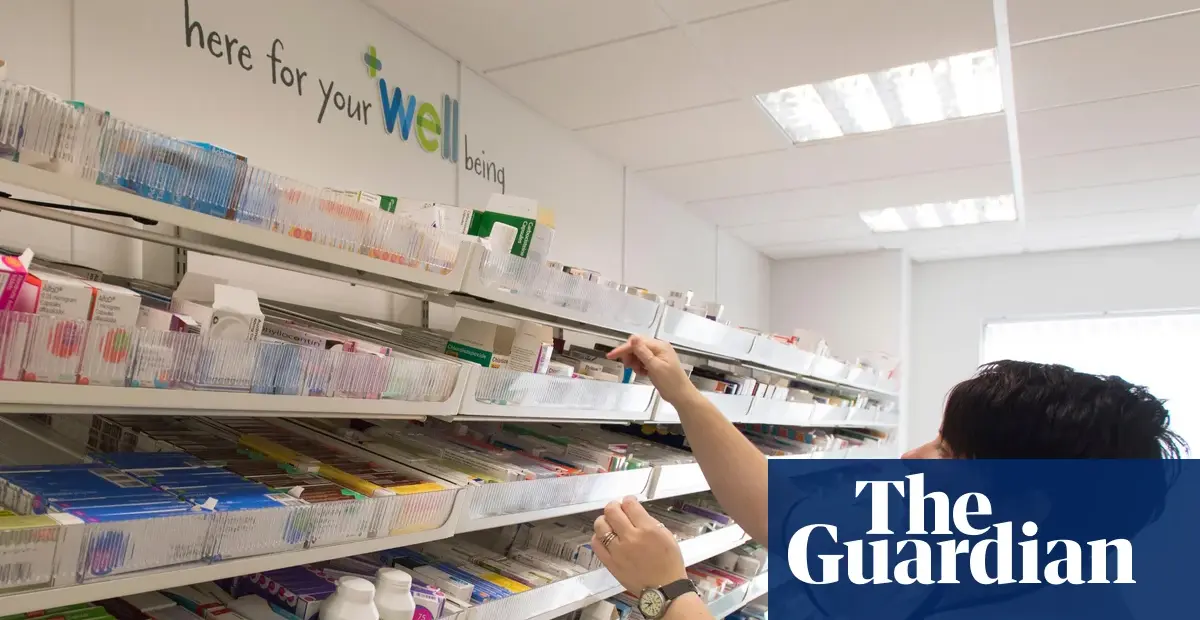
NHS facing record drug shortages, pharmacists and GPs warn

16 reported
Health leaders have warned that NHS patients are facing some of the most severe medicine shortages on record, affecting common painkillers, epilepsy drugs, and hormone replacement therapy (HRT). The National Pharmacy Association (NPA) stated that shortages pose a serious risk to patient safety, while the Royal College of GPs also raised concerns about the impact on patients, GPs, and pharmacists. Long-lasting supply issues have affected Estradot, an HRT for menopausal women, and Creon, a drug for people with pancreatic cancer and cystic fibrosis. Both medications have had serious shortage protocols (SSPs) in place for between one-and-a-half and two years, a new NHS record, with SSPs recently extended until July 10. Pharmacies report that some patients are rationing medication or skipping meals due to inability to obtain supplies. The NPA, representing 6,000 independent community pharmacies, is calling for an urgent government taskforce to address the issues.
What’s reported
The National Pharmacy Association (NPA) warned that medicine shortages pose a serious risk to patient safety.
The Royal College of GPs raised concerns about the impact of shortages on patients, GPs, and pharmacists.
Estradot (HRT) and Creon (for pancreatic cancer and cystic fibrosis) have had serious shortage protocols (SSPs) for 1.5 to 2 years, a new NHS record.
SSPs were recently extended by the NHS until July 10.
Some patients are rationing medication or skipping meals due to shortages.
Bryony Thomas, a pancreatic cancer survivor from Stroud, Gloucestershire, said she has been affected by Creon shortages for two years and has rationed the drug.
Thomas’s mother-in-law has made four-hour round trips to obtain medication from the only pharmacy in Crewe, Cheshire, where it is available.
Pharmacies are struggling to source Ramipril (for high blood pressure), low-dose aspirin, and co-codamol.
The Middle East conflict has made supply chains more volatile, but is not the only factor, the NPA said.
Other factors include lack of ingredients, manufacturing disruption, the UK’s smaller medicines budget compared with other EU countries, and changing prescribing habits for HRT.
Prices of some drugs, such as paracetamol and cetirizine for hay fever, have increased.
The NPA wants the government to convene an urgent taskforce including manufacturers, wholesalers, and clinicians.
More than 1,000 GPs and pharmacists will meet in Birmingham at a new NPA conference this weekend.
Olivier Picard, NPA chair and pharmacist, called on the government to amend legislation preventing pharmacies from making substitutions to a prescription where a safe alternative is in stock.
Prof Victoria Tzortziou Brown, president of the Royal College of GPs, said underlying causes of shortages should be quickly identified and resolved.
A Department of Health and Social Care spokesperson said the overwhelming majority of medicines are in good supply and the government is making significant investments in UK medicine manufacturing.
Key figures
Bryony Thomas, pancreatic cancer survivor from Stroud, Gloucestershire
Olivier Picard, pharmacist and chair of the National Pharmacy Association (NPA)
Prof Victoria Tzortziou Brown, president of the Royal College of GPs
Department of Health and Social Care spokesperson (not named)
Sources: The Guardian