



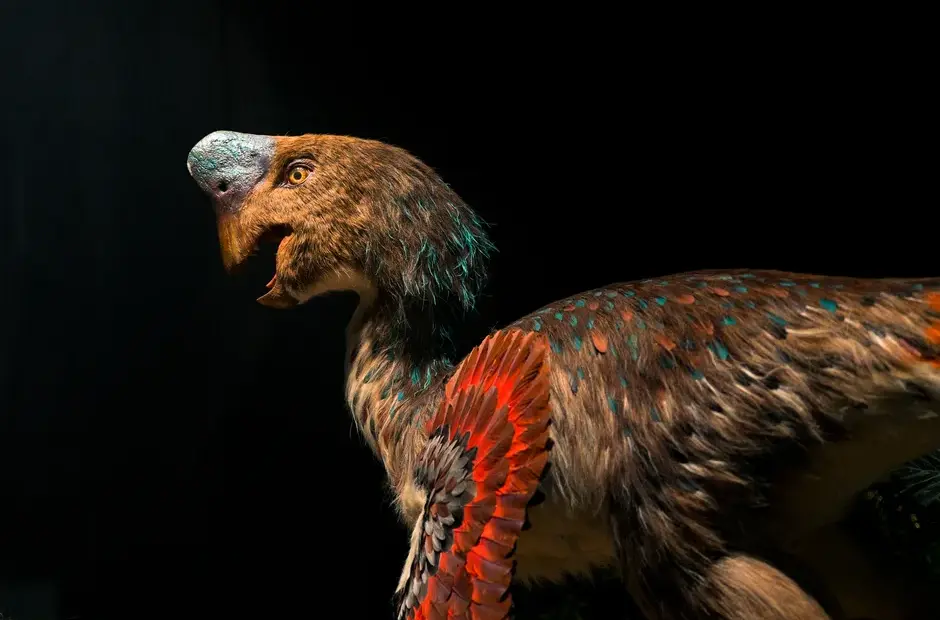
Newly discovered raptor dinosaur Kank australis may have fished like a heron

Paleontologists have identified a new species of raptor-like dinosaur from southern Patagonia that lived about 70 million years ago. Named Kank australis, the dinosaur appears to have been a fish hunter whose feeding habits may have resembled those of modern herons, according to a study published in the Journal of Vertebrate Paleontology. The discovery is based on fossil remains including teeth, vertebrae, and toe bones recovered from La Anita farm near El Calafate in Santa Cruz Province, Argentina. Researchers classified the dinosaur as an unenlagiid, a group of small to medium-sized theropod dinosaurs. By comparing fossils with those of a related species, scientists estimated that adult Kank australis reached a length of roughly 2.5 to 3 meters (8 to 10 feet). The dinosaur’s neck vertebrae show adaptations also seen in modern birds that rely on precise and flexible neck movements, such as herons. The first remains were discovered in 2018, but a cervical vertebra found in 2024 proved key to identifying it as a new species. The dinosaur’s name honors the traditions of the Aonikenk people, referring to a giant rhea whose toe prints form the Southern Cross constellation.
What’s reported
Kank australis lived about 70 million years ago in what is now southern Patagonia.
The dinosaur was classified as an unenlagiid, a group of theropod dinosaurs.
Adult Kank australis reached an estimated length of 2.5 to 3 meters.
Fossils included teeth, vertebrae, and toe bones.
Neck vertebrae showed adaptations for muscle attachment and blood vessel protection, similar to modern herons.
Researchers suggest it was an active fisher, contrasting with typical portrayals of raptors as agile terrestrial predators.
The fossils were recovered from La Anita farm near El Calafate in Santa Cruz Province, Argentina.
First remains were discovered in 2018; a key cervical vertebra was found in 2024.
The dinosaur was smaller and more lightly built than some related unenlagiids.
Remains were found alongside fish fossils, reinforcing the fishing hypothesis.
Kank coexisted with larger carnivores such as the megaraptorid Maip macrothorax.
The species name australis means “from south”; the genus name Kank comes from Aonikenk mythology referencing a giant rhea and the Southern Cross constellation.
The study was led by Dr. Matías Motta of the Bernardino Rivadavia Natural Sciences Museum in Buenos Aires and colleagues.
Researchers plan to continue excavations in the Chorrillo Formation.
Key figures
Dr. Matías Motta of the Bernardino Rivadavia Natural Sciences Museum in Buenos Aires (Museo Argentino de Ciencias Naturales “Bernardino Rivadavia”)
Colleagues (not individually named in the article)
Journal of Vertebrate Paleontology
Sources: ScienceDaily