



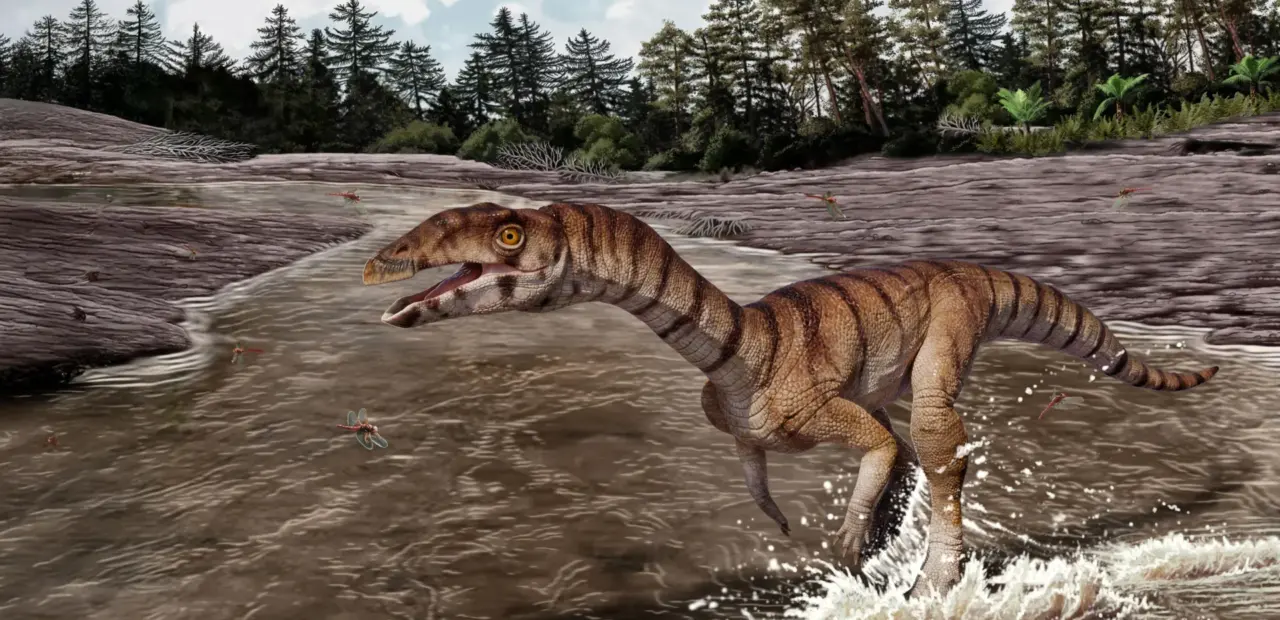
New Triassic Crocodile Relative Had Ostrich-Like Body

The Story
Scientists have discovered Labrujasuchus expectatus, a crocodile relative from the Triassic Period that walked on two legs, had small forelimbs, and a toothless beak. The species was described in the Journal of Vertebrate Paleontology and belongs to the Shuvosauridae group, of which only five species are known. The discovery fills an evolutionary gap that paleontologists had predicted from earlier fossils found at Ghost Ranch in New Mexico.
Key Facts
- Labrujasuchus expectatus is a newly identified species from the Triassic Period.
- It walked on two legs, had tiny arms, and a toothless beak.
- It belongs to the crocodile lineage (archosaurs) but looked like an ostrich-like dinosaur.
- The species is part of the Shuvosauridae group; only five shuvosaur species have been identified so far.
- The species name “expectatus” reflects that scientists anticipated finding an intermediate form.
- Fossils were found at Ghost Ranch in New Mexico.
- The genus name combines a reference to “Ranchos de los Brujos” (Ranch of the Witches) with the Greek word for crocodile.
- Dr. Alan Turner is the lead author; Dr. Nate Smith is a co-author and Gretchen Augustyn Director & Curator of the NHMLAC Dinosaur Institute.
- The study was published in the Journal of Vertebrate Paleontology.
Conflicting Reports
No conflicting reports identified in the source article.
Still Unclear
No open questions identified in the source article.
Misconceptions
No widespread misconceptions addressed in the source article.
Key Figures
- Dr. Alan Turner, lead author on the paper
- Dr. Nate Smith, co-author and Gretchen Augustyn Director & Curator of the NHMLAC Dinosaur Institute
- Joanne Lefrak, Director of Experience and Social Impact at the Ghost Ranch Education and Retreat Center
Sources: ScienceDaily