


NASA Lucy mission reveals wobbling peanut-shaped asteroid with ancient water traces

7 reported
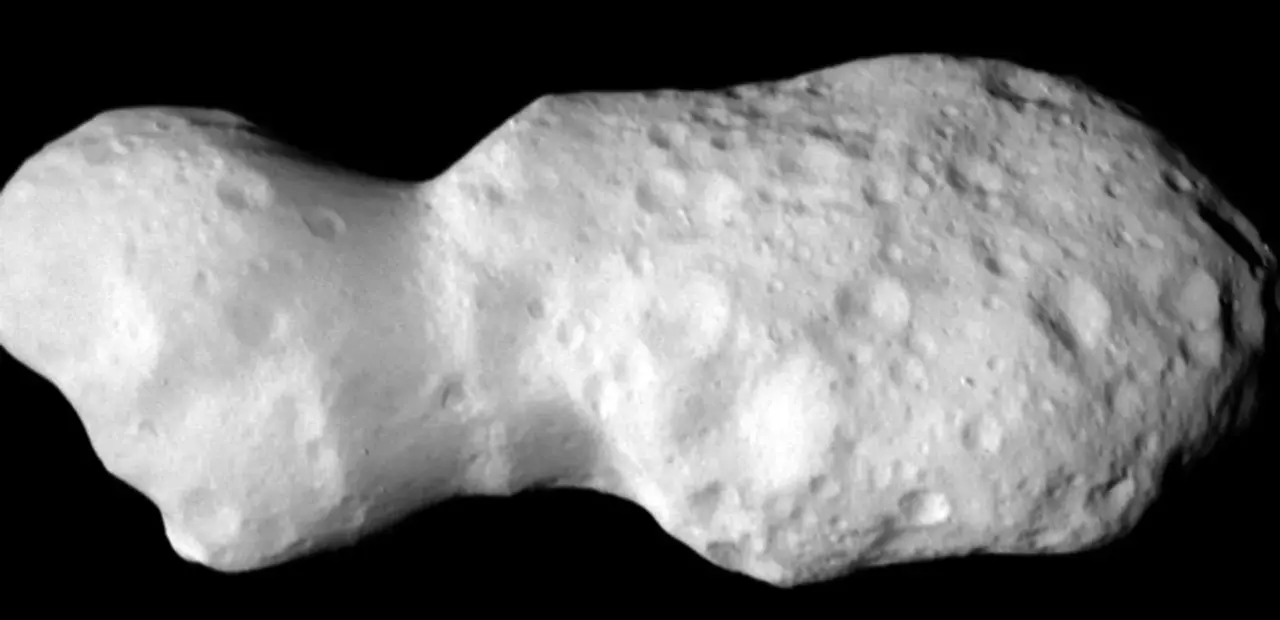
NASA's Lucy spacecraft has discovered that asteroid Donaldjohanson is a wobbling, peanut-shaped object with traces of ancient water, according to findings published June 18 in the journal Science. The asteroid formed about 155 million years ago from fragments of a violent collision. On April 20, 2025, Lucy passed within 650 miles of Donaldjohanson in the main asteroid belt, capturing the first close-up images and scientific measurements. The spacecraft revealed an unusual rotation: the asteroid turns end-over-end once every 10.5 days while rocking back and forth around its long axis once every 26.5 days. Lucy detected iron-rich clay minerals on the surface, which could only have formed in the presence of liquid water, though scientists believe the water exposure was brief. The asteroid is composed of two connected lobes joined by a narrow neck, a structure known as bilobate. Researchers estimate the asteroid was spinning at least ten times faster shortly after formation, with rotation slowing over the last 20 to 60 million years due to the YORP effect, a subtle force from sunlight.
What’s reported
Lucy passed within 650 miles of Donaldjohanson on April 20, 2025.
The asteroid rotates end-over-end once every 10.5 days and rocks around its long axis once every 26.5 days.
Donaldjohanson is bilobate, composed of two connected lobes joined by a narrow neck.
Iron-rich clay minerals on the surface indicate brief exposure to liquid water.
The asteroid formed about 155 million years ago from fragments of a violent collision.
Rotation slowed over the last 20 to 60 million years due to the YORP effect from sunlight.
Findings were reported on June 18 in the journal Science.
Key figures
Simone Marchi: Lucy deputy principal investigator and lead author of the study at the Boulder, Colorado, office of the Southwest Research Institute.
Lonnie Shekhtman and Katherine Kretke: Original writers of the NASA materials.
Sources: ScienceDaily