


Millions of Subterranean Bees Found Under New York Cemetery

The Story
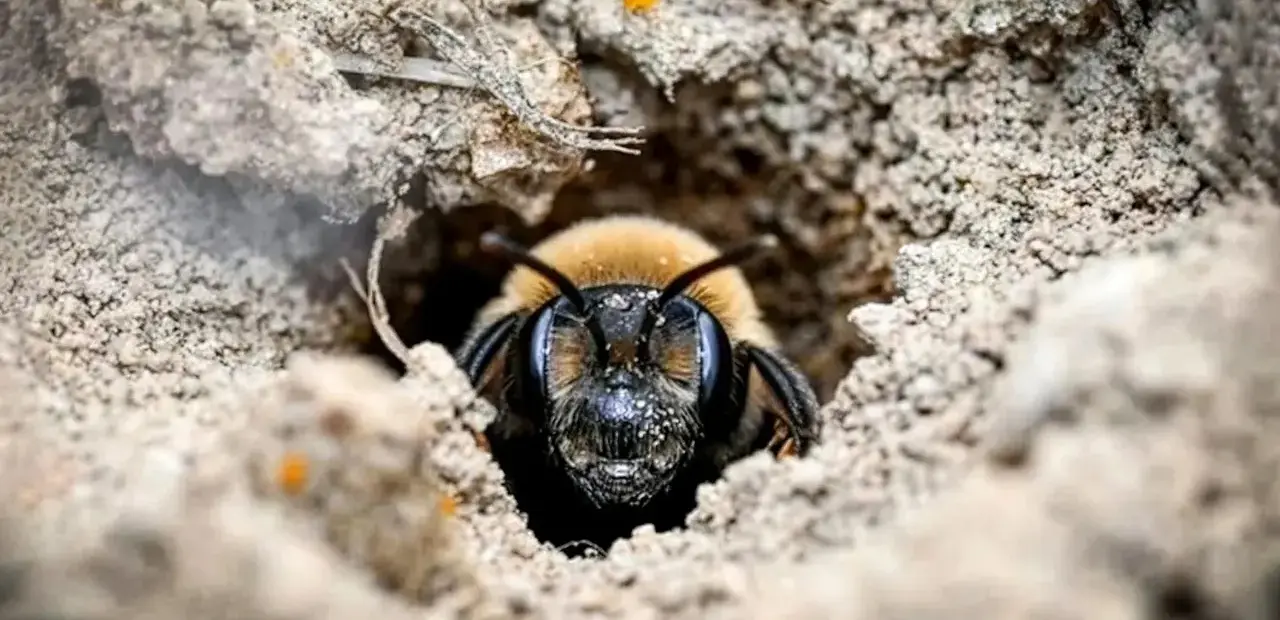
A study published in April in the journal Apidologie documents one of the largest aggregations of subterranean bees ever recorded, located beneath East Lawn Cemetery in Ithaca, New York. The colony, estimated at roughly 5.5 million bees of the species Andrena regularis, covers about 1.25 acres and has been present since at least the early 1900s, according to historical records. The discovery began in spring 2022 when Cornell University laboratory technician Rachel Fordyce noticed an unusual number of insects during her walk to work and brought specimens to entomologist Bryan Danforth. To estimate the population, researchers placed traps in the cemetery between late March and mid-May 2023, sampling more than 3,000 insects from 16 species, with Andrena regularis overwhelming dominant. The study also revealed that males emerge from the ground a few days before females in early April, and the species overwinters as adults underground, synchronizing with the flowering of apple trees in nearby Cornell orchards. The authors have launched a global citizen science initiative to report underground bee aggregations to protect these pollinators from accidental destruction.
Key Facts
- The colony is located under East Lawn Cemetery in Ithaca, New York, established in 1878.
- Estimated population: between 3 and 8 million, with an average of 5.5 million Andrena regularis bees.
- The colony occupies an area of about 1.25 acres.
- Discovery was made by Rachel Fordyce in spring 2022, with identification by Bryan Danforth of Cornell University.
- Publication: April in the journal Apidologie.
- Traps placed between late March and mid-May 2023 collected over 3,000 insects from 16 species.
- Males emerge a few days before females in early April.
- The species parasitized by Nomada imbricata, which lays eggs in host nests.
- The bees are crucial for pollination of the region’s orchards.
- Authors launched a global citizen science initiative to report underground bee aggregations.
Conflicting Reports
No conflicting reports identified in the source article.
Still Unclear
No open questions identified in the source article.
Misconceptions
No widespread misconceptions addressed in the source article.
Key Figures
- Rachel Fordyce, former laboratory technician in Cornell University’s entomology department
- Bryan Danforth, entomologist at Cornell University
Sources: Wired