



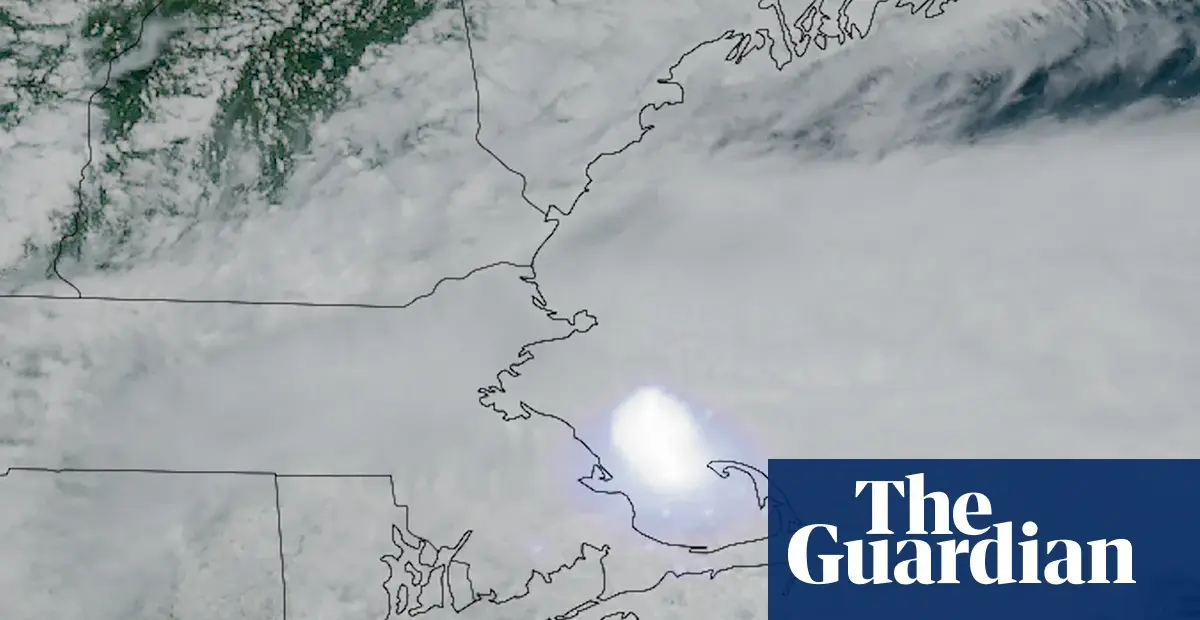
Meteor over Massachusetts causes booms and sightings across New England and Canada

A meteor approximately 3ft wide entered the atmosphere near the New Hampshire border with Massachusetts on Saturday afternoon, prompting reports of booms and sightings from Delaware to Montreal. The American Meteor Society confirmed the event, and NASA stated the object was natural material, not a satellite or debris. The meteor created a double sonic boom that shook buildings across parts of Massachusetts and Rhode Island, and a dashboard camera in New York captured the fireball. NASA reported the meteor was traveling at about 75,000mph and likely fragmented roughly 40 miles above the ground, releasing energy equivalent to about 300 tons of TNT. The American Meteor Society’s Robert Lunsford noted it was unlikely the meteor struck the ground, as most burn up before impact. The US Geological Survey received shaking reports but confirmed no earthquake was recorded.
What’s reported
The meteor was about 3ft (1 meter) wide as it entered the atmosphere near the New Hampshire border with Massachusetts, north of Boston.
NASA confirmed it was natural material, not a satellite or space debris, and it entered the atmosphere at 2.06pm on Saturday.
The American Meteor Society received reports from Delaware to Montreal of double booms, ground shaking, and daytime fireball sightings.
The double boom shook buildings across Massachusetts into Rhode Island, and a dashboard camera in New York captured the meteor.
NASA spokesperson Allard Beutel said the meteor traveled at about 75,000mph (120,700 km/h) and probably fragmented about 40 miles (60km) above the ground.
NASA estimated the energy released when the meteor broke up was equivalent to about 300 tons of TNT.
Robert Lunsford of the American Meteor Society said it was unlikely the meteor struck the ground; if it did not burn up, it would have landed in the ocean.
The US Geological Survey received reports of shaking but confirmed no earthquake was registered on its seismographs.
Open questions
Whether the meteor fragment struck the ground or landed in the ocean was not determined, as Lunsford noted more trajectory and speed data would be needed.
Key figures
Robert Lunsford, American Meteor Society program monitor
Allard Beutel, NASA spokesperson
Steve Sobie, US Geological Survey spokesperson
Sources: The Guardian