



Marine expedition discovers 31 new species in two weeks off Brazil

8 reported
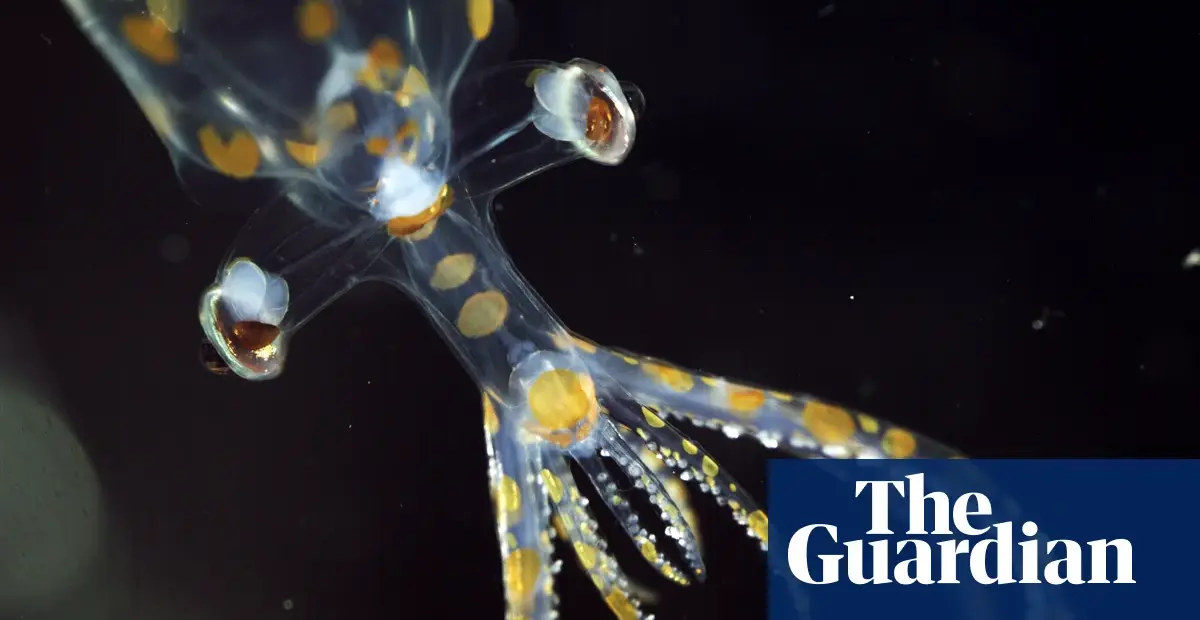
A marine biology expedition in international waters off the coast of Brazil discovered 31 new species in two weeks, according to a report by The Guardian. The researchers believe the speed of discovery may be a record, aided by cutting-edge technology including a spinning wheel confocal microscope nicknamed the Squid, which allowed live observation of 3D cellular structures for the first time on a ship. Two dozen international experts from the US, Australia, Brazil, and Japan conducted the survey on the research vessel Falkor (too), operated by the Schmidt Ocean Institute with support from the University of Western Australia. The expedition focused on the ocean midwater, described as the largest habitat on Earth and one of the least explored. Discoveries included an amphipod, a gossamer worm, nine jellyfish, seven siphonophores, seven comb jellies, four larvaceans, and two giant rhizarians. The expedition coincided with the unveiling of plans by the Trump administration to dismantle the Ocean Observatories Initiative, a deep-sea observation system.
What’s reported
The expedition discovered 31 new species in two weeks in international waters off Brazil.
The speed of discovery may be a record, partly due to a technological breakthrough nicknamed the Squid.
The Squid is a spinning wheel confocal microscope that allowed live observation of 3D cellular structure on board.
Two dozen international experts from the US, Australia, Brazil, and Japan participated.
The survey was conducted on the Falkor (too), a research vessel operated by the Schmidt Ocean Institute with support from the University of Western Australia.
The expedition focused on the ocean midwater, described as the largest habitat on Earth and one of the least explored.
Discoveries included an amphipod, a gossamer worm, nine jellyfish, seven siphonophores, seven comb jellies, four larvaceans, and two giant rhizarians.
The expedition coincided with plans by the Trump administration to dismantle the $368m Ocean Observatories Initiative.
Key figures
Dr Karen Osborn, chief scientist of the expedition, Smithsonian National Museum of Natural History
Schmidt Ocean Institute
University of Western Australia
Sources: The Guardian