



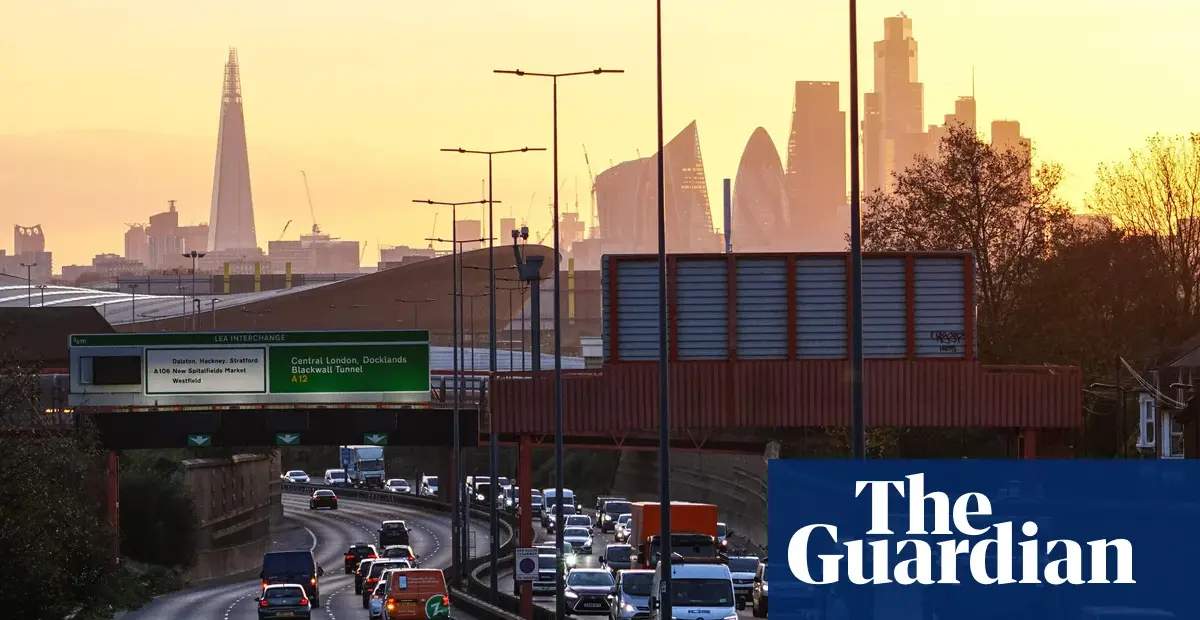
London T-charge and Ulez linked to drop in emergency hospital admissions

7 reported2 unconfirmed
A new study from Imperial College London suggests that emergency hospital admissions in central London fell after the introduction of the T-charge in 2017 and the ultra-low emissions zone (Ulez) in 2019. The research, which analyzed health records, found that for people living in the central London zone, emergency admissions had been increasing at 3% per year before the schemes started. After their launch, admissions decreased by 3% per year overall, including an 8% reduction for heart problems and a 6% reduction for breathing problems. The researchers controlled for other factors by comparing central London with similar areas elsewhere in the country. The reduction in total emergency admissions and heart-related admissions remained robust, while the decrease for breathing problems did not reach statistical significance. The study’s lead author noted that the inconclusive respiratory finding may be partly because the analysis considered only adults, and that children are particularly susceptible to air pollution’s effects on respiratory health. The researchers concluded that the reductions in hospital admissions are directly linked to the emission reduction initiatives, though other factors such as increased walking and cycling may also contribute.
What’s reported
Emergency hospital admissions in central London fell after the T-charge (2017) and Ulez (2019) were introduced.
Before the schemes, admissions were increasing at 3% per year; after, they decreased by 3% per year.
Heart problem admissions dropped 8%; breathing problem admissions dropped 6%.
The breathing problem reduction did not reach statistical significance.
The study excluded cases such as accidents, burns, drug overdose, poisoning, or self-harm.
Researchers compared central London with similar areas to control for other trends.
The central London Ulez launched one year before the Covid pandemic; nitrogen dioxide from traffic had been reduced by about 44% on central London roads before lockdowns.
Open questions
Whether the reduction in breathing problems would be statistically significant if children were included in the analysis.
The specific contribution of increased walking and cycling or reduced traffic noise to the health improvements.
Key figures
Dr Rosemary Chamberlain, researcher at Imperial College London
Dr Daniela Fecht, lead researcher of the study at Imperial College London
Sources: The Guardian