



Japan’s parliament enacts male-only imperial succession law

12 reported
Japan’s parliament enacted a historic revision to the 19th-century Imperial House Law on Friday, insisting only paternal-lineage men can become emperor. The revisions include allowing adoption of distant male relatives to father future heirs and permitting princesses to keep their royal status after marrying commoners. Royal watchers and experts fear the new measures could doom the 1,500-year-old hereditary institution by insisting only men can be emperor, sparking worry about the shrinking, fast-aging imperial family. Emperor Naruhito’s 24-year-old daughter Princess Aiko is ineligible because she is a woman, and the male-only succession rule means the line must move to the emperor's younger brother, then to his 19-year-old nephew Prince Hisahito. Prime Minister Sanae Takaichi and other conservatives insist the male bloodline is “the only source of the emperor’s authority and legitimacy.” The revision passed Friday is meant to solidify that principle by allowing adoption of distant royal male relatives to father future heirs. Friday’s revisions have led to protests from Japanese who see the government efforts as meant to eliminate Aiko from ruling and to justify discrimination against women.
What’s reported
Japan’s parliament enacted a historic revision to the 19th-century Imperial House Law on Friday.
The revision insists only paternal-lineage men can become emperor.
The revisions include adoption of distant male relatives to father future heirs and allowing princesses to keep their royal status after marrying commoners.
Emperor Naruhito’s 24-year-old daughter Princess Aiko is ineligible because she is a woman.
The male-only succession rule means the line must move to the emperor's younger brother, then to his 19-year-old nephew Prince Hisahito.
Next in line after Hisahito is the emperor's 90-year-old uncle.
Only five of the 16 adults in the imperial family are men.
Prime Minister Sanae Takaichi and other conservatives insist the male bloodline is “the only source of the emperor’s authority and legitimacy.”
There have been eight female monarchs; the last was Empress Gosakuramachi, who ruled from 1762 to 1770.
The paternal-line male succession was stipulated for the first time in the 1890 Imperial House Law.
Friday’s revisions have led to protests from Japanese who see the government efforts as meant to eliminate Aiko from ruling.
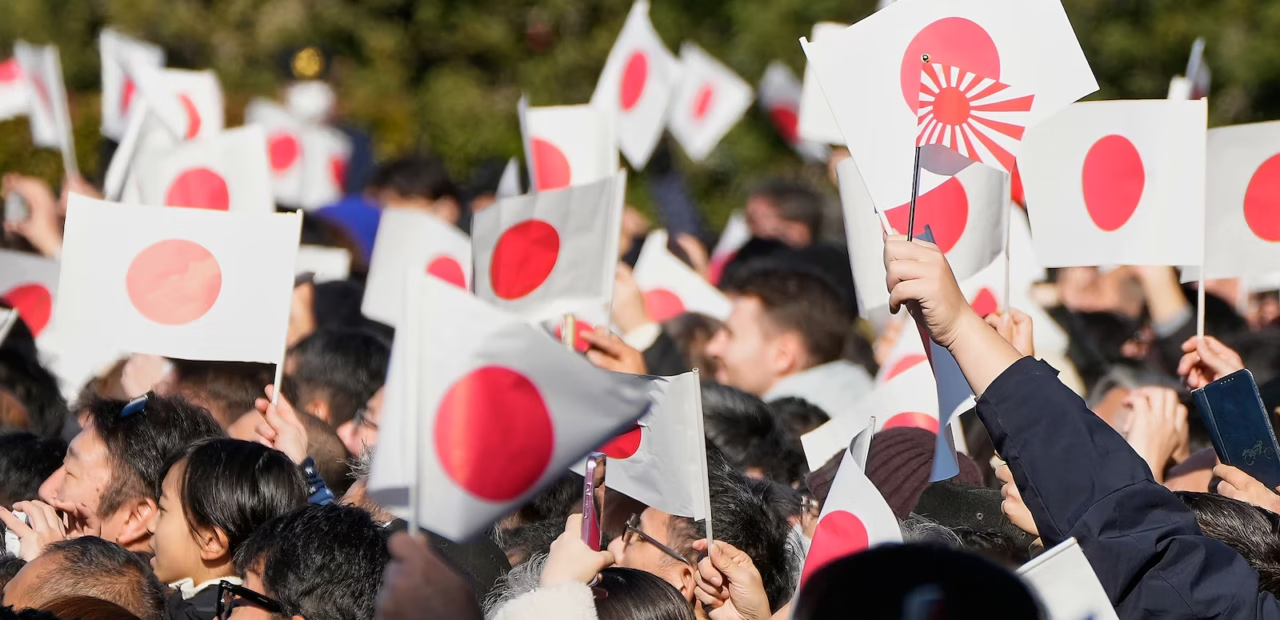
Japan also enacted a new law prohibiting desecration of its national flag.
Key figures
Emperor Naruhito
Princess Aiko (24-year-old daughter of Emperor Naruhito)
Prince Hisahito (19-year-old nephew of Emperor Naruhito)
Prime Minister Sanae Takaichi
Hideya Kawanishi (Nagoya University expert on monarchy)
Chizuko Ueno (feminist scholar)
Empress Masako (mother of Princess Aiko)
Shingo Haketa (former Imperial Household Agency chief)
Yoshimi Ogata (Imperial Household Agency official)
Yoshinori Kobayashi (cartoonist campaigning for Aiko’s succession)
Asahiro Kuni (81-year-old former royal)
Junichiro Tsujimaru (sushi chain founder)
Yoshio Iwase (78-year-old)
Former Emperor Akihito
Empress Gosakuramachi (ruled 1762-1770)
Emperor Taisho (great-grandfather of Naruhito)
Crown Prince Akishino (60-year-old brother of Naruhito)
Prince Hitachi (90-year-old uncle of Naruhito)
Mako (elder cousin of Aiko)
Kako (31-year-old cousin of Aiko)
Sources: abcnews.com